There is a 'lack of faith' between charities and high net worth individuals, causing one of the biggest obstacles to philanthropy in the UK, new research has revealed.
According to a new report, Barriers to Giving, 50% of UK millionaires donate 1% or more of their annual income to charity - highlighting a 'lack of understanding and poor communication' between the charity sector and half of the UK's wealthiest people.
The figures, compiled by Barclays Private Bank, found the lack of major donors has a considerably impact on charitable funding, with philanthropic donations in the UK accounting to just 0.5% pf national GDP, compared with 2.1% in the US.
The firm said an additional £46.4m could be created for charities if every multi-millionaire in the UK increased donations to 1% of their total income.
Further research by the firm found there is an underlying sense of 'us and them' between HNWI and charities, which has led to a detrimental impact on the potential for HNWIs and charities to develop 'mutually beneficial partnerships over the longer term'.
According to the findings, one in four wealthy individuals state a 'lack of faith' in how charities are run (25%), and a lack of control over how money is used (27%) as major reasons that prevent them from donating more to charity. Scandals involving reputable charities have furthered this lack of trust and the assumption that such issues are widespread within the sector.
Charities’ current perceptions and methods of engaging with HNWIs are also identified in the report as barriers to major giving.
The report suggested the assumptions that HNWIs often demand ‘too much control’ over their donations and that they can ‘always give more’ are cited as contributing factors to the problematic ‘us and them’ mentality.
Bridging the gap
In response to the findings, Barclays Private Bank, together with The Beacon Collaborative and the Institute of Fundraising have partnered with the aim of bridging the gap.
The partnership is designed to deliver a change in giving by building trust and understanding between HNWIs and charities. It will support The Beacon Collaborative’s objective to generate an additional £2bn in donations to charity by 2025.
The IoF will also work with the organisations to deliver a series of events to help fundraisers engage and form long-term relationships with wealthy individuals.
IoF chief executive, Peter Lewis said: “We’re delighted to be bringing the findings of Barriers to Giving 2020 to life for the hundreds of charities we support, with a series of events that will help fundraisers to better understand wealthy donors, and to build more impactful, longer-term relationships with them. At the same time there is a need to help HNWIs better understand charities and the impact we know is achieved.”
The Beacon Collaborative co-founder, Matthew Bowcock added: “Philanthropy has a crucial role to play in modern society – especially in today’s climate, where inequality has created deep divisions.
"We are already working alongside a growing force of major givers in the UK, but as this report reveals, there is more to be done to bridge the gap between charities and donors."

Latest News
-
Dismay over youth suicide prevention charity's collapse
-
Sally Hogg: How charities can build a public mandate in a multi-party age
-
Youth suicide prevention charity closes amid ‘a reduction in reliable funding’
-
Macmillan income reaches record level after ‘exceptional’ £22.4m legacy gift
-
Think tank boss takes senior role at grant maker
-
Children’s charity defends dropping Real Living Wage commitment





Beyond the funding squeeze: Using equities to secure your charity’s future
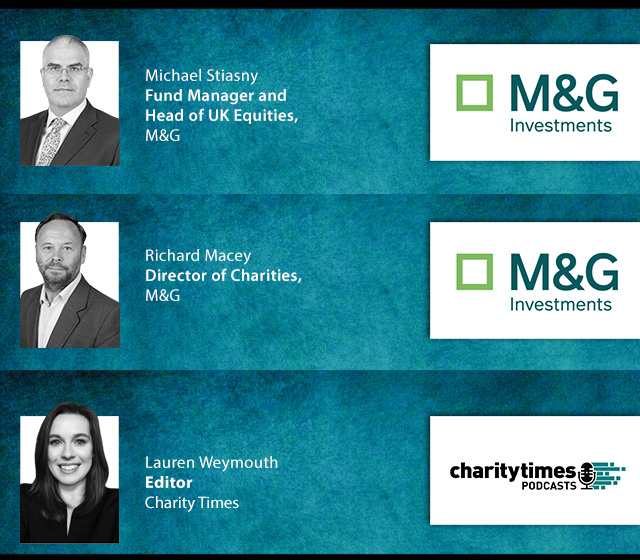
With charities facing increasing financial pressure and traditional income streams under strain, making investments work harder has never been more important. M&G’s Richard Macey and Michael Stiasny join Charity Times to discuss why equities remain a vital long-term asset class for charities, how organisations can balance income generation and growth, and the opportunities the current market environment may offer to help strengthen financial resilience.
Charity Times Awards 2023
Charity Times video Q&A: In conversation with Hilda Hayo, CEO of Dementia UK
Charity Times editor, Lauren Weymouth, is joined by Dementia UK CEO, Hilda Hayo to discuss why the charity receives such high workplace satisfaction results, what a positive working culture looks like and the importance of lived experience among staff. The pair talk about challenges facing the charity, the impact felt by the pandemic and how it's striving to overcome obstacles and continue to be a highly impactful organisation for anybody affected by dementia.





© 2021 Perspective Publishing Privacy & Cookies
Recent Stories