Ask a nonprofit finance leader what keeps them up at night, and the answer isn't dramatic. It's not fraud or a funding cliff. It's something quieter: they don't trust their own numbers.
Across the sector, finance teams are drowning in complexity. Many spend enormous amounts of time correcting coding errors on invoices or re-imbursements. No matter how often end users are trained, the wrong codes get applied. Purchase orders land against the wrong projects. The result? Analysis built on unreliable foundations. Budget meetings that don't reflect reality. Hours lost chasing what should be straightforward answers.
The spreadsheet trap
Recent research surveying 100s of finance leaders from nonprofits reveals a startling reality: 61% still rely on spreadsheets for core financial management. One organisation uses 12 separate systems. Another uses 26. And almost everyone surveyed pointed to the same fallback tool holding it all together: Excel.
Spreadsheets are familiar and flexible. But the cost is real. Massive amounts of manual reconciliation. Version control issues. The constant debate over who has the "right" number. And a huge lag between reporting a figure and actually understanding what it means for the organisation.
Every grant becomes a new tab. Every funding restriction needs manual tracking. Every funder report requires custom formatting and consolidating data from multiple sources. The more grants you win, the more complex the spreadsheet architecture becomes.
The hidden costs
The most damaging cost isn't financial - it's informational inequality. While 79% of boards have direct access to financial data, only 51% of program staff can access financial information directly. Boards get reports. The people delivering the mission often don't.
When the people closest to mission delivery lack access to financial information, strategic decision-making suffers. Program staff can't plan effectively. Development teams work without visibility into fund status. Finance teams spend hours creating customised views for each department manually, pulling skilled people away from the analysis and strategic work they were hired to do.
Breaking the cycle
The organisations that recognise these challenges share a common insight: fix the process first, then fix the technology. Multiple leaders described a pattern they'd seen repeated - an organisation buys a new system, migrates its existing mess into the new platform, and wonders why nothing improves.
Here's what works:
• Process before platform. Review workflows before buying new tools. Understand what's broken and why.
• Data before AI. Clean, consistent, trustworthy data is the prerequisite for everything else. Without it, AI will only scale your mistakes.
• People before automation. Invest in training. Build confidence. Help teams see technology as something that frees them, not threatens them.
• Foundations before ambition. Document policies. Consolidate systems. Tighten controls. Then, and only then, build upward.
How Unit4 helps nonprofits
We don't just sell software - we partner with organisations on their journey, bringing sector knowledge and honest guidance about what works and what doesn't. This close partnership has enabled us to build solutions that you need, to handle the complexity of multiple funding streams, sophisticated grant portfolios, and diverse stakeholder reporting requirements.
We truly believe that every hour saved on reconciliation is an hour returned to mission. Every system connected is a team no longer working in the dark.
Nonprofit finance deserves better than 26 disconnected systems and a prayer.


Latest News
-
Directory of Social Change to close amid ‘huge financial pressures’
-
Rare banknotes charity shop donation raises over £85,000
-
Government consults over plans to ban trustees who promote hate
-
Think tank links with bank to provide 'key fiscal moments' analysis
-
CRUK fundraiser takes place this week following far right rally postponement
-
Age UK call centre workers balloted for strike action amid pay dispute


Beyond the funding squeeze: Using equities to secure your charity’s future
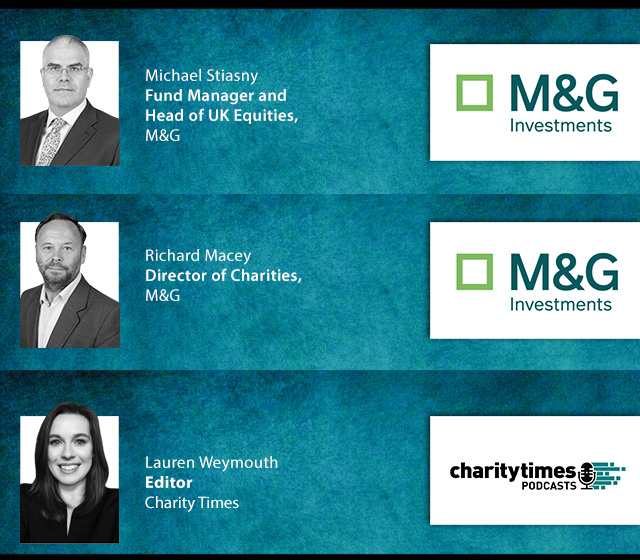
With charities facing increasing financial pressure and traditional income streams under strain, making investments work harder has never been more important. M&G’s Richard Macey and Michael Stiasny join Charity Times to discuss why equities remain a vital long-term asset class for charities, how organisations can balance income generation and growth, and the opportunities the current market environment may offer to help strengthen financial resilience.
Charity Times Awards 2023
Video Q&A: Benefits of bespoke investment vs pooled funds for the third sector
In this Charity Times video Q&A, editor Lauren Weymouth speaks to Ed Caswell of RBC Brewin Dolphin to explore how charities can align investment strategies with their mission, balance income and growth, and adapt to changing needs. He discusses discretionary management, responsible investment and the importance of effective governance and regular portfolio reviews.




© 2021 Perspective Publishing Privacy & Cookies
Recent Stories