
Culture secretary Lisa Nandy has asked government officials to work with the Charity Commission “to speed up the process for investigating charities suspected of engaging in extremist behaviour”.
This includes strengthening the regulator’s powers to close charities if needed.
Nandy also wants to see swift processing of decisions and the appeals process reviewed.
The bolstered powers to tackle extremism within charities forms part of a wider social contract announcement expected today around “establishing clearer expectations around integration and taking action to bring communities together”.
The powers are also in addition to a forthcoming consultation around banning charity leaders “who use their positions to promote violence or hatred” who have a criminal conviction for a hate crime or where there is evidence they have promoted hatred or violence.
Since October 2023, the Charity Commission has opened over 400 regulatory cases for hate speech and made around 70 referrals to police where criminal offences may have been committed, said the government.
Further measures under consideration include mandatory trustee ID verification, digitising charity accounts and strengthening councils’ powers to issue fines to tackle unlicensed street fundraising.
"Charities are the lifeblood of our communities, and we will not allow extremists to hijack their good name,” said Nandy.
“By giving the Charity Commission the teeth, it needs to act fast and decisively, we will close the door on those who exploit charitable status to spread hate, and open a new chapter that gives the sector the protection it deserves."
The DCMS gives the example of a trustee who was stripped of their UK citizenship by the Home Secretary nine years ago after they were found to be aligned with terrorist group, Al-Qaida. The Charity Commission then took action to disqualify this trustee from charity leadership roles.
“If the proposed powers were in place at this time, the Commission would not have had to rely on arguing the conduct was likely to be damaging to public trust and confidence in charities,” said the DCMS.
“Instead, it would have been able to base its disqualification decision on the Home Secretary’s exclusion decision, resulting in a faster outcome.”


Latest News
-
Charity boss shows her 'vulnerability' as she posts emotional grant rejection video
-
Charity charged with corporate manslaughter following fatal boating incident
-
CEO retires after 40 years with mental health charity
-
Gift Aid backlog impacting charities’ cash flow
-
Former National Lottery chief to chair social mobility charity
-
Volunteers call for training and communication improvements


Beyond the funding squeeze: Using equities to secure your charity’s future
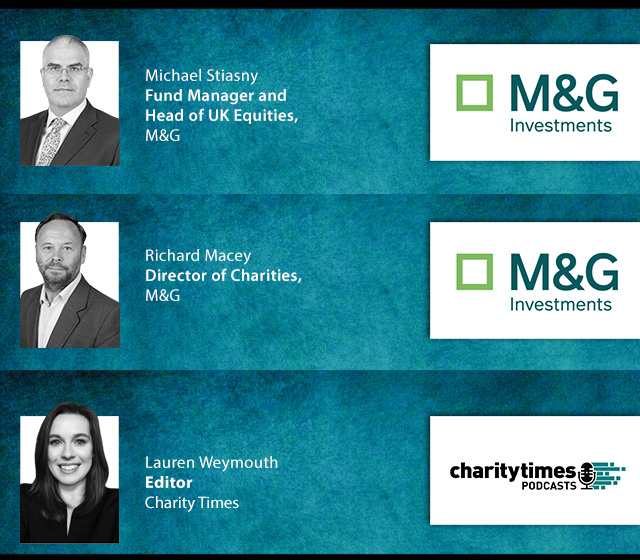
With charities facing increasing financial pressure and traditional income streams under strain, making investments work harder has never been more important. M&G’s Richard Macey and Michael Stiasny join Charity Times to discuss why equities remain a vital long-term asset class for charities, how organisations can balance income generation and growth, and the opportunities the current market environment may offer to help strengthen financial resilience.
Charity Times Awards 2023
Charity Times video Q&A: In conversation with Hilda Hayo, CEO of Dementia UK
Charity Times editor, Lauren Weymouth, is joined by Dementia UK CEO, Hilda Hayo to discuss why the charity receives such high workplace satisfaction results, what a positive working culture looks like and the importance of lived experience among staff. The pair talk about challenges facing the charity, the impact felt by the pandemic and how it's striving to overcome obstacles and continue to be a highly impactful organisation for anybody affected by dementia.




© 2021 Perspective Publishing Privacy & Cookies
Recent Stories