Research has revealed the charities that are most effectively adapting to artificial intelligence (AI)’s transformation of the way people search for information online through systems such as Google AI Overviews and ChatGPT.
Consultancy Platypus Digital’s research found the most successful charities at adapting to this change are those focusing their content on one issue, who make it easy for AI systems to understand and extract information, and those offering practical specialist advice, such as those offered by health charities.
Those that “balance clinical information with lived experience” are also performing well in AI searches, adds Platypus managing director Matt Collins.
Most effective AI search charities
The consultancies analysis of 15 of the UK’s best-known charities, gave its highest rating of nine out of 10 to Cancer Research UK, the British Heart Foundation, RSPCA and Mind.
“Cancer Research UK (CRUK) effectively utilises their position as the most well-known charity in the UK in combination with a comprehensive website with a clear focus,” said researchers.
“The result is that they perform very well in AI search, often being cited as the primary source for foundational cancer information and symptom led queries.”
Researchers were particularly impressed with its “about cancer” patient guides that are “ideal for AI search extraction”.
AI systems were found to “heavily rely on CRUK's structured data tables for cancer incidence and survival rates”, the research also found.
CRUK would benefit in AI searches further through more user generated content on their website. Currently this is often in the charity’s patient forums but could better target AI searches through being in “well formatted, expert vetted Q&A pages”.
In looking at British Heart Foundation’s success, researchers found that the charity has “a dominant presence in most cardiovascular related queries”.
Also, it has “the highest number of estimated monthly AI citations of all the charities” looked at and “enjoys a strong relevance for both broad terms and definitions, as well as more granular or rare cardiovascular condition search terms”.
Researchers advise that the charity can perform even better by “explicitly stating who has written or reviewed their content” and “linking to specific cardiovascular expert author bio pages would cement their authority and expertise further”.
Mind was found to have “strong AI search visibility and “the main citation for mental health conditions, as well as mental health rights and workplace wellbeing”.
Often it was ranked higher than the NHS, researchers found.
“Its content successfully bridges the gap between formal clinical diagnoses and everyday lived experiences. They carry out the role of a supportive, interpretive layer between the clinical, medical world, and the end user,” said Platypus.
“This tone and support aligns perfectly with what AI platforms are looking for.”
Meanwhile, RSPCA performed “fantastically well in AI searches for pet and animal welfare enquiries.
“They have a strong AI overview inclusion rate, suggesting that their site content is largely well associated with their core focus,” said Platypus, which advises the charity to expand its animal welfare content to include advice on areas it performed weakest in, such as animal adoption and fostering processes.
Least effective AI search charities
A factor among the least effective charities looked is that often research is being kept withing PDF reports or use websites “stuffed with JavaScript that hides” content, warns Collins.
Another problem is when charities attempt to be “an expert in 47 different topics” when they are “actually specialist in three.
He warns charities that “just being a household name doesn't guarantee you'll be cited” adding “AI platforms cite dozens of sources, and while the big players are right up there, they don’t always win”.
Among the least effective charities looked at include The Salvation Army, which scored just three out of 10 in terms of AI search performance.
Researchers found that its “AI visibility is low” despite being a “highly prominent Christian church and charity focused on practical social welfare” , with a long history and links to UK government.
They warn that there is “limited search demand for topics” on its website, which is blighted by “limited informational content offerings”. More content around homelessness is advised by researchers.
Another poor performer is BBC Children in Need, with a score of only four out of 10.
“Outside of non-brand related queries, the Children In Need site struggles for AI visibility,” found researchers.
“They house little informational content, limiting their keyword rankings and when an AI platform would consider them as a relevant source of information.”
The funder is advised to develop more content geared towards “higher volume, informational search queries”.
For example, they could produce content to guide users on fundraising ideas to attract new users to the site. It’s also a highly relevant topic they are likely to rank well for in organic and AI search platforms”, said researchers.
Charities performing better than other sectors
Research released last year found that charities have seen a drop in organic growth in website traffic since the rise in AI powered searchers.
Digital marketing and PR agency Tank’s research found that average monthly organic growth for charities fell from 15% in 2024 to 12.5% last year.
But while significant it shows charities are adapting to AI systems far better than other sectors, for example the hospitality industries’ organic website traffic growth fell from 47.9% over the same period to -6.7%.


Latest News
-
Arts venue charity to close after ‘exhausting all possible alternatives’
-
Hospice charity repeatedly targeted by criminals launches appeal to improve security
-
Children’s charity refreshes brand to be clearer ‘about who it is’
-
Monday movers – 12 October 2026
-
Council terminates charity’s £8.57m children's care home contract early amid staffing concerns
-
Charity boss shows her 'vulnerability' as she posts emotional grant rejection video


Beyond the funding squeeze: Using equities to secure your charity’s future
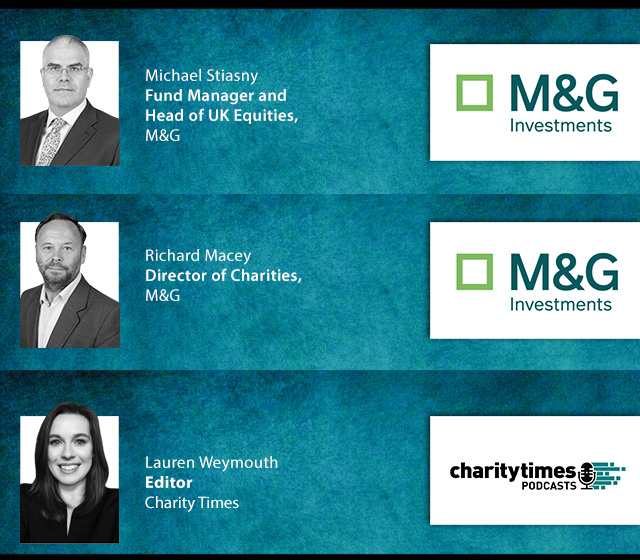
With charities facing increasing financial pressure and traditional income streams under strain, making investments work harder has never been more important. M&G’s Richard Macey and Michael Stiasny join Charity Times to discuss why equities remain a vital long-term asset class for charities, how organisations can balance income generation and growth, and the opportunities the current market environment may offer to help strengthen financial resilience.
Charity Times Awards 2023
Charity Times video Q&A: In conversation with Hilda Hayo, CEO of Dementia UK
Charity Times editor, Lauren Weymouth, is joined by Dementia UK CEO, Hilda Hayo to discuss why the charity receives such high workplace satisfaction results, what a positive working culture looks like and the importance of lived experience among staff. The pair talk about challenges facing the charity, the impact felt by the pandemic and how it's striving to overcome obstacles and continue to be a highly impactful organisation for anybody affected by dementia.




© 2021 Perspective Publishing Privacy & Cookies
Recent Stories