NAVCA, Community Matters and the Small Charities Coalition have written a joint open letter to Civil Society Minister, Nick Hurd MP, in response to Lord Hodgson’s report.
The letter focusses on ten of Hodgson’s recommendations and classifies them using a traffic light system of red, amber or green.
Key points from the response include:
Small charities will suffer unless the threshold to register as a charity is only raised after voluntary registration has been made available and organisations that claim tax relief are required to register.
The recommendations require proper resourcing to work, in particular those that see more responsibility transferring to umbrella bodies.
The recommendation to label charities as small is divisive and unwarranted.
The cost for small charities of implementing the recommendations in full could be prohibitive for small charities
David Tyler, chief executive of Community Matters, said: “The raising of the threshold to £25,000 has the potential to make registration just the preserve of larger charities and be damaging to the many small local charities that want to register.
"Lord Hodgson’s was clear that his intention is that raising of the threshold, voluntary registration and compulsory registration for those wanting to claim Gift Aid are a package. The Government will harm small charities if it raises the threshold before implementing all parts of this package.”
Joe Irvin, chief executive of NAVCA, noted: “We are making clear that Lord Hodgson’s recommendations will only work if there is a co-ordinated advice service available to charities, especially smaller ones that will not be able to afford legal advice.
"Charities will turn to local and national umbrella bodies for this support. NAVCA, Community Matters and NCVO, with Charity Commission support, have proposed a scheme that will allow this to be properly resourced, both in terms of pump-priming funding and the ongoing support of the Charity Commission. We would like this proposal to be given further consideration.”
Cath Lee, chief executive of the Small Charities Coalition, added: “Lord Hodgson made some sound and practical recommendations in the report.
"He also made some recommendations that, if care is not taken over the timing and detail of implementation, could be hugely damaging to the sector and to small charities in particular. We welcome the opportunity this presents to work collaboratively to avoid the danger zones and get it right.”
The letter from the three groups reads:
Nick Hurd MP
Minister for Civil Society
Cabinet Office
70 Whitehall
London
SW1A 2AS
Dear Nick,
Joint Response from Community Matters, NAVCA and Small Charities Coalition to: Trusted and Independent: Giving charity back to charities – Review of the Charities Act 2006
This open letter from Community Matters, NAVCA and Small Charities Coalition is a joint response to your invitation to comment on “Trusted and Independent: Giving charity back to charities”, Lord Hodgson’s review of the Charities Act 2006. We have responded using the traffic light system you suggested would be helpful for you.
Our three organisations
The Small Charities Coalition: We are a national networking, mentoring and support organisation for small charities. We work with trustees, staff and volunteers to help them find practical solutions to the daily challenges they face so that they are better able to fulfill their aims. We have over 6500 members.
NAVCA is the national voice of 375 local support and development organisations in England. We champion and strengthen voluntary and community action by supporting our members in their work with over 160,000 local charities and community groups.
Community Matters is the nation-wide federation for community associations and similar multi-purpose community organisations, with a growing membership of over 1,250 organisations across the UK.
Our joint response
Our three organisations decided upon a joint response because our respective members have a particular interest in the implications of the proposals for small local charities. As individual organisations we may also respond separately on other recommendations from the review.
We have prioritised ten of Lord Hodgson’s recommendations, which in our view, have greatest impact on small charitable organisations and on which we wish to strengthen our response by coming together. We have also raised a further red light, in relation to the costs of the proposals when taken together.
Our welcome for the report
Lord Hodgson’s report is comprehensive and there is much that we welcome. It is already creating debate within the sector and beyond and providing the catalyst to bringing organisations like ours together to consider ways forward. Unfortunately, some momentum has been lost as timeframes for responding to the recommendations have not been clear. We believe there must be greater clarity around acceptance and implementation of Hodgson’s recommendations; this demands a well thought through strategy, which must be clearly communicated.
Recommendations we welcome and would encourage early implementation or steps towards removing barriers to implementation (green):
1. The Charity Commission should work with umbrella bodies and other groups in the sector to promote their best practice on trustee recruitment.
This is already happening to a certain extent. National initiatives such as Trustee Week, led by the Charity Commission, are beginning to achieve positive change, particularly in facilitating coordination between umbrella bodies and other organisations involved in promotion of trusteeship.
Many of our members are already doing this and 93% of NAVCA members support this recommendation. However, they and others emphasise that this work is not cost neutral and will need resourcing if a significant impact is to be made. In addition, work needs to focus on ensuring that charities have the mindset, capability and capacity to take on trustees, support and make the most of their skills and experience.
2. The impact of the Charitable Incorporated Organisation (CIO) form should be assessed 3 years after implementation.
The CIO will bring benefits to organisations by reducing reporting requirements, as organisations will only have one regulator. The delays in implementing the CIO have been unacceptable, causing confusion, frustration and additional work for charities wanting to start up as a CIO or those wishing to convert. This has created a backlog that jeopardizes the potential benefits to be gained from implementing other recommendations relating to registration with the Charity Commission. For example, the timescale within which implementation of voluntary registration will be practical. We support the proposal that the impact of this new legal form is reviewed after implementation, as clearly Lord Hodgson has not been able to do so because we are still awaiting the introduction of the CIO.
3.The Charity Commission needs to be adequately funded to properly regulate the sector
The reductions in the Charity Commission’s budget from £29.3m in 2010/11 to 21.3m in 2014/15 are challenging. We strongly agree with Lord Hodgson that the Commission’s budget should be reviewed to ensure that it has the resources it needs to carry out all the functions identified in the report and required to properly regulate the sector.
Recommendations we consider need further work or consultation but could have positive impact on the sector (amber):
4. The general threshold for compulsory registration should be raised to £25,000 (to match the accounting threshold), with compulsory registration also applicable to all (non-exempt) charities that claim tax relief.
We are unconvinced that raising the threshold is the right approach and lean more towards considering this recommendation as ‘red’. However, the recommendation would be more acceptable if it is implemented in conjunction with:
a) the proposals to require all that charities claiming Gift Aid register
b) voluntary registration
It is vital that voluntary registration is in place before any raising of the threshold. Our consultation with members indicated almost universal support for this position.
Registration with the Charity Commission is vital for fundraising because a significant number of trusts and foundations do not support unregistered charities. Charities under £25k income account for the majority of the sector and so one of the major risks of raising the threshold is that, in effect, the majority of the sector will slip under the radar and lose access to a vital source of funding for work that is essential to our communities. In addition, charities generally do not realise that it is not registration that defines them as a charity but their objects. This means that many organisations aspire to registration as it is a public demonstration of their status.
5. The Charity Commission should continue its work to develop more partnerships with sub-sector umbrella bodies, enabling them to take on a greater role in promoting compliance, developing best practice (including model governing documents) and helping their membership with queries. The Commission should underscore these agreements with Memoranda of Understanding that are published on its website.
Many national and in some cases local organisations are already working in partnership with the Charity Commission. There is, however, a difference between the promotion of compliance, the provision of advice and guidance, the promotion and development of good practice and the enforcement of regulatory requirements. The report does not recommend the latter point and we would agree that regulation should remain the role of the Charity Commission. For many charities stepping over that line would change the relationship between them and their beneficiaries or members.
Many local umbrella organisations, in particular NAVCA members, already provide an element of the support services identified and are the first port of call for local organisations. Indeed, 70% of NAVCA members polled were in support of this recommendation, with the caveat that the development of this role must be properly resourced.. Many NAVCA members are concerned that they may well be expected to provide this service without the additional resources required to do the job properly, something that they are clear is unsustainable. As the Charity Commission withdraws from providing one to one advice to organisations, the advisory service will need to be picked up nationally and locally by umbrella bodies. For this transition to be successful there needs to be investment in establishing a co-ordinated service.
6. Umbrella bodies should, working with the Charity Commission and Government, investigate ways to draw together and promote a centralised portal for trustee vacancies.
This recommendation has some potential, however the cost of achieving it is a significant barrier and there is the additional challenge of bringing together organisations with competing commercial interests. It is unlikely that a centralized portal would gain the profile needed to be a useful national resource. Local and hyper-local charities want local people and expertise and look to local services for this, for example volunteer centres. Any additional resources should be targeted at supporting existing effective services and driving greater coordination between them to remove duplication.
7. Fundraising Standards Board (FRSB)
Although there are benefits to be gained from greater coordination and clarification of the self-regulation landscape it is unclear to many small charities what the role of FRSB is and what the benefits for small charities are. We have concerns over potential statutory enforcement of self-regulation if take up of FRSB membership does not reach down below the £1m mark quickly enough. The barriers of complexity around the standards and cost would need to be addressed for membership to become more of a possibility. We hope that the revised and simplified code due in November will address some of the concerns around complexity. As with any regulation, requirements need to be proportionate to the extent and complexity of the fundraising activity and not impose additional burdens of cost or administration. Promotion by other organisations should be around the benefits of following good practice and standards rather than FRSB as an organisation. The Institute of Fundraising’s training for small charities training, which is delivered in partnership with local support providers, is one example of this approach.
Recommendations we do not support and think should not be adopted (Red)
8. All charities which are unregistered should be required to disclose this fact on their correspondence, fundraising materials and cheques.
The implementation of this would be problematic and result in additional costs for some. It is unclear how it would be enforced or how it would work. Current practice of declaring registration on items such as cheques, even amongst larger charities, is inconsistent. It is unclear what the motivation for unregistered charities would be for them to undertake this. The questions and caveats around this recommendation are such that it is unlikely it would reap any potential benefits without incurring disproportionate level of cost.
9. Charities who fall into the ‘large’ category … should have the power to pay their trustees, subject to clear disclosure requirements on the quantum and terms of any remuneration in the individual charity’s annual report and accounts. We do not believe there is evidence of substantial support within the charitable sector or among the public for changing current regulations. There is no evidence that paying trustees results in greater diversity on boards or better governance. We are also concerned that such a measure could lead to problems in recruiting trustees if an expectation of payment is created that small and medium sized charities with low levels of income these charities cannot fulfil. We oppose this recommendation and think it will be damaging for the sector and public confidence. However, reimbursement for legitimate trustee expenses is perfectly legitimate and good practice.
10. All registered charities with an annual income of less than £25,000 should be identified on the Commission’s register as “small” alongside their registration number. The intention of this is to improve the public perception that these charities are subject to little proactive regulatory oversight – and alert potential donors to this fact.
We believe that this recommendation is divisive and could create two tiers of charity. There is not a clear or robust rationale to support.
The limited resources of the Charity Commission and the consequent decisions to regulate small charities less do not constitute a valid reason for introducing what can be perceived as a ‘punitive’ measure for the majority of the sector. The measure could be perceived as ‘less regulatory oversight equals more prone to bad practice’, a completely unproven correlation. We also believe that the Charity Commission should not abandon scrutiny of small charities as this has historically been an important measure in improving practice within the sector and one that could not be easily reversed if practice significantly deteriorated.
This recommendation has been made without a thorough assessment of the implications for smaller charities and start up charities.
Many small charities manage or even in some cases own significant assets on behalf of the community which has brought them out from under the radar, whilst still retaining a below threshold income. With regard to registration and accountability it may not be appropriate for them to be treated as a ‘Small Charity’.
Cross-cutting issue that we do not support (Red)
Costs of implementation
The recommendations, taken in conjunction, could lead to a lot more costs for small charities:
• Payment to Charity Commission for accounts.
• Payment to FRSB.
• Payment of membership fees to umbrella bodies (not stated but there is encouragement of umbrella bodies performing functions, and it is likely that this is expected to be funded at least partly by membership fees. An additional factor to consider is that many small umbrella bodies do not charge membership fees as the cost of administering payment outweighs the income that can be generated. Carrying out the functions that may become expected are therefore an additional drain on smaller umbrella organisations resources).
• Payment to Charity Commission for registration.
These costs will disproportionately affect small charities. There is widespread evidence that membership fees, charges for services and conferences, even when these are graded, are a greater proportion of a small charities income than a larger charity. For a charity with income of £10,000, and assessing each of these as about £50, these charges could be at least £200 (or 2% of their income). These fees will make it more expensive to run smaller charities and should only apply to larger charities.
Fines to charities or removal of rights for late filing of accounts or returns is also too punitive a step that disproportionately impacts on charities with low capacity. As a threat, it is unlikely to lead to early positive behaviour and as a sanction it can only make matters worse.
We would be keen to discuss any of these issues further with you,
Yours sincerely,
Cath Lee
Chief Executive, Small Charities Coalition
David Tyler
Chief Executive, Community Matters
Joe Irvin
Chief Executive, NAVCA


Latest News
-
King’s Birthday Honours List pays tribute to charity leaders and fundraisers
-
Charity brands with 'momentum' among the public revealed
-
Regulators issue transparency plea to the public when fundraising
-
Two in three Brits feel ‘overwhelmed by the number of charity appeals’, survey finds
-
Charities retreating into ‘protection mode’ amid online hostility, warns NCVO
-
Regulator considering MP’s claim 32 charities ‘funnelled' £28m to illegal Israeli settlements





Charity Times video Q&A: In conversation with Hilda Hayo, CEO of Dementia UK
Charity Times editor, Lauren Weymouth, is joined by Dementia UK CEO, Hilda Hayo to discuss why the charity receives such high workplace satisfaction results, what a positive working culture looks like and the importance of lived experience among staff. The pair talk about challenges facing the charity, the impact felt by the pandemic and how it's striving to overcome obstacles and continue to be a highly impactful organisation for anybody affected by dementia.
Charity Times Awards 2023
Mitigating risk and reducing claims
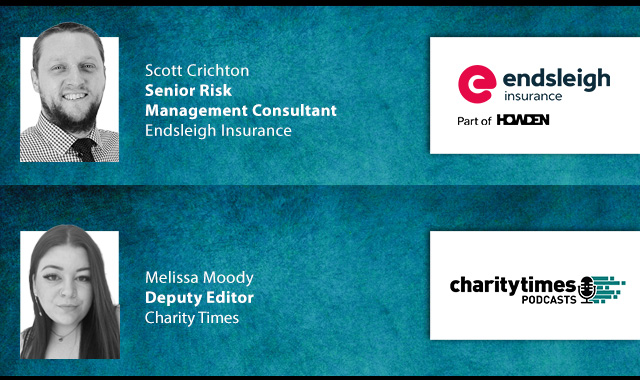
The cost-of-living crisis is impacting charities in a number of ways, including the risks they take. Endsleigh Insurance’s* senior risk management consultant Scott Crichton joins Charity Times to discuss the ramifications of prioritising certain types of risk over others, the financial implications risk can have if not managed properly, and tips for charities to help manage those risks.
* Coming soon… Howden, the new name for Endsleigh.
* Coming soon… Howden, the new name for Endsleigh.
Better Society





© 2021 Perspective Publishing Privacy & Cookies
Recent Stories