
There’s a hidden trauma and burnout crisis among fundraising professionals, which has been ‘ignored for too long’, new research has shown.
Research conducted by Irish fundraiser Michelle Reynolds has highlighted a number of factors contributing to stress among fundraisers.
According to her findings, fundraisers feel they ‘can’t say no’ to taking on extra work and are being affected by the perception that mental health issues experienced by fundraisers are ‘nothing’ compared to those experienced by beneficiaries and frontline staff.
The Rogare report, Caring too much: The burnout dilemma faced by fundraisers, and the emotional toll of a fundraising career identifies four key drivers of stress and burnout among fundraisers.
These include fundraisers’ inherent empathy, which ‘opens the door to emotional strain’; their desire to put others’ interests before their own; the pressure to achieve more for less’ and the sense of idealisation that fundraisers should be able to ‘deliver the impossible’.
Reynolds also said fundraisers can often experience the same type of trauma as frontline charity workers.
She said the syndrome, known as ‘secondary vicarious trauma’, results from indirect exposure, such as through photographs and stories, to the real life factors that induce stress.
“Many fundraisers are so committed to their organisation’s mission that the intensity of work feels worth it. But this extra effort often comes at the expense of fundraisers’ mental health and wellbeing,” Reynolds said.
“Charities need to do more to support their fundraisers. While fundraisers often put themselves forward to do more, it is impossible to ignore the concomitant cultural expectation and pressure from organisations and leadership that this is what fundraisers ought to do. In fact, perhaps this has been overlooked for too long.
“Fundraisers need to be empowered and enabled to hold boundaries around workload, to find their individual comfort level around exposure to others’ traumatic experiences, and resist the self-imposed yet seemingly reinforced-by-others belief that they must be ‘always on’ and put everyone else’s needs ahead of their own.”
Rogare’s chair Damian Chapman, who is director of income generation at Money Advice Trust and a trustee of the Chartered Institute of Fundraising, added that burnout is “endemic in fundraising and not an anomaly – it is a silent and devastating crisis in the fundraising profession”.
“The changes we need to put in place to deal with this crisis are not radical; they are the basic protections any profession should provide to those working on the frontlines of social good,” he said.
“Fundraisers are not an infinite resource. We cannot afford to keep losing them to burnout. We owe it to them – not just to keep them in the profession, but to ensure they can thrive within it.”
Caring too much: The burnout dilemma faced by fundraisers, and the emotional toll of a fundraising career is available here.


Latest News
-
Millionaire charity founder's legacy mismanaged by trustees, regulator finds
-
Charity reports itself to police and regulator after ‘significant concerns’ emerge
-
Civil society is ‘critical to the success of our country’, says PM
-
Homelessness charity takes on housing association as a subsidiary
-
Staff walkouts at V&A to escalate amid calls for improved pay
-
Refuge merges with healthy relationships charity





Beyond the funding squeeze: Using equities to secure your charity’s future
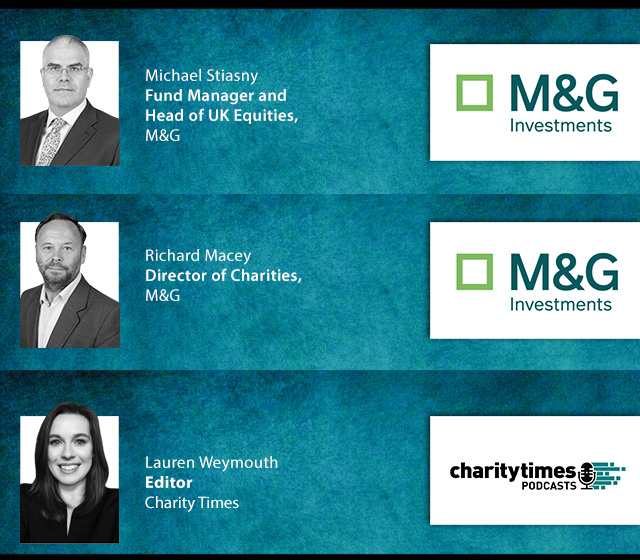
With charities facing increasing financial pressure and traditional income streams under strain, making investments work harder has never been more important. M&G’s Richard Macey and Michael Stiasny join Charity Times to discuss why equities remain a vital long-term asset class for charities, how organisations can balance income generation and growth, and the opportunities the current market environment may offer to help strengthen financial resilience.
Charity Times Awards 2023
Video Q&A: Benefits of bespoke investment vs pooled funds for the third sector
In this Charity Times video Q&A, editor Lauren Weymouth speaks to Ed Caswell of RBC Brewin Dolphin to explore how charities can align investment strategies with their mission, balance income and growth, and adapt to changing needs. He discusses discretionary management, responsible investment and the importance of effective governance and regular portfolio reviews.




© 2021 Perspective Publishing Privacy & Cookies
Recent Stories