
The Charity Commission has handed a grantmaking charity an official warning after uncovering a raft of failures by its trustees to manage a £5.7m legacy it received following the death of its millionaire founder.
The Commission’s probe into the financial management of the The Schwarzschild Foundation was launched after concerns were raised by the National Crime Agency over funds being held in a personal bank account under the control of a trustee.
Its investigation details how the charity became entitled to the estate of its founder, Helga Schwarzschild, following her death six years ago. This totalled £5.7m, including the sale of her £1.72m home and property portfolio.
After it received the proceeds from Mrs Schwarzschild’s legacy four years ago the funder approved four grants of £250,000 each.
But the regulator found that one of these grants, to an organisation called Yad L’Achim, had been paid into an account controlled by one of the funder’s trustees.
Also, trustees were only able to verify the use of the remaining £750,000 after the Commission became involved, found the regulator’s investigation.
These grants were handed to UK Friends of Yad Yisroel Incorporating Sponsor a Meal, Menorah High School for Girls Foundation Trust and BCR GJAG Ltd (Gateshead Jewish Academy for Girls).
Further concerns to emerge were that in the eight years to 2022 the funder only handed out one grant, of £200m which was to a charity that one of the grantmaker’s trustees also sat on the board of.
In addition, trustees invested £600,000 of Mrs Schwarzschild’s legacy with a wealth manager without having an investment policy in place, as is required.
Interim Managers appointed by the regulator to review the charity’s governance also found that there had “been no meaningful review of a £4m portfolio of investment properties held on the charity’s behalf”.
“The inquiry found that due to the lack of proper policies, procedures and monitoring in place, the charity was exposed to a serious risk of misuse, misapplication or loss of funds. This was misconduct and / or mismanagement in the administration of the charity,” concluded the Commission.
Trustees' failure to manage conflicts of interest is another concern.
The official warning was handed to the charity for “a breach of trust or duty” and trustees have been ordered to implement a “comprehensive action plan” of improvement.
“Good policies and procedures are fundamental components of effective charity governance,” said Charity Commission head of high risk compliance Brian Wilson.
“These, along with robust decision making, are the checks and balances that ensure a charity is well run and can demonstrate funds are being spent in its best interests.
He added: “While we have closed the inquiry, we will continue to monitor the charity’s implementation of the action plan.”


Latest News
-
Millionaire charity founder's legacy mismanaged by trustees, regulator finds
-
Charity reports itself to police and regulator after ‘significant concerns’ emerge
-
Civil society is ‘critical to the success of our country’, says PM
-
Homelessness charity takes on housing association as a subsidiary
-
Staff walkouts at V&A to escalate amid calls for improved pay
-
Refuge merges with healthy relationships charity


Beyond the funding squeeze: Using equities to secure your charity’s future
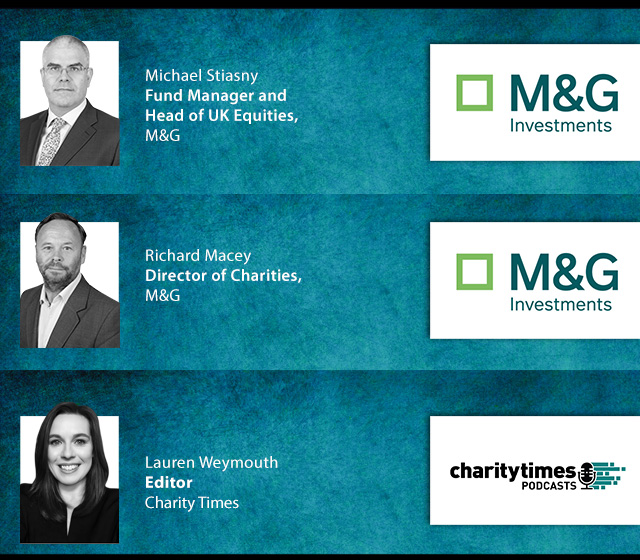
With charities facing increasing financial pressure and traditional income streams under strain, making investments work harder has never been more important. M&G’s Richard Macey and Michael Stiasny join Charity Times to discuss why equities remain a vital long-term asset class for charities, how organisations can balance income generation and growth, and the opportunities the current market environment may offer to help strengthen financial resilience.
Charity Times Awards 2023
Video Q&A: Benefits of bespoke investment vs pooled funds for the third sector
In this Charity Times video Q&A, editor Lauren Weymouth speaks to Ed Caswell of RBC Brewin Dolphin to explore how charities can align investment strategies with their mission, balance income and growth, and adapt to changing needs. He discusses discretionary management, responsible investment and the importance of effective governance and regular portfolio reviews.




© 2021 Perspective Publishing Privacy & Cookies
Recent Stories