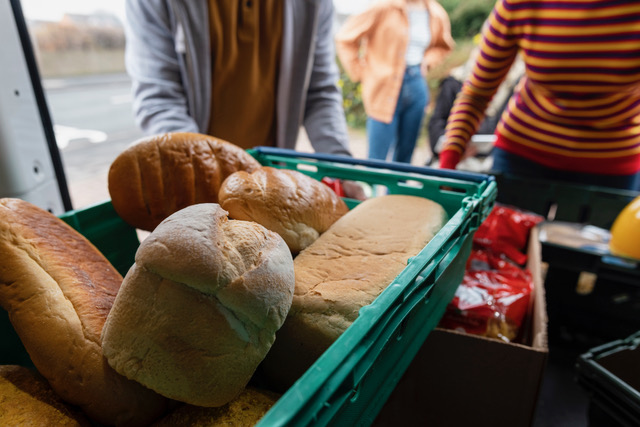
A £15m fund has been created by the government to help charities involved in distributing produce and tackling poverty get spare food from farming to those in need.
The fund has been created by the Department for Environment, Food and Rural Affairs and aims to strengthen links between farms and charities.
An estimated 330,000 tonnes of edible food are either wasted or repurposed as animal feed “before leaving farm gates every year”, said the government department.
“While farmers would prefer for this to be destined for people’s plates, charities that redistribute food often lack the means to collect food from farms and get it to those who need it,” it added.
Grants starting from £20,000 will be made available to charities in England.
Food banks, food poverty charities and homeless shelters are among charities the funding is aimed at supporting.
It will also reduce costs for farmers in dealing with food waste.
“Nobody wants to see good food go to waste – especially farmers who work hard to put food on family tables across the country,” said circular economy minister Mary Creagh.
“Our new fund will help the charitable sector to work more closely with farmers, helping to find new opportunities to get their world-leading produce to those most in need within our communities.”
Charities involved in distributing food and tackling food waste have welcomed the funding.
In a joint statement Felix Project chief executive Charlotte Hill and FareShare CEO Kris Gibbon-Walsh said: “After years of campaigning by food redistribution charities, we are thrilled to see this fund come to fruition.
“We are pleased that the government has recognised that too much food goes to waste on our farms, and that it should be redistributed to feed people who need it.
They added: “We look forward to acting quickly with the government, the charity sector, and farmers to maximise the impact of this initiative during British growing season, ensuring surplus food reaches as many people as possible.
“We have a proven model which funds farmers to redistribute their unsold food, which means that together, we can take meaningful steps toward achieving a zero-waste Britain.”
Harriet Lamb, chief executive of environmental NGO WRAP said: “This is welcome support for farmers and redistribution organisations ensuring more quality food is rescued and can support more people and communities, while reducing the environmental impact of food waste on climate change.
“It gives a flying start to the New Year, ensuring that food charities and the farming sector can both make a difference immediately and can develop long term solutions. Every year, the amount of surplus food being redistributed is going up, but sadly the need is also increasing so this gives a much-needed boost.”
She added that in 2024, 191,000 tonnes of food from retailers, food manufacturers, the hospitality sector and UK farms - worth £764 million - was redistributed with the potential to make 450 million meals.
Information on when the fund opens and full eligibility criteria for applications will be confirmed in the New Year, added the government.


Latest News
-
Arts venue charity to close after ‘exhausting all possible alternatives’
-
Hospice charity repeatedly targeted by criminals launches appeal to improve security
-
Children’s charity refreshes brand to be clearer ‘about who it is’
-
Monday movers – 12 October 2026
-
Council terminates charity’s £8.57m children's care home contract early amid staffing concerns
-
Charity boss shows her 'vulnerability' as she posts emotional grant rejection video




Beyond the funding squeeze: Using equities to secure your charity’s future
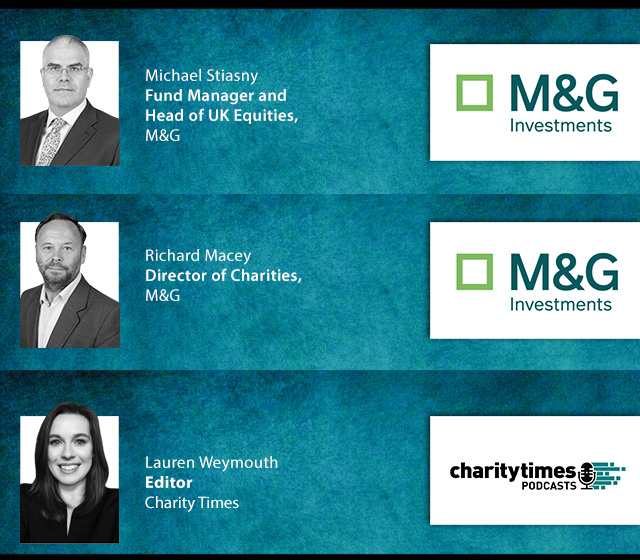
With charities facing increasing financial pressure and traditional income streams under strain, making investments work harder has never been more important. M&G’s Richard Macey and Michael Stiasny join Charity Times to discuss why equities remain a vital long-term asset class for charities, how organisations can balance income generation and growth, and the opportunities the current market environment may offer to help strengthen financial resilience.
Charity Times Awards 2023
Charity Times video Q&A: In conversation with Hilda Hayo, CEO of Dementia UK
Charity Times editor, Lauren Weymouth, is joined by Dementia UK CEO, Hilda Hayo to discuss why the charity receives such high workplace satisfaction results, what a positive working culture looks like and the importance of lived experience among staff. The pair talk about challenges facing the charity, the impact felt by the pandemic and how it's striving to overcome obstacles and continue to be a highly impactful organisation for anybody affected by dementia.




© 2021 Perspective Publishing Privacy & Cookies
Recent Stories