Ylann Schemm, executive director of the Elsevier Foundation, reflects on the evolution of global philanthropy - and what the shift towards more locally led, collaborative approaches mean for charities today.
___________________________________________________________________
For decades, global philanthropy has been driven by good intentions but shaped by unequal power dynamics. Funding has often flowed from the Global North to the Global South through externally designed programmes, with limited recognition of the need for local leadership or long-term ownership. That approach is being challenged – and increasingly replaced.
In my work with the Elsevier Foundation for nearly two decades, I’ve seen this shift firsthand. Communities once positioned as recipients are now asserting their role as partners and experts, and impact is no longer defined solely by short-term outputs.
This reflects a broader rebalancing of power across the global funding landscape. For the first time, researchers based in low- and middle-income countries account for the majority of academic publications worldwide (by volume)*. For us as a Foundation, this is significant, given our roots in academic publishing and research, but it also carries wider implications for philanthropy. It challenges long-held assumptions about where insight and innovation originate – and reinforces the point that communities most affected by challenges such as climate change or health inequalities also hold critical knowledge about how to address them.
An example of this approach is our Climate Women programme with TWAS, the World Academy of Sciences. Over the past five years, we’ve supported 14 women climate scientists from low-income countries who have convened teams of women in their communities to deliver climate action. Projects have ranged from climate-resilient farming in stressed coastal areas to sustainable vegetable gardens, each shaped by local context and expertise.
At the same time, international aid and research funding are under pressure, prompting funders and charities to rethink how impact is created and sustained. A key shift has been moving from externally driven programmes towards locally led delivery. At the Elsevier Foundation, this has meant working in partnership with local organisations, researchers, and communities from the outset, recognising that sustainable solutions are rarely imported, but built from within.
In India, for example, we work with Swasti, a Bangalore-based global health charity, to support Climate Health Champions by training community health workers to address extreme heat health risks on the frontlines. Swasti’s deep understanding of local needs enables them to work effectively with health officials, embedding new approaches and scaling them across regions.
This level of understanding is difficult to achieve without long-standing local engagement. It requires trust: trust in local leadership and lived experience, and trust that progress does not need to be tightly controlled to be effective. For charities, it often involves letting go of familiar models and listening more than directing.
I was reminded of the value of this approach while attending the Gender Summit India, hosted by the Indian National Academy of Sciences. The summit brought researchers, practitioners, and funders together to share Indian research with a gender dimension, ultimately feeding into a shared Global Gender Roadmap that sets priorities for advancing gender equality.
Funding models are also evolving. There is growing recognition that short-term project cycles rarely lead to systemic change. More funders are exploring longer-term, flexible approaches that prioritise learning and resilience, and trust-based relationships focused on shared accountability.
For charities working globally, operating in this landscape means sharing power, investing in relationships, and accepting that sustainable impact takes time. Global philanthropy is not becoming less ambitious; it is becoming more honest about what real change requires.
_________________________________________________________________
*Brito Cruz, C.H. (2025). Changing Geography of Research. UN Multistakeholder Forum on Science, Technology, and Innovation for the SDGs (Elsevier / UN policy brief).


Latest News
-
Arts venue charity to close after ‘exhausting all possible alternatives’
-
Hospice charity repeatedly targeted by criminals launches appeal to improve security
-
Children’s charity refreshes brand to be clearer ‘about who it is’
-
Monday movers – 12 October 2026
-
Council terminates charity’s £8.57m children's care home contract early amid staffing concerns
-
Charity boss shows her 'vulnerability' as she posts emotional grant rejection video


Beyond the funding squeeze: Using equities to secure your charity’s future
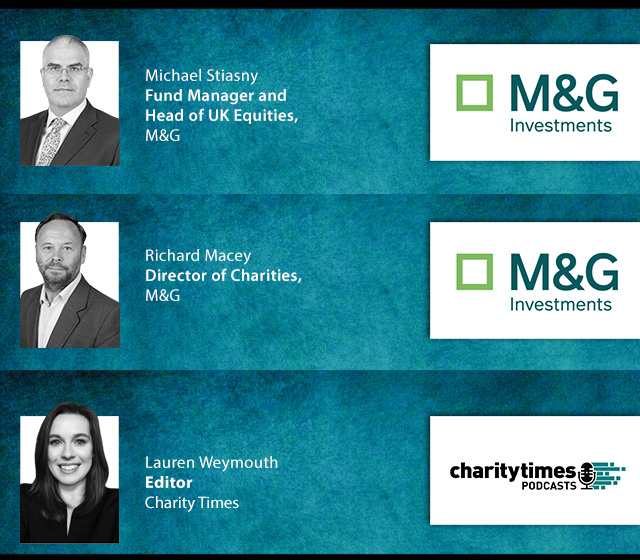
With charities facing increasing financial pressure and traditional income streams under strain, making investments work harder has never been more important. M&G’s Richard Macey and Michael Stiasny join Charity Times to discuss why equities remain a vital long-term asset class for charities, how organisations can balance income generation and growth, and the opportunities the current market environment may offer to help strengthen financial resilience.
Charity Times Awards 2023
Charity Times video Q&A: In conversation with Hilda Hayo, CEO of Dementia UK
Charity Times editor, Lauren Weymouth, is joined by Dementia UK CEO, Hilda Hayo to discuss why the charity receives such high workplace satisfaction results, what a positive working culture looks like and the importance of lived experience among staff. The pair talk about challenges facing the charity, the impact felt by the pandemic and how it's striving to overcome obstacles and continue to be a highly impactful organisation for anybody affected by dementia.




© 2021 Perspective Publishing Privacy & Cookies
Recent Stories