"Leadership is not the same for minoritised people"
_____________________________________________________________________
The term “authentic leadership” has been a phrase bandied around for quite a few years now. But are there leaders for whom being authentic is a privilege from which they are excluded?
I am currently developing a programme to support career women of colour into senior leadership roles. Research I commissioned to support this work shocked even me.
The literature is clear. Having minoritised characteristics actively prevents women of colour from being authentic leaders. They simply can’t afford to be authentic. To rise up the leadership ladder they need to sacrifice authenticity for self-protection.
While my work focuses on women of colour, much of what I discovered will relate to others with minoritised characteristics, and particularly those who have more than one.
Take research from the Runnymede Trust and the Fawcett Society (2022) which showed that 75% of women of colour have experienced racism at work. If you had experienced this, would you want to open yourself up to further abuse by being “authentic”?
2024 research by Williams and Okafar shows women of colour are actively pressured NOT to be authentic. They are pushed to modify their appearance, change their communication style and delete cultural expressions to fit into organisational norms.
More 2024 research by Davis and Ahmed shows that women of colour are forced to make active, strategic choices about when to be authentic leaders and balance this with organisational expectations of them.
I set up and run a network of women leaders of colour called Together We Rise. In discussing authentic leadership, members raised a plethora of issues, e.g.:
• It is harder to authentically be yourself at work given colleagues around you see (and judge) you through filters of conscious and unconscious bias
• Experiences of covert and unconscious bias make it feel psychologically unsafe to be authentic
• Women leaders of colour are under continuous pressure to prove and prove again why they should be at the table, which impedes authenticity
The systemic and interpersonal biases women leaders of colour face mean they are regularly having to manage and contain their emotions at work, making it much harder to be or want to be authentic.
There are ways to be an authentic leader as a minoritised person - if that’s what you want. We just have to be more planned about it.
We need to get ultra specific and detailed in our thinking about what authenticity at work means. Which aspects of “me” do I want to bring to work? Which aspects of “myself” might I share with some and not others?
We have to calculate when it is either safe or necessary to be authentic at work. E.g. We need to work out in advance within what specific settings is it safe to be authentic. We have to identify the risks specific to working in our organisation of being authentic, and then how to mitigate or avoid those risks.
It can be confusing as a minoritised leader to know how to respond to the constant expectations to be authentic. It is important to pause and to recognise that we have a choice. None of us owe anyone authenticity. It is up to us to make up our own minds about whether and how to show up as an authentic leader, and to decide what that looks like.
Leadership is not the same for minoritised people.
The sooner we realise that approaches to leadership are not a “one size fits all”, the easier it will be for minoritised people to build a leadership career, so the rest of us can benefit from their talent and expertise.
This piece was first published in the Spring issue of Charity Times available here


Latest News
-
Arts venue charity to close after ‘exhausting all possible alternatives’
-
Hospice charity repeatedly targeted by criminals launches appeal to improve security
-
Children’s charity refreshes brand to be clearer ‘about who it is’
-
Monday movers – 12 October 2026
-
Council terminates charity’s £8.57m children's care home contract early amid staffing concerns
-
Charity boss shows her 'vulnerability' as she posts emotional grant rejection video


Beyond the funding squeeze: Using equities to secure your charity’s future
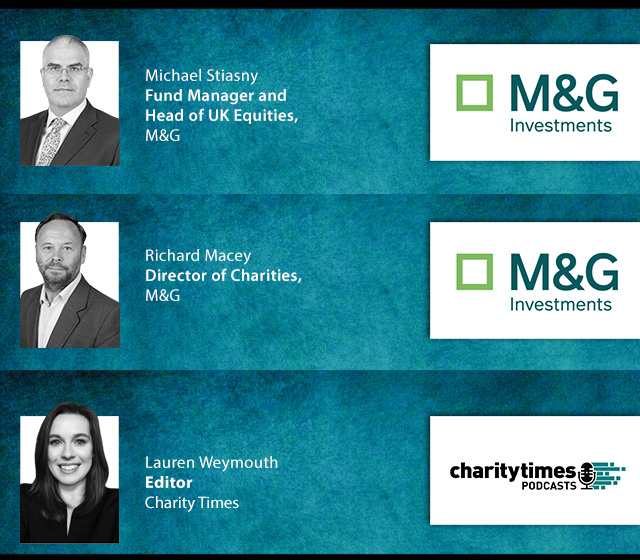
With charities facing increasing financial pressure and traditional income streams under strain, making investments work harder has never been more important. M&G’s Richard Macey and Michael Stiasny join Charity Times to discuss why equities remain a vital long-term asset class for charities, how organisations can balance income generation and growth, and the opportunities the current market environment may offer to help strengthen financial resilience.
Charity Times Awards 2023
Charity Times video Q&A: In conversation with Hilda Hayo, CEO of Dementia UK
Charity Times editor, Lauren Weymouth, is joined by Dementia UK CEO, Hilda Hayo to discuss why the charity receives such high workplace satisfaction results, what a positive working culture looks like and the importance of lived experience among staff. The pair talk about challenges facing the charity, the impact felt by the pandemic and how it's striving to overcome obstacles and continue to be a highly impactful organisation for anybody affected by dementia.




© 2021 Perspective Publishing Privacy & Cookies
Recent Stories