Working in communications, you quickly learn that a good story isn't enough. Unless it's tailored for its intended audience it will sink without trace. And what worked ten years ago is unlikely to work today.
______________________________________________________________________
What do you feel optimistic about?”
My team and I were recently asked this on a gloomy Monday morning. What initially felt like an odd question soon proved to be an eye-opening one.
We spoke about examples of determined campaigns, changing lives, sparking hope. That's the power of good communications. Compelling, human-led storytelling can change minds and inspire action.
It's an especially vital tool for charities, where such powerful stories are plentiful.
But working in communications, you quickly learn that a good story isn't enough. Unless it's tailored for its intended audience it will sink without trace. And what worked ten years ago is unlikely to work today.
Charities have always worked under pressure. But this has accelerated rapidly. Despite growing demand for their services, central funding decreased by 33% from 2022 to 2023 and local authority funding fell by 23% between 2009-2010 and 2023. Last year the government announced it would cut Official Development Assistance (ODA) from 0.5% to 0.3% by 2027.
Such ODA cuts would have been unthinkable 20 years ago, when millions proudly wore 'Make Poverty History' bands. However, in post-Crash, post-pandemic, pre-war Britain, the conditions have changed. The country’s concern about the wellbeing of others is still there, but it competes with anxieties that feel closer to home: cost of groceries and faltering public services.
As a Charity Times reader, you will likely see the distinction as a false one. After all, reducing our assistance to the rest of the world makes us less safe. Those of us working in and around the charity sector know this, but it would be wrong to assume that everyone else thinks this way. Good communications knows its audience.
This hugely challenging environment presents an opportunity for charities, particularly those seeking political change. Decision-makers dealing with multiple, competing crises are not beyond reach, they just need to be engaged using language that recognises, rather than ignores, the current political landscape.
Economic growth, for example, is this government’s modus operandi. Health charities might therefore wish to highlight how important a healthy population is to a healthy economy – both in terms of a productive workforce but also reduced pressure on the NHS. Homelessness charities could make clear that theirs is an issue which can help to limit the amount of money cash-strapped councils have to spend on temporary accommodation.
Those working on international climate action may benefit from talking up the business case. An overseas wind power project, for instance, means commercial opportunities for UK firms.
Similarly salient is security. Political leaders are waking up to the danger of being overly dependent on imported fossil fuels. Climate advocates can make the argument that clean energy is not a progressive indulgence, but critical to national security. Organisations campaigning for more support to help developing countries manage water crises could do so on the basis of preventing civil unrest.
These frames work for charities whose audiences are policy makers. For others, different language will be needed. Strategic communications is about tailoring your approach.
Rapid changes in recent years also extend to our media landscape. Communications teams can no longer rely on a single press release to generate blanket coverage as they once did. And even on social media – once a direct line to sympathetic audiences – changing algorithms, endless scroll and shifts in platform popularity make it harder than ever to cut through.
A strategic, effective approach to digital communications means focusing on shared values, amplifying lived experiences and highlighting work being undertaken on the ground.
Charity works. The UK third sector helps deliver essential public services and employ hundreds of thousands of people. The voluntary sector contributed over £17 billion to the UK economy in 2020/21. Between 2000 and 2024, when ODA was higher, the proportion of the global population living in extreme poverty fell from 29.3% to 8.5%.
The context has shifted, but the starting point for good, strategic communications hasn't: know your audience and what their priorities are. By using these principles to reimagine how they communicate their causes - whether to the public, the sector, or Westminster - charities can inspire Britons to demand more.
_________________________________________________________________
Felix is Head of News at di:ga communications, a strategic communications consultancy that works with non-profit organisations.


Latest News
-
Arts venue charity to close after ‘exhausting all possible alternatives’
-
Hospice charity repeatedly targeted by criminals launches appeal to improve security
-
Children’s charity refreshes brand to be clearer ‘about who it is’
-
Monday movers – 12 October 2026
-
Council terminates charity’s £8.57m children's care home contract early amid staffing concerns
-
Charity boss shows her 'vulnerability' as she posts emotional grant rejection video


Beyond the funding squeeze: Using equities to secure your charity’s future
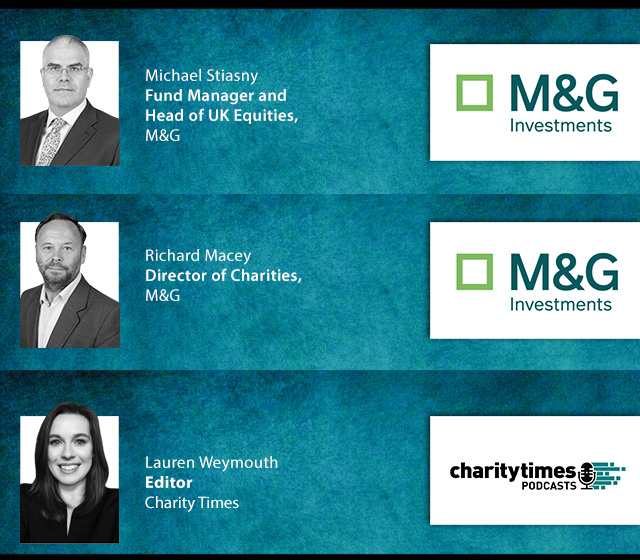
With charities facing increasing financial pressure and traditional income streams under strain, making investments work harder has never been more important. M&G’s Richard Macey and Michael Stiasny join Charity Times to discuss why equities remain a vital long-term asset class for charities, how organisations can balance income generation and growth, and the opportunities the current market environment may offer to help strengthen financial resilience.
Charity Times Awards 2023
Charity Times video Q&A: In conversation with Hilda Hayo, CEO of Dementia UK
Charity Times editor, Lauren Weymouth, is joined by Dementia UK CEO, Hilda Hayo to discuss why the charity receives such high workplace satisfaction results, what a positive working culture looks like and the importance of lived experience among staff. The pair talk about challenges facing the charity, the impact felt by the pandemic and how it's striving to overcome obstacles and continue to be a highly impactful organisation for anybody affected by dementia.




© 2021 Perspective Publishing Privacy & Cookies
Recent Stories