Dr Clare Mills, co‑CEO of CFG, explores why “disintermediation” is fast becoming one of the most important, and overlooked, concepts charity leaders need to understand, as AI reshapes how people find, trust and use information.
______________________________________________________________________
The irony. It’s not lost on me that I could not remember the word ‘disintermediation’ and asked Copilot to tell me the word I was thinking of…
If you’re asking ‘what even is disintermediation?’ you won’t be alone. It’s one of those new words that’s not widely used, and it’s not particularly catchy either. I don’t think it’ll be the word of the year. It certainly isn’t skibidi.
But if AI was the cool topic for 2024, which hasn’t gone away in 2025, then charity leaders all need to be thinking a lot more about disintermediation in 2026 as a key factor in our AI thinking and decision-making.
So what is it? Disintermediation is a term describing the reduction of intermediaries between producers and consumers. A farm shop selling potatoes directly to locals removes wholesalers, distributors and supermarkets from the chain between field and fork.
In the world of knowledge and AI, disintermediation is the removal of traditional intermediaries between information and consumers – happening when we use search engines or generative AI tools like ChatGPT, Copilot or Gemini to find and interpret information.
Why does this matter for charity leaders? In the charitable sector, we’re all stretched thin. I’m writing this with my laptop balanced on my knees at the end of a 12 hour day (no sympathy please) and I bet many of you have had similar days recently. We look for hacks to get things done quicker – and so do our colleagues.
So the issue with disintermediation? Doesn’t it just speed things up? Well, yes it can. Using a free generative AI tool can give you fast and cheap but currently, quality is where it can let us down.
It’s easy to treat generative AI results as ‘the answer’ rather than ‘an answer’ and forget how much critical thinking is being bypassed. According to Bain and Company research, about 80% of search users rely on AI summaries at least 40% of the time. The same study also shows that 60% of searches yield no clicks at all. If traffic to your website has plummeted, this is very likely why.
Am I saying we should unplug the internet? Absolutely not. I’m embracing the potential of generative AI in the workplace. My concern is about how we engage with our beneficiaries, the people and communities we serve.
Charities across the UK benefit from a high level of public trust. We hold a huge amount of information and knowledge about the causes we work on, whether that’s health, education, or (whisper it) charity finance. People turn to us for expert, reliable information to support them in challenging times.
Generative AI has the power to remove charities as valued intermediators – if people can find out everything from a ChatGPT search or Google summaries, why go further?
I’m sure there was a similar debate when people started using Google, Bing (did anyone use Bing?) or even Ask Jeeves, but this feels different. A search engine gathers sources for people to explore, whereas generative AI presents data as the answer. For charities sharing knowledge freely for public benefit, there’s a chance your work is included in AI-generated answers – but in competition with a huge range of other scraped data.
The challenge, then, for charities is to remain trusted and relevant, and to somehow continue to be heard by those that need us through the AI generated noise. We will need to find better (or new) ways to connect, engage and build relationships with our beneficiaries. We need to make sure we keep humans in the loop.
I don’t have many answers to the big question of responding to disintermediation. But it’s a question we do need to think about and find ways to address.
This piece was originally published in the Winter edition of Charity Times

Latest News
-
Arts venue charity to close after ‘exhausting all possible alternatives’
-
Hospice charity repeatedly targeted by criminals launches appeal to improve security
-
Children’s charity refreshes brand to be clearer ‘about who it is’
-
Monday movers – 12 October 2026
-
Council terminates charity’s £8.57m children's care home contract early amid staffing concerns
-
Charity boss shows her 'vulnerability' as she posts emotional grant rejection video


Beyond the funding squeeze: Using equities to secure your charity’s future
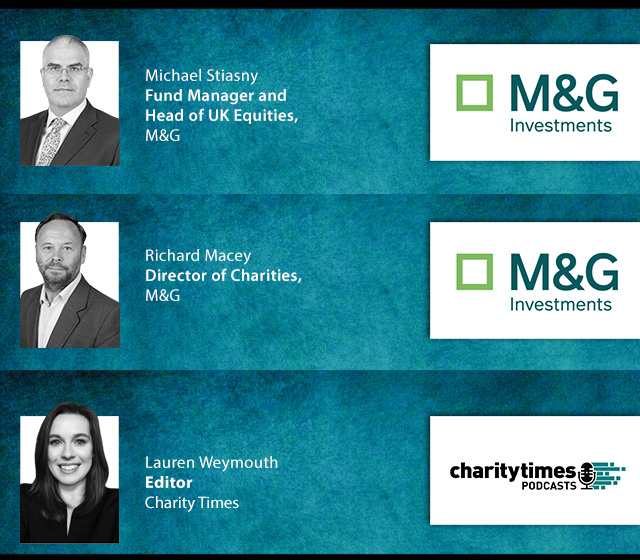
With charities facing increasing financial pressure and traditional income streams under strain, making investments work harder has never been more important. M&G’s Richard Macey and Michael Stiasny join Charity Times to discuss why equities remain a vital long-term asset class for charities, how organisations can balance income generation and growth, and the opportunities the current market environment may offer to help strengthen financial resilience.
Charity Times Awards 2023
Charity Times video Q&A: In conversation with Hilda Hayo, CEO of Dementia UK
Charity Times editor, Lauren Weymouth, is joined by Dementia UK CEO, Hilda Hayo to discuss why the charity receives such high workplace satisfaction results, what a positive working culture looks like and the importance of lived experience among staff. The pair talk about challenges facing the charity, the impact felt by the pandemic and how it's striving to overcome obstacles and continue to be a highly impactful organisation for anybody affected by dementia.




© 2021 Perspective Publishing Privacy & Cookies
Recent Stories