For the last two years, the Weston Charity Awards Small Charity Leaders survey has provided a barometer of the confidence and concerns of small charities.
This year, despite general political unrest and uncertainty, the sound of cautious optimism is emerging from the sector. The survey does also highlight concerns the role of central and local government on whose support they rely and even the sector's own ability to work effectively with larger organisations, particularly in the private sector.
Nearly two out of five (38 per cent) small charities expect their income to rise over the next year and a half (46 per cent) expect to maintain current income levels. Optimism is on the rise, with only one in eight (16 per cent) small charity leaders forecasting a drop in income in 2019 compared to a third expecting a fall at this point last year.
Growing confidence for the future is also reflected in small charities' impressive ambitions to expand their services next year. There is a significant increase in the number of charities saying they plan to help more people in the next 12 months - nearly four in five (78 per cent) in 2019 compared to nearly three in five at the end of 2017.
However, there is unease at the operating environment that charities will find themselves in. Over two thirds (69 per cent) of leaders say there is more uncertainty in their operating environment than in previous years. In the last year, a quarter had to deal with the impact of the withdrawal of a major funding source and more than one in 10 has closed services.
On top of this, the advent of increased regulation, including GDPR, leaves two thirds (71 per cent) of leaders saying they had struggled to meet the challenge. Other challenges were in recruiting for a key role (37 per cent) and setting up a new partnership was a challenge.
Indeed, building partnerships with the commercial sector was the skill most charities lacked. This year, over half (51 per cent) of small charities are seeking this skill, only second in priority to fundraising (57 per cent). Around two out of five (38 per cent) said both IT & digital skills and branding and communication expertise were top priorities for their charities.
For Charity Times advice on partnerships click here.

Latest News
-
Former Salvation Army worker struck off after alleged sex with ‘vulnerable’ ex-resident
-
British Heart Foundation reveals extent of retail losses as it starts closing 150 shops
-
Dan Francis: Thinking differently about charity leadership
-
Friday funding round up – 25 September
-
Lifeboat charity crew tracked then subjected to ‘inflammatory’ social media attack
-
Arts Council England pledges to boost ‘local expertise’ in funding decisions





Beyond the funding squeeze: Using equities to secure your charity’s future
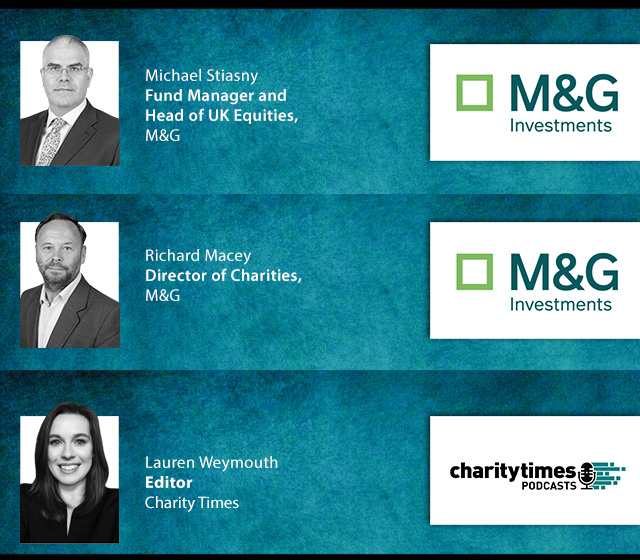
With charities facing increasing financial pressure and traditional income streams under strain, making investments work harder has never been more important. M&G’s Richard Macey and Michael Stiasny join Charity Times to discuss why equities remain a vital long-term asset class for charities, how organisations can balance income generation and growth, and the opportunities the current market environment may offer to help strengthen financial resilience.
Charity Times Awards 2023
Charity Times video Q&A: In conversation with Hilda Hayo, CEO of Dementia UK
Charity Times editor, Lauren Weymouth, is joined by Dementia UK CEO, Hilda Hayo to discuss why the charity receives such high workplace satisfaction results, what a positive working culture looks like and the importance of lived experience among staff. The pair talk about challenges facing the charity, the impact felt by the pandemic and how it's striving to overcome obstacles and continue to be a highly impactful organisation for anybody affected by dementia.




© 2021 Perspective Publishing Privacy & Cookies
Recent Stories