
Affluent areas in the South East and South West of England have the highest concentration of small charities than areas of disadvantage, research has found.
While a third (33.3%) of charities with an income of between £10,000 and £50,000 a year are based in the most affluent areas in England and Wales, the proportion dips to just under a quarter (24.5%) in the least affluent areas.
The difference is more pronounced among micro charities with an income of less than £10,000 a year. Among this group 36.2% are based in the most affluent areas, while 25.8% are in the least well-off areas.
The findings have emerged in the Third Sector Trends 2022 survey report, published by North East of England based Community Foundation.
The likely reason for small charities to be based in wealthy areas according to the report “is that social capital is stronger and people have greater financial resources at their disposal”.
This incentivises charitable work in these areas and increases the likelihood of those living their setting up their own charities.
In contrast larger charities are more likely to be based in poorer areas. Among the largest charities, with an income of more than £1m, 6.9% are in the least affluent areas, while 3.3% are in the most affluent.
Similarly, among charities with an income of more than £250,000, the report found that 114.4% are based in the poorest areas, while 5.4% are in the most affluent.
“In poorer areas, there is a stronger concentration of larger charities for several interrelated reasons,” states the report.
“At a pragmatic level, it is cheaper for organisations to establish themselves in less affluent areas because properties and rents may be lower.”
Other reasons is that larger charities are “more likely to engage in activities that meet urgent or critical needs” and they are more likely to be given grants and contracts earmarked to improve areas of disadvantage.
Regional divide
The concentration of small charities in affluent areas has created stark regional differences, per 1,000 of population, with 4.2 in the South West but only 2.6 in Yorkshire and Humber.
While there are 3.6 charities per 1,000 people in the South East, this proportion falls to 2.7 in both the North East and North West of England.
“The third sector is not distributed evenly across England and Wales. This may mean that some areas are better served than others,” states the study.


Latest News
-
Staff walkouts at V&A to escalate amid calls for improved pay
-
Refuge merges with healthy relationships charity
-
Free system change evaluation guide launches for charities
-
Angela Biden - Why Rigorous Evaluation Matters More Than Ever
-
Women and LGBT people ‘fair game for hate’ under proposed trustee banning powers
-
Assess criminal risks before accepting crypto donations, regulator urges charities





Beyond the funding squeeze: Using equities to secure your charity’s future
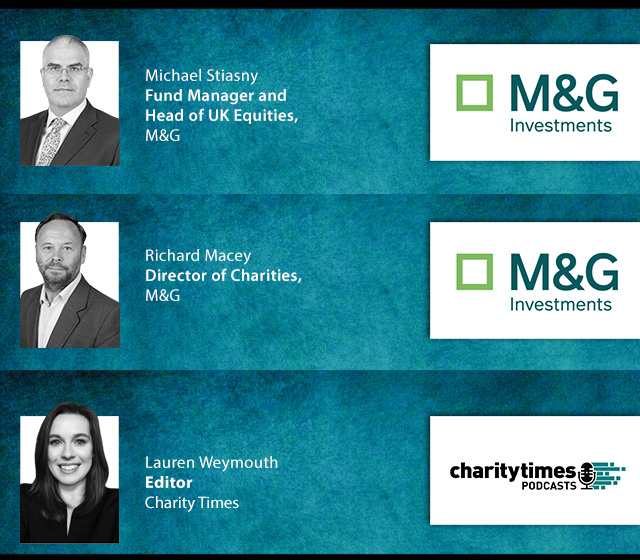
With charities facing increasing financial pressure and traditional income streams under strain, making investments work harder has never been more important. M&G’s Richard Macey and Michael Stiasny join Charity Times to discuss why equities remain a vital long-term asset class for charities, how organisations can balance income generation and growth, and the opportunities the current market environment may offer to help strengthen financial resilience.
Charity Times Awards 2023
Video Q&A: Benefits of bespoke investment vs pooled funds for the third sector
In this Charity Times video Q&A, editor Lauren Weymouth speaks to Ed Caswell of RBC Brewin Dolphin to explore how charities can align investment strategies with their mission, balance income and growth, and adapt to changing needs. He discusses discretionary management, responsible investment and the importance of effective governance and regular portfolio reviews.




© 2021 Perspective Publishing Privacy & Cookies
Recent Stories