Two in five charity workforces are blighted by overwork and presenteeism, where employees work despite being ill, a survey has revealed.
The survey of 121 UK charities also found that almost a quarter are reporting high levels of burnout.
Burnout and overworking challenges among staff have emerged as just over half of charities are reporting they are struggling to full skill and talent gaps.
More than a third of UK charities have a turnover rate of between 10% and 20% over the last three years.
Nine in ten say they unable to compete with salaries offered in the private sector.
The findings among UK charities have been revealed by human resources firm Personio Foundation within its global survey of staffing and recruitment issues among more than 1,000 not for profit organisations across 115 countries.
Just under a quarter of UK charity representatives surveyed also revealed they are struggling with career development and pathway issues. One in ten say they have high levels of employee turnover.
Lack of time and money are among barriers cited to improving the situation, UK charities warn.
Almost two in five say constrained costs and budget are a barrier, meanwhile more than half say they do not have enough time or resources in human resources to put towards strategic work to improve recruitment and retention.
A fifth say there is too much administration involved and almost a quarter of charities do not have someone specifically responsible for HR.
Onboarding new employees is among HR tasks that take up charities’ time, cited by two in five UK survey respondents.
Other time-consuming processes include the interview process and organising feedback and performance reviews with employees.
Action being taken to help retain workers includes offering learning and development opportunities and flexible working options. These are cited by just over three in five UK charities surveyed.
Offering staff “more appreciation and recognition of work” and improving benefits and salaries are other improvements mentioned more than half of charities.
More than two in five say they are improving performance feedback and review processes.
Small charities
Half of all charities globally surveyed have fewer than ten members of staff.
Personio says that among small charities “HR tasks often fall to the CEOs themselves, who therefore have to take on HR management in addition to other key tasks such as fundraising and project management”.
In addition, around half of all charities surveyed globally do not employ a professional full time member of staff for people management.
In the UK only around a third of charities have a full time HR manager, with the remaining two thirds employing only a part time manager or do not have a dedicated HR role.
A lack of investment in dedicated HR staff and digital tools to help with time consuming recruitment and retention tasks are key challenges facing charities, says Personio Foundation.
Its managing director Philipp Richter says that the use of digital HR tools “is still very low” among charities.
“In addition to traditional project funding, the focus should be more on strategic investments — for example in personnel management and organisational processes,” he said.
“This is the only way for NGOs to create a sustainable organisation that provides the best possible support for their mission and the employees who implement it."


Latest News
-
Council terminates charity’s £8.57m children's care home contract early amid staffing concerns
-
Charity boss shows her 'vulnerability' as she posts emotional grant rejection video
-
English speaking fundraising ideas may be ‘crowding out’ local strategies
-
Friday funding round up – 9 October
-
Charity charged with corporate manslaughter following fatal boating incident
-
CEO retires after 40 years with mental health charity


. by Robin Kent.jpg)


Beyond the funding squeeze: Using equities to secure your charity’s future
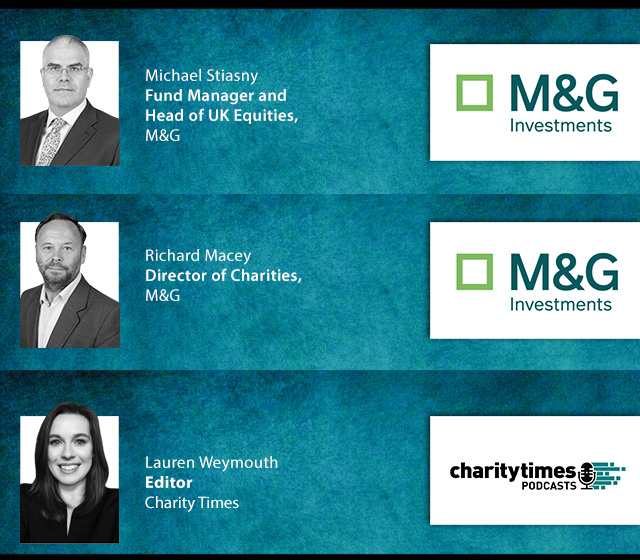
With charities facing increasing financial pressure and traditional income streams under strain, making investments work harder has never been more important. M&G’s Richard Macey and Michael Stiasny join Charity Times to discuss why equities remain a vital long-term asset class for charities, how organisations can balance income generation and growth, and the opportunities the current market environment may offer to help strengthen financial resilience.
Charity Times Awards 2023
Charity Times video Q&A: In conversation with Hilda Hayo, CEO of Dementia UK
Charity Times editor, Lauren Weymouth, is joined by Dementia UK CEO, Hilda Hayo to discuss why the charity receives such high workplace satisfaction results, what a positive working culture looks like and the importance of lived experience among staff. The pair talk about challenges facing the charity, the impact felt by the pandemic and how it's striving to overcome obstacles and continue to be a highly impactful organisation for anybody affected by dementia.



© 2021 Perspective Publishing Privacy & Cookies
Recent Stories