Responding to the NAO report on government grants published today, the National Council for Voluntary Organisations, which represents charities, has noted that grants to charities are a tiny proportion of the total grant funding the NAO report examines.
The NAO report covers £292bn of government grants, of which £61bn goes to recipients outside the public sector.
NCVO’s analysis shows UK charities received £2.56bn in government grant income in 2011/12.
NCVO says there are clear advantages to grant funding – grants to voluntary organisations are a simple and efficient way for government to meet its objectives and avoiding the bureaucracy and costs of contracting.
And NCVO notes grants from government are a rapidly declining part of the funding mix for charities – with contracts to deliver services now significantly more common than grants.
Andrew O’Brien, senior policy analyst at the National Council for Voluntary Organisations, said: "Grants are a critical part of the funding mix for voluntary organisations.
"Unfortunately, grants to charities are diminishing rapidly as a funding mechanism used by government – having more than halved in value within the last decade.
‘It’s right that grant funding is scrutinised, and we welcome the NAO’s call for better data collection on grants.
"But it is important to remember that grants to charities can be an efficient and effective way for government to meet its objectives and have the advantage of simplicity.
"If government wants to draw on the expertise of charities, it is important that they continue to use grants as one of their funding options.
‘Grants enable a public body to identify an organisation which can deliver the work it needs and let them get on with it. If they don’t deliver, they don’t get the grant again.
"Freed from bureaucracy and prescriptive contract terms, charities can be more innovative in creating services that deliver the best results.
"Grants are particularly useful in funding very localised or niche services, where the costs of running a procurement exercise would be disproportionate.
"A grant also avoids the pitfalls associated with more complicated contracting arrangements.
"We have seen how the payment mechanisms in the Work Programme, for example, have caused difficulty for contractors, government, and consequently for the people it is intended to help."


Latest News
-
National Trust pauses TikTok ads after AI ‘error’
-
City & Guilds scraps permanent chief hire at the 11th hour
-
Education charity fails to file accounts for last three financial years
-
‘Perfect storm’ of financial pressures forces social inclusion charity to close
-
Yvonne Tulloch : Digital or in person? Why charities should design for both
-
Arts venue charity to close after ‘exhausting all possible alternatives’





Beyond the funding squeeze: Using equities to secure your charity’s future
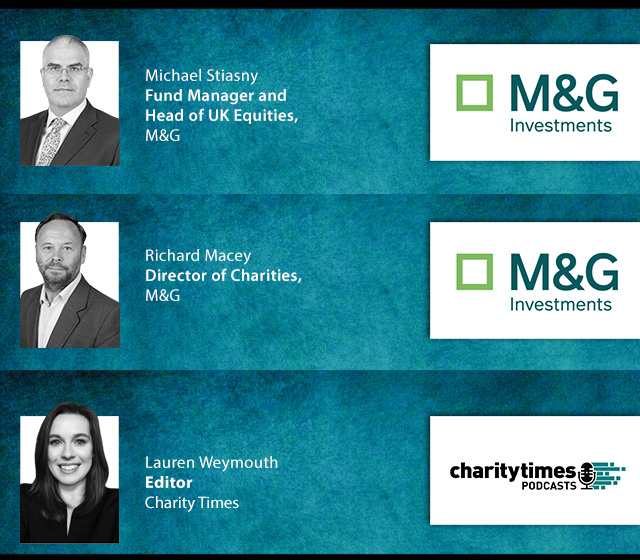
With charities facing increasing financial pressure and traditional income streams under strain, making investments work harder has never been more important. M&G’s Richard Macey and Michael Stiasny join Charity Times to discuss why equities remain a vital long-term asset class for charities, how organisations can balance income generation and growth, and the opportunities the current market environment may offer to help strengthen financial resilience.
Charity Times Awards 2023
Charity Times video Q&A: In conversation with Hilda Hayo, CEO of Dementia UK
Charity Times editor, Lauren Weymouth, is joined by Dementia UK CEO, Hilda Hayo to discuss why the charity receives such high workplace satisfaction results, what a positive working culture looks like and the importance of lived experience among staff. The pair talk about challenges facing the charity, the impact felt by the pandemic and how it's striving to overcome obstacles and continue to be a highly impactful organisation for anybody affected by dementia.




© 2021 Perspective Publishing Privacy & Cookies
Recent Stories