Partnerships involving Macmillan Cancer Support and the World Wildlife Fund and businesses have jointly topped this year’s ‘most admired corporate-non-profit partnerships’ rankings.
The C&E Advisory poll among charity and corporate partnership professionals found that MacMillan’s link up with Greene King and WWF’s relationship with IKEA were the most admired during the year.
Greene King’s partnership with Macmillan Cancer Support began in 2012 and has evolved to include strategic collaboration, customer engagement, community activity, health awareness and practical support for people living with cancer. The link up has raised £27m to date.
“For over 14 years, Greene King colleagues, customers and communities have gone above and beyond to help make sure nobody faces cancer alone,” said Macmillan Cancer Support chief executive Gemma Peters.
“We’re incredibly proud of what we’ve achieved together and excited for what we can achieve next for people living with cancer.”
Meanwhile, IKEA and WWF have worked together since 2002, on conservation issues including forests, agriculture, freshwater, climate and biodiversity.
“This recognition reflects the power of long-term collaboration,” said WWF Sweden partnership manager Johan Degerheim.
“For more than two decades, WWF and IKEA have combined our strengths to protect and restore ecosystems, support local communities and demonstrate how business and NGOs can drive lasting change.”
Last year top spot went to Tesco and its healthcare partnerships with Cancer Research UK, the British Heart Foundation and Diabetes UK. This takes second place this year.
Macmillan also takes third sport in addition to its first placing, for its partnership with Boots.
Impact of ESG scrutiny
This survey’s findings have been revealed in C&E’s 2026 Corporate-Non-Profit Partnerships Barometer.
This found that nine in ten of all organisations surveyed expect their long-term strategic partnerships to be more important over the next three years.
Growing scrutiny of environmental, social and governance (ESG) is a factor in companies looking to bolster their engagement with charities, the study found.
Just over three in ten corporates expect their links with good causes to increase in response to ESG pressure, up from just over one in five last year.
Seven in ten firms say their charity link ups have helped improve their business practices.
Eight out of ten charities and corporates expect to maintain their current investment of funding, time and resources to their cross sector partnerships.
Profits up but giving down
However, C&E’s findings have been revealed that FTSE 100 firms are slashing how much they give to good causes despite profits soaring.
Their donations, grants and fundraising for good causes 17 years ago equated to 1.7% of pre-tax profits and amounted to £1.84bn, according to the research by Charities Aid Foundation.
But now they give just 0.8% of their profits to charity, amounting to just £1.69bn. This is despite their combined profits almost doubling since 2009.


Latest News
-
Arts venue charity to close after ‘exhausting all possible alternatives’
-
Hospice charity repeatedly targeted by criminals launches appeal to improve security
-
Children’s charity refreshes brand to be clearer ‘about who it is’
-
Monday movers – 12 October 2026
-
Council terminates charity’s £8.57m children's care home contract early amid staffing concerns
-
Charity boss shows her 'vulnerability' as she posts emotional grant rejection video


Beyond the funding squeeze: Using equities to secure your charity’s future
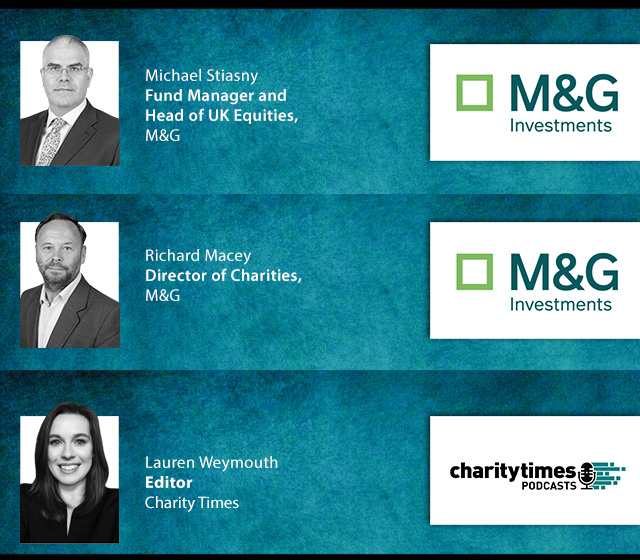
With charities facing increasing financial pressure and traditional income streams under strain, making investments work harder has never been more important. M&G’s Richard Macey and Michael Stiasny join Charity Times to discuss why equities remain a vital long-term asset class for charities, how organisations can balance income generation and growth, and the opportunities the current market environment may offer to help strengthen financial resilience.
Charity Times Awards 2023
Charity Times video Q&A: In conversation with Hilda Hayo, CEO of Dementia UK
Charity Times editor, Lauren Weymouth, is joined by Dementia UK CEO, Hilda Hayo to discuss why the charity receives such high workplace satisfaction results, what a positive working culture looks like and the importance of lived experience among staff. The pair talk about challenges facing the charity, the impact felt by the pandemic and how it's striving to overcome obstacles and continue to be a highly impactful organisation for anybody affected by dementia.



© 2021 Perspective Publishing Privacy & Cookies
Recent Stories