
Across Europe more than a quarter of charities are reducing their staffing numbers due to the cost-of-living crisis, a survey has found.
The survey of 671 sector representatives from across 20 European countries found that 28% of charities have been forced to let staff go over the last year, as they look to meet increasing costs, rising demand and a squeeze on income streams.
The same proportion have seen demand increase over 2023 and donations fall.
Meanwhile, just over a quarter saw a fall in individual supporters, a fifth are plundering their reserves and the same proportion are concerned about the future.
The survey also found 14% are changing the way they deliver services and 12% are cutting back on support they can offer.
Just 6% say they are not being affected by the cost-of-living crisis across Europe.
The survey has been published jointly by the European Fundraising Association, the Chartered Institute of Fundraising (CIoF), and Salesforce. More than a quarter of respondents are from the UK, more than a fifth from Germany and just under a fifth were from France and the Netherlands.
“The nonprofit sector is currently facing its biggest collective set of opportunities,
challenges and risks in our lifetime,” said CIoF executive director of membership and operations Rob Cope.
“It’s a perfect storm of rising demand, growing workload and squeezed income that means together, as a sector, we must answer the big question of how we can all do more with less.”
He added that the use of AI and new technologies to improve efficiency “is a critical lever of change that we cannot ignore”.
The survey found that almost one in eight charities across Europe are “excited” by AI and are already using new technologies.
However, more than one in five say they are only “optimistic but cautious” about new technologies and more than one in six do not see their organisation using AI.
Data security, privacy, loss of human expertise and job displacement are among concerns around AI raised by charities.
EFA president Charlotte Rydh added: “Having this pan-European view of the nonprofit sector, with its trends, challenges and opportunities, helps us all by enabling individual nonprofits to benchmark, as well as informing the work of national fundraising associations, networks like our own, and others supporting the sector.”


Latest News
-
Millionaire charity founder's legacy mismanaged by trustees, regulator finds
-
Charity reports itself to police and regulator after ‘significant concerns’ emerge
-
Civil society is ‘critical to the success of our country’, says PM
-
Homelessness charity takes on housing association as a subsidiary
-
Staff walkouts at V&A to escalate amid calls for improved pay
-
Refuge merges with healthy relationships charity





Beyond the funding squeeze: Using equities to secure your charity’s future
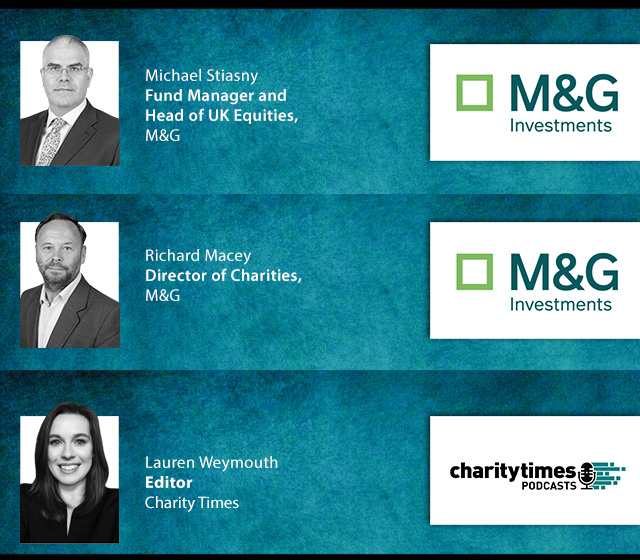
With charities facing increasing financial pressure and traditional income streams under strain, making investments work harder has never been more important. M&G’s Richard Macey and Michael Stiasny join Charity Times to discuss why equities remain a vital long-term asset class for charities, how organisations can balance income generation and growth, and the opportunities the current market environment may offer to help strengthen financial resilience.
Charity Times Awards 2023
Video Q&A: Benefits of bespoke investment vs pooled funds for the third sector
In this Charity Times video Q&A, editor Lauren Weymouth speaks to Ed Caswell of RBC Brewin Dolphin to explore how charities can align investment strategies with their mission, balance income and growth, and adapt to changing needs. He discusses discretionary management, responsible investment and the importance of effective governance and regular portfolio reviews.




© 2021 Perspective Publishing Privacy & Cookies
Recent Stories