



Donors, particularly young people, are more likely to give to a charity that has been criticised by the media and on social media, latest research has revealed.
More than a quarter (27%) of the public say they are motivated to give to a good cause in reaction to criticism made against it.
This proportion rises to 48% among generation Z. This tech-savvy demographic’s group of teenagers and donors in their 20s are the most likely to be concerned about the environment, poverty and crises such as Covid-19.
The findings have been revealed by Enthuse in its latest quarterly Donor Pulse report on fundraising trends.
It explains that donors' reaction to criticism is known as “inverse giving”.
“Traditionally, the thinking has been that getting positive headlines behind a cause has been a great driver for donations,” said Enthuse.
It says that while there is truth in this theory, as more than a quarter of people give due to positive coverage, Enthuse adds “it seems that donations can just as easily be inspired by criticism too”.
☀️Donor Pulse Summer has arrived! ☀️
— Enthuse (@enthuseco) June 30, 2023
Our latest donor insight report covers:
📰The phenomenon of inverse giving
🔁The outlook for recurring donations
👩💻Charity as a service
Get your free copy 👉https://t.co/x3CIH6OHgp#DonorPulse #DigitalFundraising
RNLI ‘overwhelmed’ by support
Among the most high-profile cases of a charity garnering further support following criticism has involved the Royal National Lifeboat Institution (RNLI).
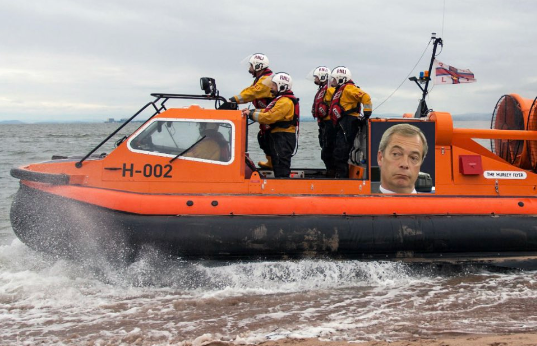
In 2021 it said it was “overwhelmed” by support after its life saving operations in the English Channel were criticised by among others Nigel Farage. The former UKIP leader had accused the charity of being “a taxi service for illegal immigration”.
Following Farage’s criticism, a crowd funding campaign was launched by charity supporter Simon Harris to fundraise for the charity, initially to buy a hovercraft called ‘The Flying Farage’.
The campaign continues to collect money, with more than £235,000 raised as of July this year for the RNLI from 14,700 donations.
So on the one hand, anti-RNLI rhetoric is rampant on here and people threaten to pull their donations, and on the other hand The Flying Farage Appeal has just passed £235,000 … https://t.co/pXJyJr8NfQ pic.twitter.com/tkWh8Htbxk
— Simon Harris - Man Behaving Dadly (THAT’S DADLY) (@simonharris_mbd) June 26, 2023
One donor, who gave £20 in June said: “I’m proud to be an RNLI supporter and they do a fabulous job of saving lives at seas with no questions and no judgement”.
Another, who gave £10 last month, said: “I admire the work of the RNLI. Such brave and compassionate people."
Last year the NCVO urged charities to be “braver” in tackling culture war threats in the media.
Enthuse founder and chief executive Chester Mojay-Sinclaire added: “The concept of ‘inverse giving’ is an interesting one for charities because it shows that taking a bold stance on social issues may be rewarded with donations, whether it receives a positive or negative reaction in the media - provided charities are in tune with the sentiment of their supporters.”






Recent Stories