
The Royal Society for the Protection of Birds (RSPB), the World Wildlife Fund (WWF) and the National Trust have launched a joint campaign to improve public involvement in UK policy debates around nature.
The charities’ People’s Plan for Nature campaign is inviting people to share their ideas on protecting the environment and develop a set of policies to be handed to Prime Minister Liz Truss and environment secretary Ranil Jayawardena.
This follows concerns from conservation charities over current government environmental policy, in particular the government's support in last week’s mini-budget for the expansion of fossil fuel and fracking as well as relaxing of planning laws in 38 ‘investment zones’ across England.
Following the mini-budget the RSPB, National Trust and Wildlife Trusts criticised Chancellor of the Exchequer Kwasi Kwarteng’s investment zone plans. They also fear the government will abandon a scheme to reward farmers who protect nature.
“This government, elected on their greenest ever manifesto, is now contemplating breaking its promises on vital protections for the UK’s nature, risking catastrophic consequences,” said the three chief executives, National Trust’s Hilary McGRady, RSPB’s Beccy Speight and WWF’s Tanya Steele in a joint statement.
“From abandoning fundamental legal protections for wildlife to failing farmers committed to sustainable agriculture, this would be an attack on nature at the worst possible time.
“The desire to defend nature unites people in every community from Caerphilly to Cumbria, Antrim to Aberdeen, and we must all be part of the conversation about how we protect and restore it. Today’s People’s Plan For Nature is vital for us all to have our voices heard – nature has never needed us more.”
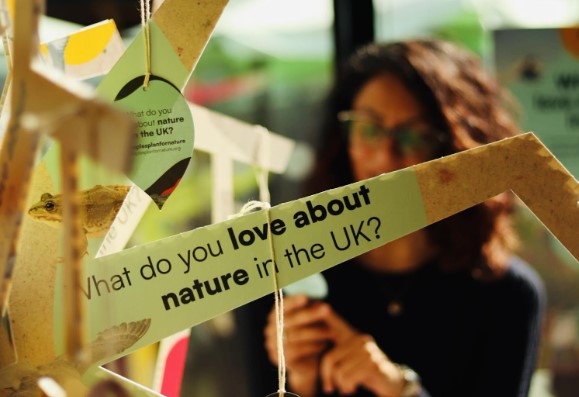
The charities are urging people to submit their views online before October 30. In addition, the public will be invited to add their ideas via a network of tree installations at art centres and National Trust venues.
To promote the campaign the charities have released the results of a survey showing that more than eight in ten adults believe nature is under threat.
Half said they are will to take action themselves, but 42% say they do not feel empowered to do so.
Action to clean up rivers, waterways and seas is the top priority among the public, followed by greater legal protection for nature, particularly in the planning system.
Funding to ensure farmland is nature friendly and the creation of more wildlife reserves are among other priorities, according to the survey of more than 8,500 adults.


Latest News
-
Scope apologies after axing choir’s performance over founder’s gender-critical views
-
Major funder ‘aware of the risks’ as it tests using AI to assess applications
-
Charities share £450,000 in funding from housing partnership
-
CEO of social entrepreneurs' funder to step down after 11 years
-
Friday funding round up – 23 October
-
Hospice charity consults staff on restructure plans amid £1.8m deficit

.jpg)
Video Q&A: In conversation with Vicki Sellick MBE, CEO of Good Things Foundation
Vicki Sellick MBE, CEO of Good Things Foundation joins Charity Times editor, Lauren Weymouth to discuss her leadership journey, the organisation’s new strategy and the findings of the Digital Nation 2026 report. She explores the challenges of digital inclusion, the opportunities and risks of AI, and how the sector can ensure nobody is left behind.
Video Q&A: Benefits of bespoke investment vs pooled funds for the third sector
In this Charity Times video Q&A, editor Lauren Weymouth speaks to Ed Caswell of RBC Brewin Dolphin to explore how charities can align investment strategies with their mission, balance income and growth, and adapt to changing needs. He discusses discretionary management, responsible investment and the importance of effective governance and regular portfolio reviews.
Charity Times Awards 2023


© 2021 Perspective Publishing Privacy & Cookies
Recent Stories