The Charity Commission has today published its new Risk Framework with information on how the Framework will be applied.
The Framework explains to trustees, charity advisers, and the wider public the Commission's approach to regulation and how it assesses risks affecting charities, the wider charity sector, and public confidence.
The Risk Framework was developed following the Commission’s Strategic Review consultation and subsequent restructuring in the light of the Commission’s funding being reduced by a third in real terms over the four year spending period.
The framework replaces the publication The Commission and Regulation and the Commission’s previous Risk and Proportionality frameworks.
The Commission will use the Framework to supports its aims which are to assure the public that charity money is used in line with charity law, that charities are legitimate and run in line with their charitable purposes, as well as ensuring trustees carry out their duties and responsibilities and promoting high standards of accountability and governance in charities.
The Framework sets out the Commission’s approach to protecting the public’s interest in charity, a key focus in its current strategy.
The Commission is placing an emphasis on preventing problems, identifying risks early and providing web based guidance.
The Framework also explains how and when the Commission will intervene in serious cases and where there has been non compliance or abuse, including when it will investigate a charity.
The Commission has established a new three stage process when deciding when and how to engage, set out in an easy-to-follow flow chart to identify the most effective response.
Examples are used in the document to illustrate the Commission’s approach.
The additional guidance for Commission staff on how the Risk Framework is applied in practice is also being published.
This includes the criteria used when deciding whether to open a statutory inquiry, which are used in the most serious cases.
Sam Younger, chief executive of the Charity Commission, said: "In discussions with the sector about our strategy, there was a strong emphasis on managing and identifying the areas of greatest risk to charities and the wider sector.
"This approach sets out how we will use our resources and expertise to target the areas of highest risk and where our intervention will have the most impact.
"We will continue to deal with serious abuse and non compliance, and do so robustly. We recognise that some trustees, acting honestly and reasonably, may make mistakes.
"However, careless and deliberate wrongdoing damages not only the charity concerned but public trust in the sector more generally.
"If something goes wrong, we expect trustees to take responsibility for putting things right. There will also be a greater expectation for trustees to tackle issues of potential risk to their charities head-on."
On registration, the onus is on the organisation to demonstrate it is charitable whilst the Commission will concentrate on the more complex applications.
The Commission will also routinely check a sample of accounts each year and take action if necessary, as well as monitoring trends in data that it receives from charities and continuing to highlight charities that fail to file Annual Returns and Accounts on time.
If it is necessary for the Commission to grant a legal permission or use its powers, where possible, it will provide streamlined processes and enable charities to ‘self-certify’ their required changes by making greater use of trustee declarations.
It will focus its resources on legal permissions where there is legal uncertainty and the matter is of significant importance.
The new Risk Framework and information on its application can be found on the Commission’s website.
The Commission will in due course be publishing strategy documents on its approach specifically to matters concerning terrorism, fraud and safeguarding.


Latest News
-
Directory of Social Change to close amid ‘huge financial pressures’
-
Rare banknotes charity shop donation raises over £85,000
-
Government consults over plans to ban trustees who promote hate
-
Think tank links with bank to provide 'key fiscal moments' analysis
-
CRUK fundraiser takes place this week following far right rally postponement
-
Age UK call centre workers balloted for strike action amid pay dispute





Beyond the funding squeeze: Using equities to secure your charity’s future
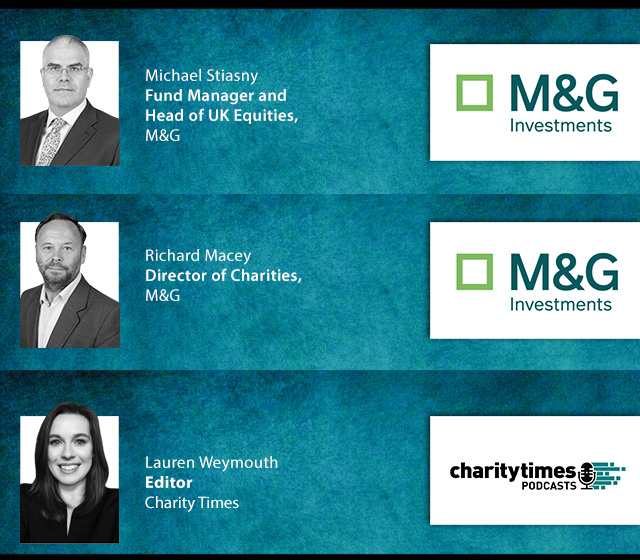
With charities facing increasing financial pressure and traditional income streams under strain, making investments work harder has never been more important. M&G’s Richard Macey and Michael Stiasny join Charity Times to discuss why equities remain a vital long-term asset class for charities, how organisations can balance income generation and growth, and the opportunities the current market environment may offer to help strengthen financial resilience.
Charity Times Awards 2023
Video Q&A: Benefits of bespoke investment vs pooled funds for the third sector
In this Charity Times video Q&A, editor Lauren Weymouth speaks to Ed Caswell of RBC Brewin Dolphin to explore how charities can align investment strategies with their mission, balance income and growth, and adapt to changing needs. He discusses discretionary management, responsible investment and the importance of effective governance and regular portfolio reviews.




© 2021 Perspective Publishing Privacy & Cookies
Recent Stories