Candidates for jobs in the charity sector have raised concerns of the increasing risk of bias and errors through recruiters’ use of artificial intelligence (AI) when assessing applications.
Among those responding to a survey for research on the technology’s role in recruitment, four in five wanted a recruiter to check their application rather than AI being involved.
The proportion is higher among female candidates, with 82% backing human application assessors over AI checkers, compared to 77% of males.
CharityJob, which has carried out the survey, cites research in the US which found racial and gender biases in AI candidate screening tools with models involved favouring white male names.
“Some respondents expressed apprehensions about AI’s susceptibility to errors and biases, which could be detrimental to candidates being assessed by it,” said CharityJob
Candidates were concerned around “AI’s ability to assess candidates objectively and its potential to increase bias, as it itself may have its own biases”.
“They didn’t think it wise to rely on AI alone, without human judgement, to review applications,” added CharityJob.
The survey involved the views of more than 2,300 candidates and almost 100 recruiters, who also had concerns over AI’s accuracy.
Almost half of recruiters said it is “very unlikely” that they would trust recommendations or decisions made by AI in the recruitment process. Two in five said they are undecided, while just one in ten said it was likely they would trust the technology’s use in recruiting.
Other concerns raised about the use of AI in the job market are around its potential to reduce available roles.
More than two thirds are concerned about the future role of AI and just under a third said they feel there are a lack of job opportunities due to an increase in the technology taking over jobs.
Benefits of AI
Despite concerns around accuracy and bias some candidates and recruiters welcome its role as a tool to help improve writing applications and support the administration of the recruitment process.
Just under three in five recruiters said AI is beneficial to scheduling interviews.
Meanwhile, two in five candidates said AI can help improve their CVs and applications for roles.
“Positive comments referred to how AI simplifies work processes,” said CharityJob.
“Respondents mentioned that AI complements human capabilities rather than replacing them, leading to improved efficiency and time savings.
“They also mentioned how AI can spark ideas, helping them to communicate their skills and experiences more effectively in job applications, when used appropriately.”
CharityJob adds that “a few comments also expressed how AI can be helpful to neurodivergent individuals, including those with dyslexia”.
However, candidates said that “it feels like cheating” if AI is used for cover letters or CVs as “they aren’t writing it themselves” to give an accurate picture of themselves.
In addition, three in five candidates felt increased use of AI in applications meant it was harder for them to stand out.
“This could be because they feel that an application using AI is no longer unique,” said CharityJob.
“On the other hand, candidates not using AI to tailor their CV or cover letter may feel it’s harder to be seen by recruiters.”


Latest News
-
Council terminates charity’s £8.57m children's care home contract early amid staffing concerns
-
Charity boss shows her 'vulnerability' as she posts emotional grant rejection video
-
English speaking fundraising ideas may be ‘crowding out’ local strategies
-
Friday funding round up – 9 October
-
Charity charged with corporate manslaughter following fatal boating incident
-
CEO retires after 40 years with mental health charity





Beyond the funding squeeze: Using equities to secure your charity’s future
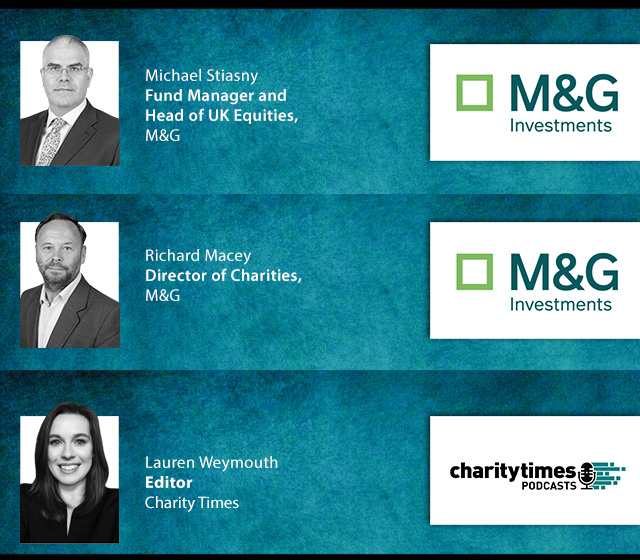
With charities facing increasing financial pressure and traditional income streams under strain, making investments work harder has never been more important. M&G’s Richard Macey and Michael Stiasny join Charity Times to discuss why equities remain a vital long-term asset class for charities, how organisations can balance income generation and growth, and the opportunities the current market environment may offer to help strengthen financial resilience.
Charity Times Awards 2023
Charity Times video Q&A: In conversation with Hilda Hayo, CEO of Dementia UK
Charity Times editor, Lauren Weymouth, is joined by Dementia UK CEO, Hilda Hayo to discuss why the charity receives such high workplace satisfaction results, what a positive working culture looks like and the importance of lived experience among staff. The pair talk about challenges facing the charity, the impact felt by the pandemic and how it's striving to overcome obstacles and continue to be a highly impactful organisation for anybody affected by dementia.



© 2021 Perspective Publishing Privacy & Cookies
Recent Stories