
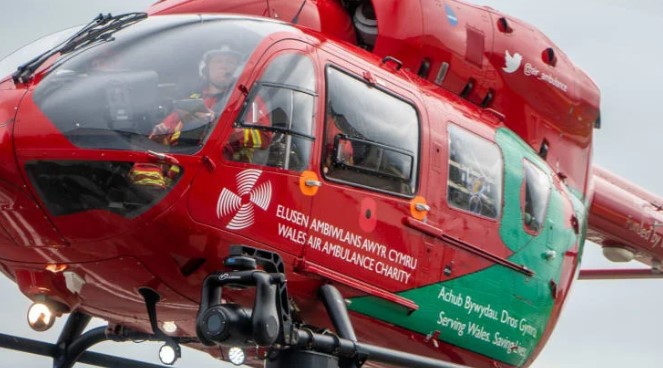
Air ambulance charities have come together to urge the main political parties to help their sector cope with the cost-of-living crisis and a reliance on income from fundraising, should they form the next government after July’s general election.
Membership body Air Ambulances UK, alongside its member charities, warns that the average cost of an air ambulance helicopter mission has increased by 4% to £4,110 over the last two years.
However, air ambulance charities “receive no day-to-day government funding” and “are almost entirely funded by the generosity of local communities”.
It is calling on the next government to “support the air ambulance community to enhance methods of income generation through distribution of UK-wide grants and capital funding”.
This would help at “ensuring that air ambulance charities can operate effectively with equitable service provision to continue to meet the surge in demand and increased operational costs”.
There are 21 air ambulance charities UK wide, attending an increasing number of incidents, according to recent data.
In 2023 they attended more than 46,000 missions, a 53% hike on figures for 2021.
Air ambulance charities are also calling for a greater say in local decision making to protect hospital helipads and community landing sites.


Latest News
-
Arts venue charity to close after ‘exhausting all possible alternatives’
-
Hospice charity repeatedly targeted by criminals launches appeal to improve security
-
Children’s charity refreshes brand to be clearer ‘about who it is’
-
Monday movers – 12 October 2026
-
Council terminates charity’s £8.57m children's care home contract early amid staffing concerns
-
Charity boss shows her 'vulnerability' as she posts emotional grant rejection video




Beyond the funding squeeze: Using equities to secure your charity’s future

With charities facing increasing financial pressure and traditional income streams under strain, making investments work harder has never been more important. M&G’s Richard Macey and Michael Stiasny join Charity Times to discuss why equities remain a vital long-term asset class for charities, how organisations can balance income generation and growth, and the opportunities the current market environment may offer to help strengthen financial resilience.
Charity Times Awards 2023
Charity Times video Q&A: In conversation with Hilda Hayo, CEO of Dementia UK
Charity Times editor, Lauren Weymouth, is joined by Dementia UK CEO, Hilda Hayo to discuss why the charity receives such high workplace satisfaction results, what a positive working culture looks like and the importance of lived experience among staff. The pair talk about challenges facing the charity, the impact felt by the pandemic and how it's striving to overcome obstacles and continue to be a highly impactful organisation for anybody affected by dementia.




© 2021 Perspective Publishing Privacy & Cookies
Recent Stories