

Cate Nelson‑Shaw, CEO of Impact Funding Partners, explains why regular organisational health checks are essential for resilient, well‑governed charities.
_____________________________________________________________________
What is an organisational health check?
Like people, charities are comprised of many different elements that all need to function properly to survive and thrive. An organisational health check is like a personal one. It’s an examination of the charity’s vital signs that is designed to spot potential problems before they become real ones. If done properly, the process will improve resilience, even during unpredictability.
Why should they be done?
The adage “better to catch it early” is as true of organisational health as it is of individual health. Keeping a head in the sand only causes greater pain down the road, and the cost of inaction can be far greater than proactivity. Organisational health checks demonstrate a positive approach to governance and risk management, and given our role in fund management, we routinely see how these can improve a charity’s appeal with funders.
How are they done?
When we conduct organisational health checks for other charities, we tend to split the process into four broad phases. The first is scoping. In this phase, the charity’s leadership, and sometimes trustees, will consider what the scope should include, and who it should involve.
The second phase is engagement. This is when people across the charity – it could be trustees, senior management, other employees, volunteers and other relevant stakeholders – are canvassed for views and insights. It’s worth considering the volume of people being engaged, and the quality of insight needed, when structuring this phase. For example, surveys can be useful for large groups and broad insights, but confidential interviews offer a better depth of understanding. Engagement should result in a clear picture of how people feel the charity is performing, indicating areas for improvement.
The next phase is a documents audit. Policies and documents should be reviewed to verify and confirm that they are consistent with the actual practices being used. The date of previous updates should be considered. Are there new laws or requirements that need to be factored in?
The final phase is concluding the process, which should leave the charity with a clear indication of how to move forward. This includes a document summarising the charity’s strengths, weaknesses and recommendations for improvement. The key is that the organisational health check concludes with commitment to implement the recommendations in a reasonable timeframe.
What are some of the main areas to look at?
Financial risk is a big one. It’s important to understand and plan for financial risk, whether that’s due to a fund ending or a lack of diversity in fundraising. The importance of rigorous financial processes and planning really can’t be understated, especially in the current funding environment.
Diversity, equity and inclusion (DEI) is another important area to examine. When were policies last updated? The Worker Protection (Amendment of Equality Act 2010) Act came into effect in October 2024, introducing a duty for employers to take reasonable steps to prevent sexual harassment in the workplace. There have also been changes to flexible working rights, the introduction of carer’s leave, paternity leave reforms and neonatal leave that should be incorporated if not already. Beyond employees, what policies are in place for volunteers and beneficiaries? Charities must reach people of diverse backgrounds and foster inclusivity, so it is imperative that leaders pay close attention to DEI and whether existing policies are fit for purpose.
Another question to ask is, when was the training programme last reviewed? Have new recommendations or regulations been introduced that could affect training requirements – such as on working with vulnerable people, safety and safeguarding? How has the employee or volunteer skills set evolved since the current programme was established? One development area most charities should consider right now is how people may – or may not – use AI.
Organisational health checks should be comprehensive and each organisation will be unique, so other common elements of a health check include a skills audit of the board of trustees, improved monitoring and evaluation processes, a review of organisational structure and strengthened internal and risk management processes. It’s important to ensure that the health check cuts across the organisation.
Most charities are time and resource poor. Any advice for how to fit one in?
Some aspects of an organisational health check can be carried out by people within the team, but they do need to be given the time to do the work. And it’s not just about reviewing processes, procedures and data, it’s also about being able to take that step back from the day to day to spot trends and emerging risks.
People also need to understand that this is a positive process, but tough questions will be asked. Those at any level of the charity could be open to constructive challenge. It needs to be collectively understood that it isn’t about blame – it’s about proactive improvement.
If capacity or autonomy feel like barriers, consider whether an external organisational health check can be factored into budgets. An external supplier will have the neutrality to provide an objective point of view and will bring experience that increases impact and expedience.
As a relationship fund manager, what’s the impact of an organisational health check when it comes to seeking funding?
Evidence of an organisational health check can make or break a funding application. If two applications are similar, an organisational health check – especially one done by a third party – can be the deciding factor. This is because it provides that extra level of assurance to the potential funder that the charity is well-governed and takes a proactive approach to risk management. If a charity knows that it is going to be applying for funding, or is approaching a new funding cycle, they should consider the potential cost of not completing a health check.



Beyond the funding squeeze: Using equities to secure your charity’s future
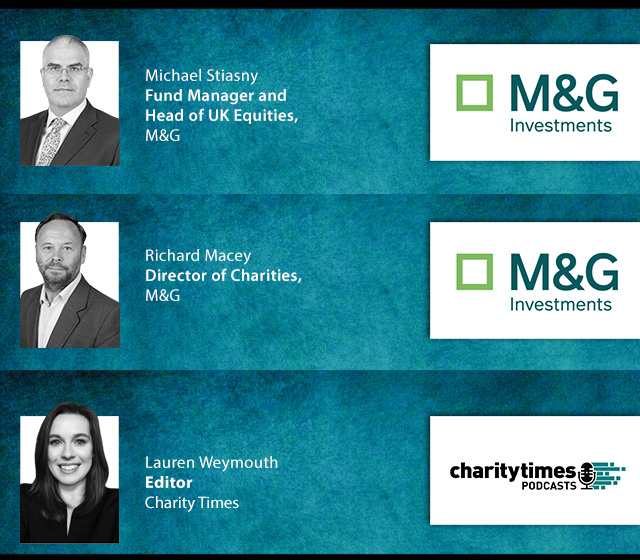
With charities facing increasing financial pressure and traditional income streams under strain, making investments work harder has never been more important. M&G’s Richard Macey and Michael Stiasny join Charity Times to discuss why equities remain a vital long-term asset class for charities, how organisations can balance income generation and growth, and the opportunities the current market environment may offer to help strengthen financial resilience.
Charity Times Awards 2023
Charity Times video Q&A: In conversation with Hilda Hayo, CEO of Dementia UK
Charity Times editor, Lauren Weymouth, is joined by Dementia UK CEO, Hilda Hayo to discuss why the charity receives such high workplace satisfaction results, what a positive working culture looks like and the importance of lived experience among staff. The pair talk about challenges facing the charity, the impact felt by the pandemic and how it's striving to overcome obstacles and continue to be a highly impactful organisation for anybody affected by dementia.




© 2021 Perspective Publishing Privacy & Cookies
Recent Stories