The CEO of the Mental Health Foundation Mark Rowland wants the charity world to be braver, faster, and more collaborative—and he’s starting with his own organisation.
When Mark Rowland stepped into the role of chief executive at the Mental Health Foundation in 2018, he brought with him more than just a CV of international development and human rights work. He carried a personal story that shaped his leadership and the organisation’s mission.
“I was raised in Central Africa… in Rwanda,” he begins. “My father was a doctor and my mother was a teacher and they were missionaries. I was raised with an understanding that life is about living according to your beliefs and making a positive contribution.”
Raised in Africa, he saw from a young age what impact poverty could have. That early exposure to inequality sparked a lifelong passion for social justice. After university, a news story about a peaceful protester imprisoned in Burma led him to his first job in campaigning for human rights. “It was incredibly satisfying,” Rowland says. “I would recommend it to anyone.”
But it was a family tragedy that shifted his focus to mental health. In 2013, Rowland lost his older brother, Daniel, to suicide following a long struggle with depression. “It was like a mirror shattering on the floor of our family life,” he recalls. “It made me think not just about physical poverty, but the poverty that can happen inside our minds.”
That experience led him to the Mental Health Foundation, where he initially joined in a fundraising and marketing role. His personal connection to the cause gave him a unique sense of purpose. “It wasn’t just a job,” he says. “It was something I cared about deeply.”
“Sometimes it’s just difficult”
As a leader of a charity focused on mental health, managing his own wellbeing is important. “I need to fill my own cup if I’m running on empty,” Rowland says, adding that he gets more pessimistic and anxious, which “doesn’t help anyone”.
To do that, he makes sure he runs every day. “I said to my chair ‘I need an hour a day’… it helps me process my thoughts, it gets me outside, it gives me perspective”. This is in addition to previous therapy sessions that have helped him understand unique aspects about him that affect his mental health, and how to manage those better.
Former chief executive of Samaritans, Ruth Sutherland once told Rowland an Atticus Finch quote; ‘The hardest step you ever take is to blindly believe in who you are,’ and it’s one that has stuck with him. Rowland admits he’s had his share of imposter syndrome. “But I think if you’re going to lead, you’ve got to offer who you are… and have the conviction that you’re going to make a positive change… there’s a vulnerability that comes with that.”
“It’s the most exposed I’ve felt professionally,” Rowland admits.
He adds: “If you’re leading a mental health charity, people maybe expect that you’ve got it all worked out,” but he freely shares that he doesn’t. “And that’s okay. Part of managing my mental health is staying realistic and grounded. Sometimes it’s just difficult.”
That difficulty will be one that many other charity leaders relate to. Like many CEOs are f inding, uncertainty is a prevailing emotion within the charity. “Uncertainty is a precursor to anxiety… we find it really difficult to contain that.” Not just around funding, but finding good trustees and partners to work with. “You can’t protect [staff] from all the uncertainty, but knowing how much to share and how much to hold is a real challenge.”
Those challenges can be exacerbated with the type of charity he’s in – Rowland is candid about what it’s like to be CEO of a mental health charity. It’s a balancing act in creating conditions that support people’s mental health and wellbeing, and also challenging people to perform at their best. “Part of good mental health is being able to stretch yourself. But that can feel at odds with being kind and supportive. “We’ve got to be able to push and challenge each other.”
A bold experiment
Part of the balancing act includes sometimes changing things up within the organisation. With this in mind, Rowland launched a year-long pilot of a 32 hour work week.
With no reduction in pay, staff at The Mental Health Foundation were able to work flexibly according to their needs. “[We wanted] to be the guinea pigs in our own experiment,” he says.
After initial resistance from funders and a delay due to the pandemic, the pilot launched with strong internal support. The results were striking: improved well-being, no drop in productivity, and a significant boost for staff with caring responsibilities or lived experience of mental health challenges.
Some of the stories are delightfully human. “One colleague starts their week with a cinema trip every Monday. Another spends Friday afternoons cycling and meditating... but the most meaningful feedback came from staff who could better care for elderly parents or partners with long-term conditions.”
The Foundation has since made the change permanent, with a few tweaks. At the introduction of the pilot, they scrapped core hours, but have reintroduced them to encourage collaboration within the organisation. They have also emphasised the need for flexibility to work both ways. Some staff were working disproportionately on some days as there were so many people off, so they have made it clear sometimes, when the need arises, people will have to work on their nonworking days.
“It’s okay to have a life outside work,” he adds, and it’s been one of the biggest reasons cited when people apply to the organisation. “It’s not perfect,” Rowland admits. “But it’s a massive attraction for talent and a real statement of our values.”
Vision for the future
Looking ahead, Rowland sees the Foundation becoming more focused on campaigning. “We want to drive change in the environments that put people at risk of poor mental health—whether that’s bullying in schools, poverty stigma, or young people falling out of education.”
Of course, much of that depends on the resources available in an already stretched funding environment. But what would Rowland do if the organisation had unlimited resources for one year?
“I’d roll out the best anti-bullying and anti-discrimination programmes in every school in the UK,” he says without hesitation. “Bullying is to mental health what the mosquito is to malaria. It targets your sense of dignity.” He would like to make it known that he is in favour of world peace, but would leave that to the experts if there were unlimited resources.
Rowland is also vocal about the structural challenges facing the charity sector. In his opinion, the charity sector isn’t changing fast enough. “The private sector is more nimble because it has access to much more capital, much more money.” Because of this, in the charity world it’s left to the big charities with money to innovate, but they can often be stuck in their own ways; whilst smaller organisations with “creativity and great ideas” often struggle to survive.
He also believes that trustees should be held accountable not just for impact, but for how they contribute to the wider charity sector. “How good are [charities] at not just delivering their own impact but being an effective citizen for the voluntary sector? How good are they at collaborating? Have they scoped out any possibilities for mergers or joint ventures?
“There’s a pattern that you can see in the charity sector where you’re only concerned with your own growth and success without understanding the environment you’re in and how working with others might bring better impact and better results.”
He believes the Charity Commission should incentivise boards to look at that and evaluate. “Have they looked at the bigger picture and their role within it?”
Authenticity, always
Outside of the charity sector, when asked what might surprise people about Rowland, he admits what his alternative career may have been if the charity world didn’t work out. “I wanted to be in a boy band,” he laughs. “I loved performing—drama, public speaking. That didn’t work out, but I think I’ve found the right stage.”
A stage where he evidently excels. In a sector where authenticity is increasingly valued, Mark Rowland stands out not just for his strategic vision, but for his willingness to lead with vulnerability. “You’ve got to stay open and grounded,” he says. “Sometimes it’s just hard. But that’s part of the work.”
Circling back to the quote from To Kill a Mockingbird’s Atticus Finch: “The bravest step you ever take is to blindly believe in who you are.” For Rowland, that’s the essence of leadership. “You’ve got to offer who you are, your strengths and your limitations, and believe that it matters.”

Latest News
-
Russell Howard and his wife launch charity after the loss of their baby
-
Government reveals delivery partner for £11.6m fund to improve charity and council links
-
Major grant makers name first recipients of £15m fund to tackle child poverty
-
Friday funding round up – 4 September
-
Minister promises action against those misusing the law to threaten charities
-
CEO of pay dispute hit museums charity to step down


Beyond the funding squeeze: Using equities to secure your charity’s future
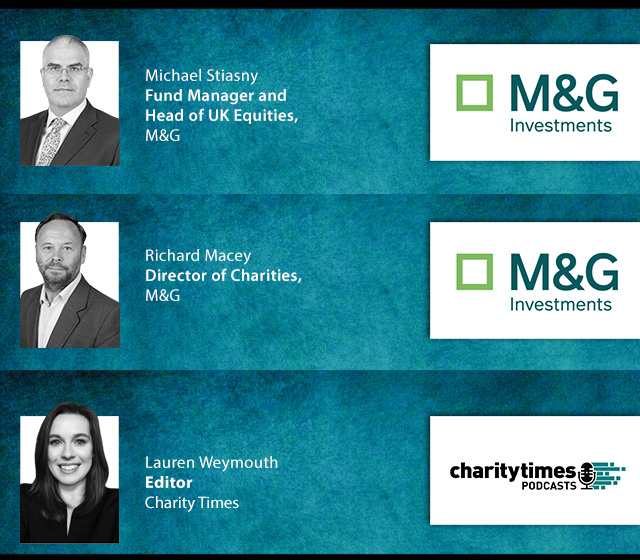
With charities facing increasing financial pressure and traditional income streams under strain, making investments work harder has never been more important. M&G’s Richard Macey and Michael Stiasny join Charity Times to discuss why equities remain a vital long-term asset class for charities, how organisations can balance income generation and growth, and the opportunities the current market environment may offer to help strengthen financial resilience.
Charity Times Awards 2023
Charity Times video Q&A: In conversation with Hilda Hayo, CEO of Dementia UK
Charity Times editor, Lauren Weymouth, is joined by Dementia UK CEO, Hilda Hayo to discuss why the charity receives such high workplace satisfaction results, what a positive working culture looks like and the importance of lived experience among staff. The pair talk about challenges facing the charity, the impact felt by the pandemic and how it's striving to overcome obstacles and continue to be a highly impactful organisation for anybody affected by dementia.




© 2021 Perspective Publishing Privacy & Cookies
Recent Stories