When outcomes may not surface for years, how can charity leaders show that a programme is “working”? Dwayne Gumbs and Alex Williams, Co‑Founders of Diverse Voices, reflect on a pilot programme that turned long‑term ambition into measurable short‑term progress.
___________________________________________________________________
Many in the third sector are faced with the dilemma of how to prove the impact of projects whose true goals won’t be visible for years. Our charity Diverse Voices often comes up against this challenge, in our mission to increase access to creative pathways for young people.
In March 2025, we piloted ‘Diverse Voices Stage & Screen’ (DVSS), a free 24-week Saturday drama and film academy for 11-16-year-olds from underrepresented backgrounds. Our aim was to create meaningful access to professional training and pathways into the arts, to address the fact that those from marginalised backgrounds remain severely underrepresented in creative industries. Career outcomes may not surface until participants are adults, yet funders and stakeholders need evidence now that the work is “working.” The challenge, therefore, was to demonstrate meaningful progress towards distant outcomes in a credible way.
After defining the desired long-term impact of our programme, we worked backwards to identify the short-term developmental milestones that would realistically indicate progress towards that vision. These included whether participants:
· Expressed a desire to continue studying creative subjects after school;
· Felt inspired to work in creative industries;
· Wanted to continue developing their creative practice through further projects.
This led us to create our bespoke programme integrating acting, filmmaking, screenwriting and production, which culminated in the creation of an original youth-led short film.
To ensure accessibility, DVSS was funded through project-based grants and made entirely free for participants. After applying and securing funding from the Foyle Foundation, we launched auditions across the London Borough of Waltham Forest. The local response was overwhelming, reflecting the appetite for accessible creative opportunities among young people who would otherwise be priced out.
Throughout delivery, we gathered feedback through participant surveys, tutor assessments and parental reflections, ensuring that both qualitative and quantitative data was captured from the outset. By embedding short-term indicators into our evaluation model, we could evidence how successful the programme was, which would lead to making our long-term mission visible and fundable in the present. It also helped us to identify the necessary partnerships which would enable us to hit these markers, such as collaborating with further education providers London Screen Academy and industry partners including Picture Shop, to give our students first-hand knowledge and relevant experience.
By the end of the pilot, our evaluation showed strong early indicators of impact:
· 90% of participants want to work on another film project (target: 80%)
· 70% want to study a subject linked to a creative career at 16+ (target: 75%)
· 55% aspire to work in the creative industries (target: 50%)
These interim outcomes proved that while the ultimate goal (creative employment) will take time, guiding our young people in the right direction is clear and measurable.
Beyond the numbers, participants reported higher confidence, improved teamwork and a greater sense of belonging in creative spaces. Parents and schools echoed these findings, noting visible boosts in motivation and self-esteem. Masterclasses by our further education partners also led to students in Year 11 applying, whilst those in Year 10 identified courses they wish to apply for upon leaving school.
The next step for us is to track participants over the next two years, so we can monitor whether short-term aspirations convert into sustained creative engagement and educational choices. We are also sharing our framework with partner organisations, to support sector-wide conversations on evidencing long-term impact.
Based on what we have learnt during this process, our biggest recommendation to other charities is that long-term missions need short-term markers. By defining and tracking interim outcomes, you can demonstrate success before the “final” results appear. This reassures funders that a programme is working, even when its deepest impact lies years ahead. We also learned that working backwards from a clear end-goal creates coherence across every decision: from curriculum design to funding structure and recruitment. For other charities, this means starting with the future you want to see, then reverse-engineering each step needed to reach it.
DVSS has become a model for weekend creative provision, balancing ambition with operational realism. It is now informing how we design other long-term pathway programmes, as we seek funding to roll DVSS out again in Waltham Forest and scale into other London boroughs.
Our pilot achieved and exceeded its interim targets, enabling us to produce a replicable model for evidence-based creative education. We encourage other charities to embrace working backwards from your long-term goals, to embed short-term indicators that tell the story of impact in progress, not just in hindsight.


Latest News
-
Arts venue charity to close after ‘exhausting all possible alternatives’
-
Hospice charity repeatedly targeted by criminals launches appeal to improve security
-
Children’s charity refreshes brand to be clearer ‘about who it is’
-
Monday movers – 12 October 2026
-
Council terminates charity’s £8.57m children's care home contract early amid staffing concerns
-
Charity boss shows her 'vulnerability' as she posts emotional grant rejection video


Beyond the funding squeeze: Using equities to secure your charity’s future
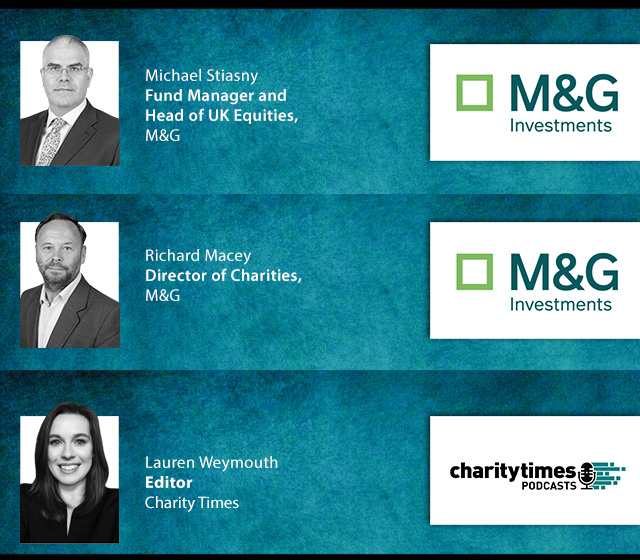
With charities facing increasing financial pressure and traditional income streams under strain, making investments work harder has never been more important. M&G’s Richard Macey and Michael Stiasny join Charity Times to discuss why equities remain a vital long-term asset class for charities, how organisations can balance income generation and growth, and the opportunities the current market environment may offer to help strengthen financial resilience.
Charity Times Awards 2023
Charity Times video Q&A: In conversation with Hilda Hayo, CEO of Dementia UK
Charity Times editor, Lauren Weymouth, is joined by Dementia UK CEO, Hilda Hayo to discuss why the charity receives such high workplace satisfaction results, what a positive working culture looks like and the importance of lived experience among staff. The pair talk about challenges facing the charity, the impact felt by the pandemic and how it's striving to overcome obstacles and continue to be a highly impactful organisation for anybody affected by dementia.



© 2021 Perspective Publishing Privacy & Cookies
Recent Stories