Professor Fiona Carragher, chief policy and research officer at Alzheimer’s Society, reflects on a 25‑year journey through the NHS and into the charity sector, where she is driving breakthroughs in dementia research and diagnosis.
_______________________________________________________________________
Name: Professor Fiona Carragher
Job role: Chief Policy and Research Officer
Organisation: Alzheimer’s Society
How did you land your current role, and what was your career path leading up to it?
Before I joined Alzheimer’s Society I worked for 25 years in the NHS. It was here, from my earliest days as a Trainee Clinical Scientist to my final role at the Deputy Chief Scientific Officer for NHS England, that I saw the extraordinary potential of science and technology to reshape society. My career path has followed this story, working at the intersection of healthcare, research and policy- starting in the laboratory before leading system-wide change at regional and national level. Joining Alzheimer’s Society felt like the natural next chapter — applying everything I’d learned to a field where much needed breakthroughs could directly transform lives today and in the future.
What is the most interesting part of your job?
We’re at an incredibly exciting time in dementia research – the science is absolutely flying, and there is tangible hope that breakthroughs will improve people’s lives. I love that I get to work with brilliant people from all walks of society who want to end the devastation cause by dementia, from the academics who are building the evidence to transform dementia diagnosis to those with lived experience who are at the heart of everything we do and some amazing partners. A great example is the Blood Biomarker Challenge – a multi-million-pound programme supported by Alzheimer’s Society and Alzheimer’s Research UK thanks to funding from players of People’s Postcode Lottery.
What would be your alternative career?
As a child of Irish parents whose values were an inspiration, I always knew I wanted to make a difference to others and that any route to success was through continual learning. When I was 12 years old, I got a chemistry set for Christmas, and I knew instantly I wanted to work in a science environment. But on days when it seems the challenge of dementia is too vast to tackle- I harbour dreams of a simple life where I teach swimming and keep goats!
What inspired you to work in the charity sector?
I was asked recently what has energised me throughout my career, and the answer was simple: hope — built on the belief that science and research can tackle the greatest societal challenges of our time. For some it felt like a significant career step to leave the NHS and join the charity sector, but for me it felt like a natural progression. I could see that Alzheimer’s Society had a critical role to play in driving and catalysing the system change that people affected by dementia urgently need.
What challenges do you face in your day-to-day work?
Like many working in this sector, there are days when it feels as though there simply aren’t enough hours to do everything we need to do. The scale and urgency of the challenge can be daunting. But what keeps me going is the combination of hope — the belief that progress is possible — and the stark reality of seeing how tough life can be right now for people affected by dementia. That contrast is a constant source of motivation, and a reminder of why the work matters so deeply.
What would make the biggest positive difference to the charity sector right now?
In these challenging societal times, the charity sector is needed more than ever. We play a vital role in shining a light on the issues that matter to our communities and showing decision makers what is possible when we act with ambition and compassion. Coming from the NHS, I believe one of the biggest opportunities for the charity sector is to nurture more boundary spanners — people who can work across sectors, build trust, and connect different parts of the system to unlock innovation. When people with different experiences and strengths come together, the impact we can make is far greater than any single organisation or system can achieve alone.


Latest News
-
Arts venue charity to close after ‘exhausting all possible alternatives’
-
Hospice charity repeatedly targeted by criminals launches appeal to improve security
-
Children’s charity refreshes brand to be clearer ‘about who it is’
-
Monday movers – 12 October 2026
-
Council terminates charity’s £8.57m children's care home contract early amid staffing concerns
-
Charity boss shows her 'vulnerability' as she posts emotional grant rejection video


Beyond the funding squeeze: Using equities to secure your charity’s future
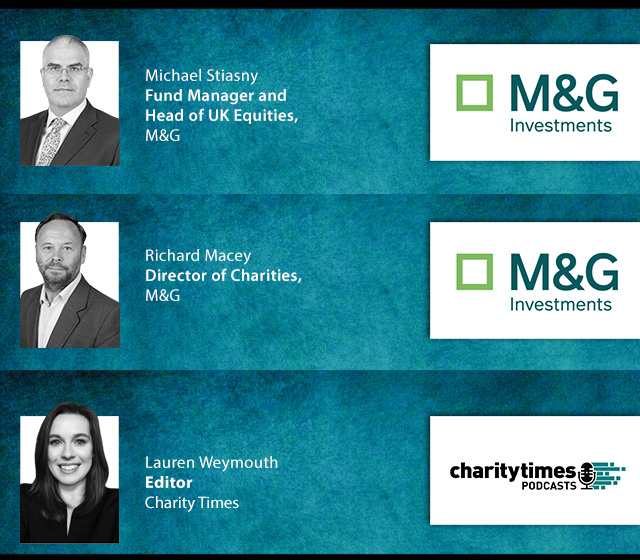
With charities facing increasing financial pressure and traditional income streams under strain, making investments work harder has never been more important. M&G’s Richard Macey and Michael Stiasny join Charity Times to discuss why equities remain a vital long-term asset class for charities, how organisations can balance income generation and growth, and the opportunities the current market environment may offer to help strengthen financial resilience.
Charity Times Awards 2023
Charity Times video Q&A: In conversation with Hilda Hayo, CEO of Dementia UK
Charity Times editor, Lauren Weymouth, is joined by Dementia UK CEO, Hilda Hayo to discuss why the charity receives such high workplace satisfaction results, what a positive working culture looks like and the importance of lived experience among staff. The pair talk about challenges facing the charity, the impact felt by the pandemic and how it's striving to overcome obstacles and continue to be a highly impactful organisation for anybody affected by dementia.


© 2021 Perspective Publishing Privacy & Cookies
Recent Stories