
The Charity Commission has pledged a crackdown on complementary and alternative medicine charities that fail to demonstrate there is a public benefit to their work.
The regulator says there is a legitimate role for such charities that “work promoting alternative therapies for comfort and relief and can deliver tangible public benefit to patients”.
But if concerns are raised about the legitimacy of their work and they cannot prove it benefits the public “then we will take firm and robust action to remove it from the register”.
The warning has been issued following the removal of the charity Gerson Support Group from the register after it was challenged to prove its work benefitted the public.
This is one of several cases the regulator is looking at involving complementary and alternative medicine charities.
Gerson had claimed to be able to relieve sickness and promote good health among cancer patients through its ‘Gerson nutritional therapy.
However, trustees have acknowledged that the evidence around this ‘therapy’ “may not be sufficient to meet the public benefit requirement”.
“This case is a practical example of how we regulate charities that offer CAM therapies, and the work we do to promote and maintain the integrity of charitable status and public confidence in charities more broadly,” said Charity Commission director of regulatory services Helen Earner.
“What matters to us at the Commission is that all CAM organisations that have charitable status – and all charities generally – can demonstrate that they provide public benefit. That is a central principle enshrined in law,” added Earner.
She added: “Our work scrutinising the activity of CAM organisations continues, and we encourage all CAM charities to consider the public benefit requirement and ensure that their own activities deliver clear public benefit.
“We are conducting a number of other ongoing cases involving concerns about some CAM organisations. In some of these cases, our concerns may be resolved through dialogue with the trustees.”

Latest News
-
Former Salvation Army worker struck off after alleged sex with ‘vulnerable’ ex-resident
-
British Heart Foundation reveals extent of retail losses as it starts closing 150 shops
-
Dan Francis: Thinking differently about charity leadership
-
Friday funding round up – 25 September
-
Lifeboat charity crew tracked then subjected to ‘inflammatory’ social media attack
-
Arts Council England pledges to boost ‘local expertise’ in funding decisions





Beyond the funding squeeze: Using equities to secure your charity’s future
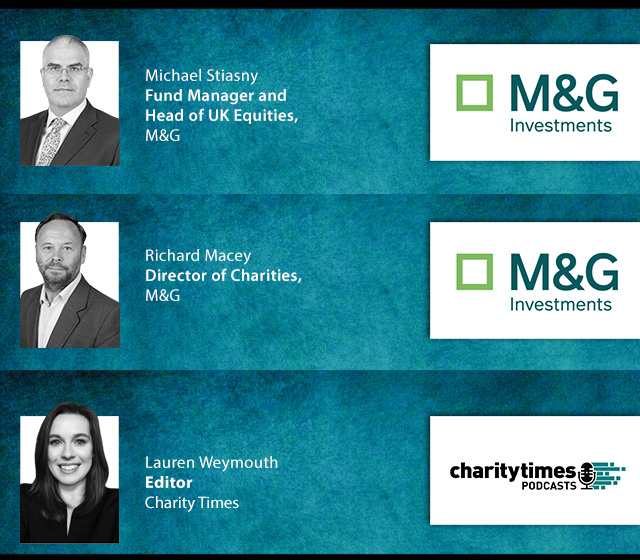
With charities facing increasing financial pressure and traditional income streams under strain, making investments work harder has never been more important. M&G’s Richard Macey and Michael Stiasny join Charity Times to discuss why equities remain a vital long-term asset class for charities, how organisations can balance income generation and growth, and the opportunities the current market environment may offer to help strengthen financial resilience.
Charity Times Awards 2023
Charity Times video Q&A: In conversation with Hilda Hayo, CEO of Dementia UK
Charity Times editor, Lauren Weymouth, is joined by Dementia UK CEO, Hilda Hayo to discuss why the charity receives such high workplace satisfaction results, what a positive working culture looks like and the importance of lived experience among staff. The pair talk about challenges facing the charity, the impact felt by the pandemic and how it's striving to overcome obstacles and continue to be a highly impactful organisation for anybody affected by dementia.




© 2021 Perspective Publishing Privacy & Cookies
Recent Stories