The catch-all clarion call of 'choice' undermines charities, their staff and the services they provide, Unite, the largest union in the country, has warned.
Unite, which has 60,000 members in the sector, said that politicians, health authorities and local councils were using the mantra of 'choice' to drive down the employment conditions for not for profit staff and disrupt the seamless delivery of services.
Rachael Maskell, Unite's national officer, Not for Profit Sector, said: 'The use of a nebulous word such as 'choice' implies improved quality services for clients and service users, when the opposite is, in fact, true.'
Maskell told Unite's Community, Youth Workers and Not for Profit conference in Brighton that 'choice' is confined to the few, not the many.
'The 'choice' is with the commissioners, not the service users and staff. The current 'choice' is between decent pay and conditions, or more cuts and a race to the bottom.'
'The catch-all clarion call for 'choice' is promoting a tick box culture, rather than professionalism.'
Rachael Maskell said that 'the ugly face' of the 'choice culture' included more than 50 top charity bosses receiving annual pay packages of more than £100,000, while many not for profit employees existed on pay hovering just above the National Minimum Wage.
This was compounded by the instability in the funding streams which were often short-term and inadequate for the services required.
Rachael Maskell said that Unite would be campaigning throughout 2010 to reverse the malign affects of the 'choice' culture, so that not for profit services were properly funded for the long-term and for an end to the 'City pay culture' that had infected some organisations in the sector.
Employees also needed to be valued, as they were a charity's most important asset in delivering quality care.


Latest News
-
Nine in ten charities using AI but few exploring its ‘true potential’, warns research
-
Evaluation reveals benefits of adding a virtual candle to online fundraising
-
Former Scope CEO to chair business group set up to tackle disability exclusion
-
Senior MP’s comparison of charity retail with vape shops criticised as 'outdated'
-
Working Families closes following ‘a sustained period of financial challenge’
-
Case study: How charities can best protect their storytellers





Charity Times video Q&A: In conversation with Hilda Hayo, CEO of Dementia UK
Charity Times editor, Lauren Weymouth, is joined by Dementia UK CEO, Hilda Hayo to discuss why the charity receives such high workplace satisfaction results, what a positive working culture looks like and the importance of lived experience among staff. The pair talk about challenges facing the charity, the impact felt by the pandemic and how it's striving to overcome obstacles and continue to be a highly impactful organisation for anybody affected by dementia.
Charity Times Awards 2023
Mitigating risk and reducing claims
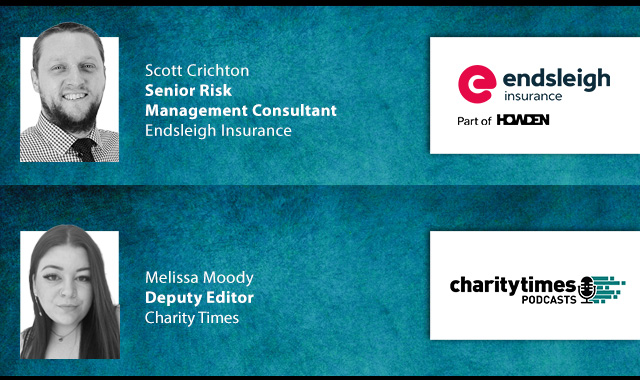
The cost-of-living crisis is impacting charities in a number of ways, including the risks they take. Endsleigh Insurance’s* senior risk management consultant Scott Crichton joins Charity Times to discuss the ramifications of prioritising certain types of risk over others, the financial implications risk can have if not managed properly, and tips for charities to help manage those risks.
* Coming soon… Howden, the new name for Endsleigh.
* Coming soon… Howden, the new name for Endsleigh.
Better Society





© 2021 Perspective Publishing Privacy & Cookies
Recent Stories