Too many business owners are becoming trustees of charities without understanding the legal implications, according to some finance experts.
There are more than a million charity trustees in the UK but as few as one in four charities runs induction training.
Charity trustees have a legal responsibility for the management and decision making of a charity.
Legislation imposes obligations upon trustees, highlighting the trend towards greater responsibility and accountability.
Trustees are responsible for what they themselves do and don’t do but may also be held liable for the actions of others.
The issue is being highlighted as the number of serious incidents reported to the Charity Commission rose by more than 75 per cent in 2009/10.
Helen Besant-Roberts, head of charities at accountancy firm Hurst, said: “Becoming a trustee is a hugely rewarding role, providing a broad range of experience and, in the majority of cases, there are no problems.
"However, the responsibility shouldn’t be taken on without careful consideration. Too many trustees don’t realise the risks and responsibilities involved in being a trustee.
“Charities suffer internal and external fraud in the same way as the private sector. With the economic downturn and cuts in public spending, charities are under even more pressure and the risk of fraud and other incidents is even greater.
"Trustees need to make sure that they have appropriate protection in place, are constantly alert to incidents and report them to the Charity Commission."
Trustees are responsible for the general control and management of the administration of a charity.


Latest News
-
Evaluation reveals benefits of adding a virtual candle to online fundraising
-
Former Scope CEO to chair business group set up to tackle disability exclusion
-
Senior MP’s comparison of charity retail with vape shops criticised as 'outdated'
-
Working Families closes following ‘a sustained period of financial challenge’
-
Case study: How charities can best protect their storytellers
-
British Heart Foundation to close almost one in four of its charity shops





Charity Times video Q&A: In conversation with Hilda Hayo, CEO of Dementia UK
Charity Times editor, Lauren Weymouth, is joined by Dementia UK CEO, Hilda Hayo to discuss why the charity receives such high workplace satisfaction results, what a positive working culture looks like and the importance of lived experience among staff. The pair talk about challenges facing the charity, the impact felt by the pandemic and how it's striving to overcome obstacles and continue to be a highly impactful organisation for anybody affected by dementia.
Charity Times Awards 2023
Mitigating risk and reducing claims
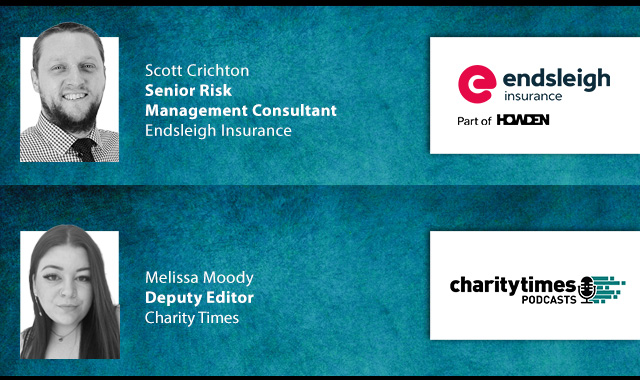
The cost-of-living crisis is impacting charities in a number of ways, including the risks they take. Endsleigh Insurance’s* senior risk management consultant Scott Crichton joins Charity Times to discuss the ramifications of prioritising certain types of risk over others, the financial implications risk can have if not managed properly, and tips for charities to help manage those risks.
* Coming soon… Howden, the new name for Endsleigh.
* Coming soon… Howden, the new name for Endsleigh.
Better Society





© 2021 Perspective Publishing Privacy & Cookies
Recent Stories