Research published this week by Capacitybuilders highlights the importance of identifying the support needs of third sector organisations through effective diagnosis, and avoiding a 'one-size fits-all' approach to support provision.
The report also highlights the extent to which smaller or newer groups can benefit from more intensive, regular one-to-one support as they develop and grow.
The research report from Shared Intelligence focuses on exploring whether different types of capacity building support tends to be more effective for particular purposes or groups.
It identifies a range of critical factors which contribute to the successful development and growth of smaller third sector organisations:
How effective diagnosis of support needs ensures that the right support is provided at an early stage.
Support providers should look to tailor support to the needs of recipients, rather than adopting a one-size-fits-all approach.
Tailored support does not necessarily have to be on a one-to-one basis. There is evidence to suggest that support can be effectively tailored to a group of recipients with common needs.
The right person or organisation providing the capacity building support appears more important than the model of provision used.
Jon Fox, director of Policy and Programmes at Capacitybuilders, commented: "This research picks up themes that Capacitybuilders wants to explore as we continue to strengthen support available to the third sector.
"Indeed, the level of demand for the first phase of our Real Help for Communities Modernisation Grants Programme demonstrates the extent to which third sector organisations recognise the value of a diagnosis-led approach to support.
"This research further demonstrates the importance of tailoring support to ensure that the needs of frontline groups are effectively identified and met."
In order to read the full report, Testing Different Models of Support and accompanying case studies, please visit: www.improvingsupport.org.uk/evaluationandlearning


Latest News
-
Nine in ten charities using AI but few exploring its ‘true potential’, warns research
-
Evaluation reveals benefits of adding a virtual candle to online fundraising
-
Former Scope CEO to chair business group set up to tackle disability exclusion
-
Senior MP’s comparison of charity retail with vape shops criticised as 'outdated'
-
Working Families closes following ‘a sustained period of financial challenge’
-
Case study: How charities can best protect their storytellers





Charity Times video Q&A: In conversation with Hilda Hayo, CEO of Dementia UK
Charity Times editor, Lauren Weymouth, is joined by Dementia UK CEO, Hilda Hayo to discuss why the charity receives such high workplace satisfaction results, what a positive working culture looks like and the importance of lived experience among staff. The pair talk about challenges facing the charity, the impact felt by the pandemic and how it's striving to overcome obstacles and continue to be a highly impactful organisation for anybody affected by dementia.
Charity Times Awards 2023
Mitigating risk and reducing claims
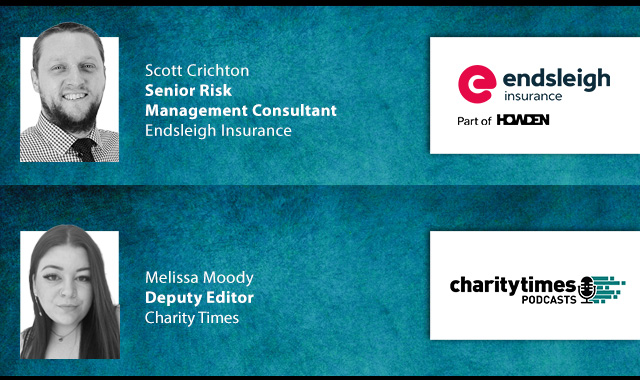
The cost-of-living crisis is impacting charities in a number of ways, including the risks they take. Endsleigh Insurance’s* senior risk management consultant Scott Crichton joins Charity Times to discuss the ramifications of prioritising certain types of risk over others, the financial implications risk can have if not managed properly, and tips for charities to help manage those risks.
* Coming soon… Howden, the new name for Endsleigh.
* Coming soon… Howden, the new name for Endsleigh.
Better Society





© 2021 Perspective Publishing Privacy & Cookies
Recent Stories