NCVO, ACEVO and 21 other key sector umbrella bodies have jointly released a statement on proposals of the new European Directives, which would significantly improve civil society organisation’s ability to bid for public sector contracts.
In particular, the umbrella bodies would like to see implementation of the proposals for:
Reduced regulation for social services
Encouraging smaller contracts and obligations to explain large contracts
An independent advice and oversight body,
The grouping are seeking a meeting with Cabinet office minister, Francis Maude to discuss civil society priorities in the UK’s current negotiations with the EU, and ensure open dialogue is maintained between the government and the sector during the progress of the Directives review.
The bodies noted that in the past, incorrect implementation of EU legislation, larger contract sizes, and heavy administrative burdens have often placed civil society organisations out of public service delivery roles.
The sector-wide coalition believe that these three proposals will help tackle risk-averse decision-making and practice, and lead to more flexible approaches for effective and more innovative local social service delivery.
The changes in these proposals meet many of the recommendations in NCVO’s report published last December.
Negotiations between Member States and the EU institutions are underway, with aims to adopt the new Directives in late 2012.
The sector-wide coalition statement aims to highlight the sector’s concerns on current procurement practice, and ensure the needs of civil society organisations are carefully considered in the government’s position during these negotiations.
NCVO will continue to engage with sector partners across England, and in Europe through the European Network of National Associations, to effectively share our views with the UK government and MEPs on key issues concerning the sector in the course of this review.
Sir Stuart Etherington, NCVO chief executive, said: "This is a crucial moment to bring together a strong coalition of civil society partners. Together we can provide the sector with a clear voice to overcome current challenges and open up new opportunities for small organisations to deliver public services.
"We have a key opportunity to share ideas and work closely with the Government to identify persistent problems in legislation and practice, and to find solutions for a more effective UK procurement market."
Joint statement on proposals in the new Public Procurement Directives
We welcome the European Commission’s proposals for the new Public Procurement Directives. We believe these will provide much-needed improvements to current procurement procedures undergone by civil society organisations in the delivery of public services.
In particular, we strongly support the three proposals outlined below. These offer solutions to some of the most common problems reported by the sector in the procurement of local community and social services.
These three key proposals are:
An independent procurement ombudsman (Articles 84-88)
In particular: each Member State must establish an independent oversight body to assist in improving procurement standards. Responsibilities of this body include:
Oversight and coordination of implementation activities
Produce an annual report to include statistics on SMEs winning contracts
Provide legal advice to contracting authorities and economic operators
Examine complaints from citizens and businesses on application of rules
Both the government and the sector have complained about risk-averse and disproportionate practice as a key barrier to efficient and appropriate procurement of services.
This proposal offers practical guidance, assistance in decision-making, and in turn, more flexible and appropriate procurement practice.
We strongly advise that the oversight body is not dismissed as bureaucratic red-tape, but recognised for its benefits to provide helpful, reliable and necessary advice to contracting authorities, procurement officers and UK organisations.
This will increase competition and reduce costs of poor practice and decision-making.
Explaining decisions behind contract size (Article 44)
In a stated effort to challenge the increasing aggregation of contract sizes, the EU proposes that all commissioning bodies letting contracts worth more than E500,000 must explain why these contracts haven’t been split into smaller lots.
This intends to support SME competition in the market.
With increased burdens on contracting authorities to reduce local budgets, this proposal ensures that decisions on contracts sizes are carefully considered on the basis of suitability, and not convenience.
This also offers organisations a route to challenge poor decision-making that
will have a detrimental impact on how services are shaped and delivered.
Raising the threshold for ‘social services’ (Article 74)
Several changes are proposed around Part A/ B categorisation and thresholds. To this, we welcome the following:
Raising the threshold for health, social and education services;
Deleting the Part B category
These proposals recognise that current regulations do not account for the distinct characteristics of social services, and have minimal effect on competition and cross-border interest.
This will alleviate unnecessary procedures and administrative burdens for all parties, and allow more focus on the design and effectiveness of services.
We have long campaigned for changes in the procedures for social services, and support the principle of a more simplified and appropriate process.
However, while ‘social services’ - described as “services to the person” - are subject to a specific lighter regime, community support services previously within
Part B will be moved upwards to the Part A category.
This includes:
Provision of services to the community
Civic betterment
Community Action Programme
We strongly recommend that these community support services are treated similarly to ‘social’ ‘services to the person’ and removed from the categories of the Regulations.
This would be proportionate treatment of community services, and recognition of both the role of SMEs and the civil society sector in the provision of such services, as well as the lack of cross-border interest and applicability in such provision.
As the government has commenced negotiations on the proposals in Europe, we hope the position on these proposals is reviewed and carefully considered.
The proposals share common aims with the UK government to ensure better and more efficient procurement practice on the ground, support SMEs and civil society organisations to access the competitive market, and create space for innovative and effective service delivery.
Letter to Cabinet office minister, Francis Maude
The Rt Hon Francis Maude MP
Minister for the Cabinet Office
70 Whitehall
London
SW1A2AS
28 February 2012
Dear Minister
Today, 23 national and regional civil society umbrella bodies released a statement on the proposals of the Public Procurement Directives, currently being negotiated in the European Council of Ministers. The sector is encouraged that some proposals could solve key problems within existing regulations and current procurement practice, which hinder civil society organisations in winning contracts and delivering key services.
Moreover we believe that the Government’s and civil society sector’s interests in this review are complementary. Many civil society organisations already play an important role in designing and delivering public services, identifying needs and helping people and communities to make informed decisions about public services. The Government’s commitments to the Big Society agenda, open public services, and the ‘right to bid’ to run any community service instead of the state, are important milestones in further enabling the expertise of civil society organisations to come to the fore.
Both parties have identified problems with the current procurement legislation which often lead to inefficient and costly processes, and wish to see significant changes in the new Directives. These include simplified and appropriate regulation, reduced administrative burdens, improved guidance on application of rules, and increased flexibility and space for innovation. The proposals we have identified can help achieve these aims and improve practical application, especially at the local level.
We would like to suggest building an open dialogue on this issue throughout the review process in 2012, and would propose a meeting with the signatory Chief Executives of our VCS umbrella coalition to shape these proposals for the interests of UK public service procurement. In partnership, we can ensure that our shared aims are achieved and that procurement practices can be improved for the benefit of the services and public good.
NCVO’s Parliamentary Officer, Chloe Stables will be in touch with your office to see if we can arrange a meeting at your earliest convenience.
Yours sincerely,
Sir Stuart Etherington, NCVO
Joe Irvin, NAVCA
Justin Davis-Smith, Volunteering England
Sir Stephen Bubb, ACEVO
Steve Wyler, Locality
Clive Martin, CLINKS
Vandna Gohil, Voice4Change England
Susanne Rauprich, NCYVS
Ed Mayo, Co-operatives UK
Peter Holbrook, Social Enterprise UK
Caron Bradshaw, Charity Finance Director’s Group
Peter Lewis, Institute of Fundraising
Vivienne Hayes, Women’s Resource Centre
Gillian Guy, Citizen’s Advice Bureau
Dr Ian McPherson, Mental Health Providers Forum
Stephen Hammersley, Community Foundation
Network
Rick Henderson, Action for Advocacy
Steve Johnson, Advice UK
Richard Caulfield, Voluntary Sector North West
Andrew Cogan, COVER East
Kay Bews, Home-Start UK
Maggie Jones, Children England
Des Kelly, National Care Forum


Latest News
-
Criticism of senior MP’s 'outdated' comparison of charity retail with ‘vape shops’
-
Working Families closes following ‘a sustained period of financial challenge’
-
Case study: How charities can best protect their storytellers
-
British Heart Foundation to close almost one in four of its charity shops
-
Monday movers - 8 June
-
Jobs at risk as RSPB looks to cut operating costs by 7%





Charity Times video Q&A: In conversation with Hilda Hayo, CEO of Dementia UK
Charity Times editor, Lauren Weymouth, is joined by Dementia UK CEO, Hilda Hayo to discuss why the charity receives such high workplace satisfaction results, what a positive working culture looks like and the importance of lived experience among staff. The pair talk about challenges facing the charity, the impact felt by the pandemic and how it's striving to overcome obstacles and continue to be a highly impactful organisation for anybody affected by dementia.
Charity Times Awards 2023
Mitigating risk and reducing claims
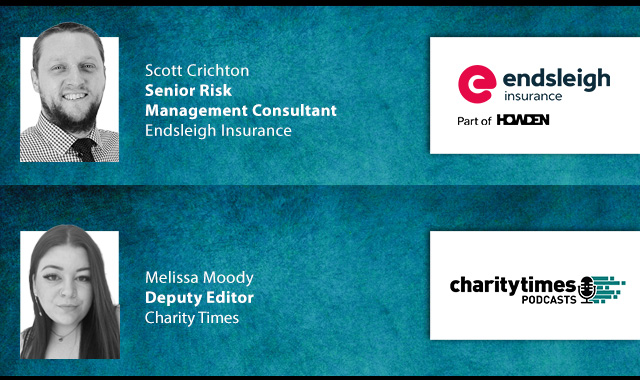
The cost-of-living crisis is impacting charities in a number of ways, including the risks they take. Endsleigh Insurance’s* senior risk management consultant Scott Crichton joins Charity Times to discuss the ramifications of prioritising certain types of risk over others, the financial implications risk can have if not managed properly, and tips for charities to help manage those risks.
* Coming soon… Howden, the new name for Endsleigh.
* Coming soon… Howden, the new name for Endsleigh.
Better Society




© 2021 Perspective Publishing Privacy & Cookies
Recent Stories