National debt charity Consumer Credit Counselling Service (CCCS) has seen a sharp rise in the number of people counselled online for their debt problems.
CCCS says that 8,591 people used its online counselling tool CCCS Debt Remedy in January this year.
This is twice the number of people counselled online during the previous month and a higher number than any month in 2010.
With 65,825 people completing counselling through CCCS Debt Remedy last year, the charity predicts a dramatic rise in 2011.
It says this will be due to increasing demands on household budgets such as inflation and tax changes combined with the limitless capacity that CCCS Debt Remedy offers.
CCCS is concerned that uncertainty about continued public funding for free debt advice will lead many struggling debtors to seek help from fee-charging debt advice organisations.
It stresses that the capacity of CCCS Debt Remedy along with continued support from the credit industry, will allow it to provide free debt advice for whoever needs it.
Delroy Corinaldi, CCCS external affairs director, said: “The next year will be very difficult for many people and I am concerned that those struggling with debt will end up being charged for debt advice because they are unaware that free advice and support is available.
“I hope that the availability of this free service which can be used at any time online will help prevent people paying for debt advice unnecessarily.”
CCCS Debt Remedy is available anytime online at www.cccs.co.uk.


Latest News
-
Regulator considering MP’s claim that 32 UK charities ‘funnelled' £28m to illegal Israeli settlements
-
Nine in ten charities using AI but few exploring its ‘true potential’, warns research
-
Evaluation reveals benefits of adding a virtual candle to online fundraising
-
Former Scope CEO to chair business group set up to tackle disability exclusion
-
Senior MP’s comparison of charity retail with vape shops criticised as 'outdated'
-
Working Families closes following ‘a sustained period of financial challenge’





Charity Times video Q&A: In conversation with Hilda Hayo, CEO of Dementia UK
Charity Times editor, Lauren Weymouth, is joined by Dementia UK CEO, Hilda Hayo to discuss why the charity receives such high workplace satisfaction results, what a positive working culture looks like and the importance of lived experience among staff. The pair talk about challenges facing the charity, the impact felt by the pandemic and how it's striving to overcome obstacles and continue to be a highly impactful organisation for anybody affected by dementia.
Charity Times Awards 2023
Mitigating risk and reducing claims
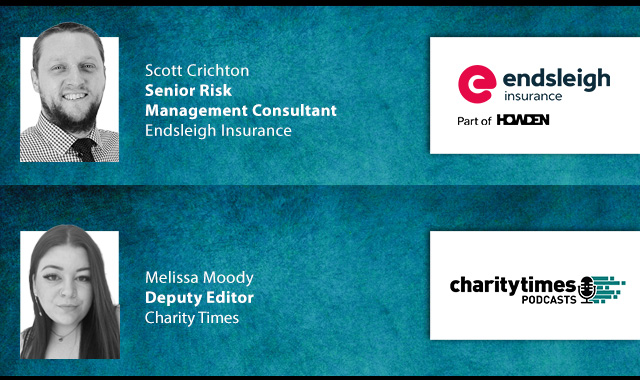
The cost-of-living crisis is impacting charities in a number of ways, including the risks they take. Endsleigh Insurance’s* senior risk management consultant Scott Crichton joins Charity Times to discuss the ramifications of prioritising certain types of risk over others, the financial implications risk can have if not managed properly, and tips for charities to help manage those risks.
* Coming soon… Howden, the new name for Endsleigh.
* Coming soon… Howden, the new name for Endsleigh.
Better Society





© 2021 Perspective Publishing Privacy & Cookies
Recent Stories