The National Trust is reorganising its internal structures in the second phase of its ambitious plan to engage the public better, raise membership, increase its relevance to the whole nation and devolve more decisions to properties.
In its strategy document - Going Local - published in February, the Trust outlined a programme to help its 180 Property and General Managers to bring their properties to life, reach out to local communities and facilitate local initiatives.
The aim is to raise membership from its current record of almost 3.8 million to 5m by the year 2020 and 'to make everyone feel like a member of the National Trust' by forging stronger links with neighbouring communities.
The first phase, once described as a 'cultural revolution', is now completed.
It created a new streamlined system of assistant directors, operations to replace area managers; and greatly empowered property and new general managers, freeing them to take more decisions and giving them control over budgets.
It also set the ambitious goal to engage more fully with neighbours and local communities, including a new emphasis on harder to reach segments of society.
Property and General Managers have all been tasked with exploring the uniqueness of their property and locality and its special value to the community and the nation, bringing properties to life and engaging people more deeply in what happens there.
Under the new reforms, specialist conservation and visitor-related experts based at the Swindon central office or in country and regional offices will become part of a new National Trust Consultancy, created to offer their services directly to increasingly ambitious properties.
The consultancy will include experts in every field relevant to the conservation and enjoyment of properties.
Among them will be specialist curators and art and architectural historians, conservationists with skills from buildings, art and furniture to nature and wildlife, experts on education and interpretation, retail and catering and professionals in community engagement, land management, and archaeology.
To facilitate the Trust's commitment to reach the whole nation there will be a new, more externally facing role for regional and country directors.
As a result the Trust's current 9 English regions and two countries (Wales and Northern Ireland) need no longer be based on operational size, so will be slimmed to six English regions plus the two countries.
To achieve this three new regions will be created: the Midlands (merging the East and West Midlands) the South East (merging the Thames and Solent region with the former South East region) and the South West (merging Wessex with Devon and Cornwall). Wales, Northern Ireland, East of England, the North West and Yorkshire/North East will remain unchanged.
"The Trust is in very good spirits and financial health at present, but that is all the more reason for pressing ahead with positive reforms. We are constantly exploring how to deliver benefit to the nation in better ways," said director-general, Dame Fiona Reynolds.
"The aim of these changes is first and foremost to make us fitter to deliver our vision for a more universal and relevant Trust in the 21st century, based on fantastic conservation and enjoyment of our properties, in a way that empowers our grass roots staff and engages our neighbours.
"However, there will also be business efficiencies that will allow us to put even more money back into conservation and improving the visitor experience."
The changes will also help eliminate unnecessary bureaucracy, remove duplication of effort and concentrate the wide range of skills within the Trust at the point of delivery. Essential central services such as financial management, IT and membership and marketing requirements will remain at the central office.


Latest News
-
Nine in ten charities using AI but few exploring its ‘true potential’, warns research
-
Evaluation reveals benefits of adding a virtual candle to online fundraising
-
Former Scope CEO to chair business group set up to tackle disability exclusion
-
Senior MP’s comparison of charity retail with vape shops criticised as 'outdated'
-
Working Families closes following ‘a sustained period of financial challenge’
-
Case study: How charities can best protect their storytellers





Charity Times video Q&A: In conversation with Hilda Hayo, CEO of Dementia UK
Charity Times editor, Lauren Weymouth, is joined by Dementia UK CEO, Hilda Hayo to discuss why the charity receives such high workplace satisfaction results, what a positive working culture looks like and the importance of lived experience among staff. The pair talk about challenges facing the charity, the impact felt by the pandemic and how it's striving to overcome obstacles and continue to be a highly impactful organisation for anybody affected by dementia.
Charity Times Awards 2023
Mitigating risk and reducing claims
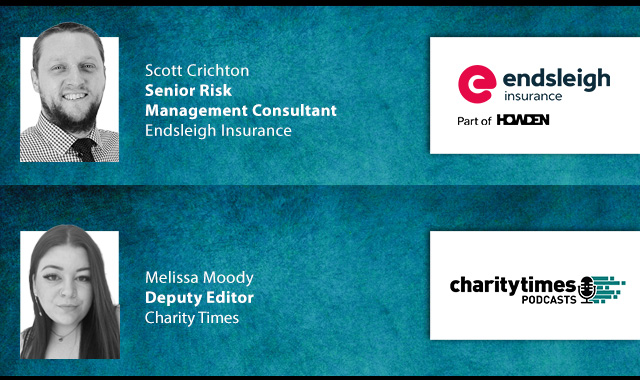
The cost-of-living crisis is impacting charities in a number of ways, including the risks they take. Endsleigh Insurance’s* senior risk management consultant Scott Crichton joins Charity Times to discuss the ramifications of prioritising certain types of risk over others, the financial implications risk can have if not managed properly, and tips for charities to help manage those risks.
* Coming soon… Howden, the new name for Endsleigh.
* Coming soon… Howden, the new name for Endsleigh.
Better Society



© 2021 Perspective Publishing Privacy & Cookies
Recent Stories