The Charity Commission is seeking views on the Equality Impact Assessment (EQIA) it has conducted into the potential impact of its aim to have all of its services online by 2012.
A consultation document is published today on the charity regulator’s website.
The Commission has been developing its online services and the number of charities taking advantage of these is growing.
Last year there was a 24% increase in take-up of our online services from the previous year, with over 75% of annual return or update submissions by charities made online.
Last year the Commission’s website had nearly 40 million page views.
By providing more services online the Commission can respond more efficiently and quickly to requests.
Registration applications filled in online take less than half the time to complete and approve than those sent in by post.
The Commission already offers a number of online services for trustees, such as being able to view and update their charity’s information - including email address, complete annual returns or update forms, upload annual accounts and change trustee details without having to phone or send details in the post.
Recent research by the Joseph Rowntree Foundation said that people now view a computer and an internet connection at home as essentials, not as luxuries, and recent research by The UK Online Measurement Company showed that nearly two million more Britons had come online during the last year, over half of which are over 50 years of age.
In addition, like all public bodies, the Commission has faced reductions in its budget in recent years and our funding for 2010/11 in real terms is 16% less than it was five years ago.
It has already made efficiency savings in the last few years and is continuing to do so, helped by more online working.
The Commission is keen to seek views on the Equality Impact Assessment it has conducted on its move to online services. These include:
Whether the Commission has accurately identified the impacts, either positive or negative of online working on customers
If there any additional impacts which arise specifically as a result of services being online, which would make it difficult or impossible for customers affected to access services
What evidence there is to help assess the extent or significance of the impact on these groups of people
How any risks relating to these impacts might be reduced and;
Any other mitigating factors that haven’t been identified
Andrew Hind, chief executive of the Charity Commission, said: "A move to online services will have numerous benefits for charities and their advisers, the Commission, and the environment, but we want to make sure charities have their say about the potential impact of this.
"We’re already asking charity advisers to communicate with us electronically, and extending this to all our customers will save us and charities valuable time and money.
"Of course we will always honour our responsibilities towards customers with disabilities and other very specific needs. However if we can adopt more online working, it will help us cope with what is likely to be a much more constrained budget.”
The Commission’s Equality Impact Assessment and the consultation document are available at www.charitycommission.gov.uk.
The Commission will accept responses up to October 29.


Latest News
-
Evaluation reveals benefits of adding a virtual candle to online fundraising
-
Former Scope CEO to chair business group set up to tackle disability exclusion
-
Senior MP’s comparison of charity retail with vape shops criticised as 'outdated'
-
Working Families closes following ‘a sustained period of financial challenge’
-
Case study: How charities can best protect their storytellers
-
British Heart Foundation to close almost one in four of its charity shops





Charity Times video Q&A: In conversation with Hilda Hayo, CEO of Dementia UK
Charity Times editor, Lauren Weymouth, is joined by Dementia UK CEO, Hilda Hayo to discuss why the charity receives such high workplace satisfaction results, what a positive working culture looks like and the importance of lived experience among staff. The pair talk about challenges facing the charity, the impact felt by the pandemic and how it's striving to overcome obstacles and continue to be a highly impactful organisation for anybody affected by dementia.
Charity Times Awards 2023
Mitigating risk and reducing claims
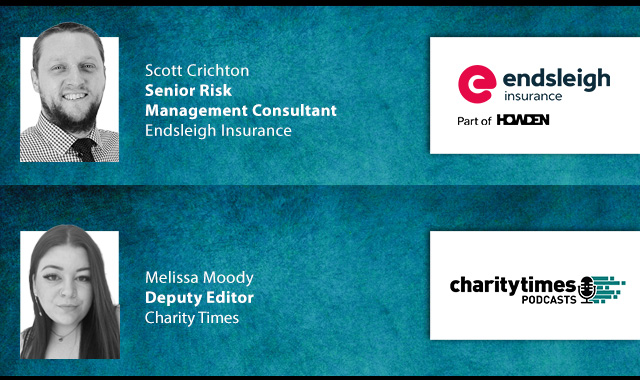
The cost-of-living crisis is impacting charities in a number of ways, including the risks they take. Endsleigh Insurance’s* senior risk management consultant Scott Crichton joins Charity Times to discuss the ramifications of prioritising certain types of risk over others, the financial implications risk can have if not managed properly, and tips for charities to help manage those risks.
* Coming soon… Howden, the new name for Endsleigh.
* Coming soon… Howden, the new name for Endsleigh.
Better Society





© 2021 Perspective Publishing Privacy & Cookies
Recent Stories