A social enterprise called Citizen Society is developing a new way for politicians to connect with disengaged Brits online.
The concept is a free to use online public opinion bank - termed the 'oPob.' - which launches in January 2010.
It will use the idea of social media to empower the voices of people who aren't usually heard and help them to become more involved in the democratic process.
Citizen Society hopes to collaborate with organizations such as the National Association of Citizen's Advice Bureaux in England and Wales and UK Online to move towards establishing the user base.
The oPob. works by allowing individual members of the public to register, log in and have their say to express their opinion about anything to do with democracy in the UK.
Citizen Society also aims to encourage what it terms as the political classes (a term borrowed from political communications theory): judges, Peers, MPs and their staff, policy makers, journalists, researchers and other organisations to literally get more in touch with the public opinion of those individuals who don't usually have a voice.
Registered politicals will be able to suggest issues for all users to express an opinion on or just users from their constituency.
Davina Kirwan, founding director of Citizen Society, said: "What the general public don't know is that academic scholars who study political science, sociology, democracy and culture theory say that public opinion is an illusion created unwittingly by opinion polling and used by political actors to legitimize their actions - giving the impression of this massive unanimous vehicle of public voices - which isn't actually accurate. It's time for the real voices of ordinary people to finally be heard - however, uninformed or basic they may be."


Latest News
-
Nine in ten charities using AI but few exploring its ‘true potential’, warns research
-
Evaluation reveals benefits of adding a virtual candle to online fundraising
-
Former Scope CEO to chair business group set up to tackle disability exclusion
-
Senior MP’s comparison of charity retail with vape shops criticised as 'outdated'
-
Working Families closes following ‘a sustained period of financial challenge’
-
Case study: How charities can best protect their storytellers





Charity Times video Q&A: In conversation with Hilda Hayo, CEO of Dementia UK
Charity Times editor, Lauren Weymouth, is joined by Dementia UK CEO, Hilda Hayo to discuss why the charity receives such high workplace satisfaction results, what a positive working culture looks like and the importance of lived experience among staff. The pair talk about challenges facing the charity, the impact felt by the pandemic and how it's striving to overcome obstacles and continue to be a highly impactful organisation for anybody affected by dementia.
Charity Times Awards 2023
Mitigating risk and reducing claims
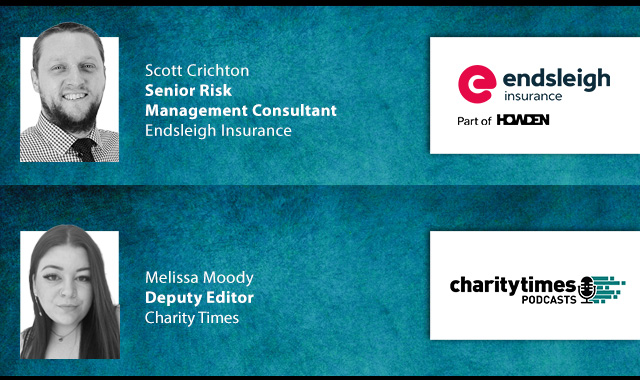
The cost-of-living crisis is impacting charities in a number of ways, including the risks they take. Endsleigh Insurance’s* senior risk management consultant Scott Crichton joins Charity Times to discuss the ramifications of prioritising certain types of risk over others, the financial implications risk can have if not managed properly, and tips for charities to help manage those risks.
* Coming soon… Howden, the new name for Endsleigh.
* Coming soon… Howden, the new name for Endsleigh.
Better Society




© 2021 Perspective Publishing Privacy & Cookies
Recent Stories