The public is becoming more discriminating about financial management in charities, according to new public opinion research commissioned by the Charity Commission.
The research shows people are placing increasing importance on knowing how charities spend their money and what they achieve.
The independent survey reveals that 42% of people say "ensuring that a reasonable proportion of a charity’s income reaches the end cause" is the most important single factor influencing their trust.
This has changed since the last time the survey was conducted in 2008, when charities’ ability to make a difference to the causes they work for was the most important factor (35% of respondents).
Overall, the survey, which was conducted by Ipsos MORI, reveals that public trust and confidence remains high, at a mean of 6.6 out of ten.
Charities are also the third most trusted group, just behind doctors (mean 7.7) and police (mean 7.1).
The survey also reveals that people are more likely to trust charities generally if they, or close friends or family members, have had experience of them.
However, people are not always aware of being beneficiaries of a charity. When asked directly, fewer than one in three (30%) say they or their close friends or family have used the services of a charity.
However, when prompted with activities that charities might provide, around nine in ten (93%) say they or close friends or family have used the services of a charity.
Other key findings include:
· The proportion of people reporting high levels of trust and confidence in charities has increased by 5 percentage points (from 36% to 41%) since 2008;
· Almost all those asked (96%) agree that it is important to them that charities provide the public with information about how they spend their money;
· Almost all those asked (98%) believe the role of the Charity Commission is essential, very or fairly important.
· People who are familiar with the Charity Commission report higher public trust and confidence in charities;
· The most common reason why some charities are trusted less is ‘not knowing how their money is spent’ (35% of those who trust certain charities or types of charities less than others).
Commenting on the report, Dame Suzi Leather, chair of the Charity Commission said: “I am delighted that public trust and confidence remains so high, and that charities are among the groups most trusted by people. As public spending declines over coming years, charities will rely ever more heavily on this public support.
“The report indicates that people are becoming more interested in knowing how charities spend their donations. Charities will need to respond to more discriminating donors by explaining their spending decisions to the public and by demonstrating what they achieve.
“We are also urging charities to submit their annual returns to us on time; this new research underlines how important it is for charities to avoid a ‘red mark’ against their name on the Commission’s online register.
"I hope that the valuable data in this report encourages charities to be even more careful to tell the public how they use their funds effectively to make a difference to the causes they work for. This will help ensure the high levels of public trust and confidence are maintained and improved.”


Latest News
-
Evaluation reveals benefits of adding a virtual candle to online fundraising
-
Former Scope CEO to chair business group set up to tackle disability exclusion
-
Senior MP’s comparison of charity retail with vape shops criticised as 'outdated'
-
Working Families closes following ‘a sustained period of financial challenge’
-
Case study: How charities can best protect their storytellers
-
British Heart Foundation to close almost one in four of its charity shops





Charity Times video Q&A: In conversation with Hilda Hayo, CEO of Dementia UK
Charity Times editor, Lauren Weymouth, is joined by Dementia UK CEO, Hilda Hayo to discuss why the charity receives such high workplace satisfaction results, what a positive working culture looks like and the importance of lived experience among staff. The pair talk about challenges facing the charity, the impact felt by the pandemic and how it's striving to overcome obstacles and continue to be a highly impactful organisation for anybody affected by dementia.
Charity Times Awards 2023
Mitigating risk and reducing claims
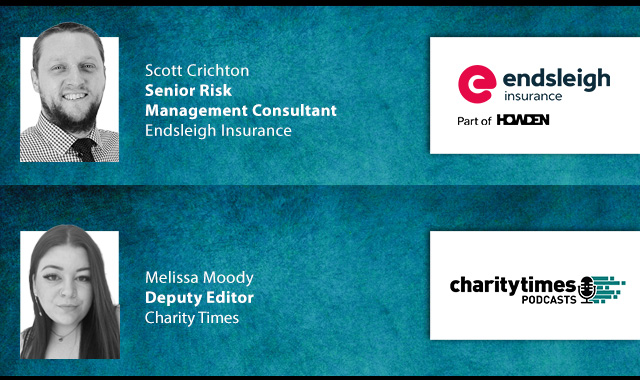
The cost-of-living crisis is impacting charities in a number of ways, including the risks they take. Endsleigh Insurance’s* senior risk management consultant Scott Crichton joins Charity Times to discuss the ramifications of prioritising certain types of risk over others, the financial implications risk can have if not managed properly, and tips for charities to help manage those risks.
* Coming soon… Howden, the new name for Endsleigh.
* Coming soon… Howden, the new name for Endsleigh.
Better Society




© 2021 Perspective Publishing Privacy & Cookies
Recent Stories