The Charity Employees Benevolent Fund (CEBF) has established an Advisory Council to guide and promote the adoption and support of the charity by the sector.
CEBF is the charity sector’s own benevolent fund, acting as a safety-net for those individuals in difficulty and underpinning the welfare provision to all charity employees, past and present, in the UK.
Made up of representatives from some of the sector’s major umbrella bodies, the Council will work to embed CEBF in the centre of the sector.
Heading up the Council is Michael Lake (formerly director-general of Help the Aged and of the English Speaking Union), flanked by senior representatives of ACEVO, CFDG, DSC, Action Planning and the Community Foundation Network (CFN).
Sir Stuart Etherington, CEO of NCVO, is president of CEBF; Andrew Hind (formerly CEO of the Charity Commission) and Stephen Lloyd, senior partner of law firm Bates Wells & Braithwaite, are also Council members.
Advisory Council chair, Michael Lake, said: "It is a strange anomaly that the charitable sector has not previously had a fund to support the many low paid employees who work within it and fall on hard times. I am pleased to work with the CEBF Trustees to steer this essential fund to a secure future."
The idea of the Council was first promoted by CEBF trustee, Michael Brophy (formerly CEO of the Charities Aid Foundation).
He commented: "We are looking to the umbrella organisations to encourage their members to support CEBF and to sector leaders to show the way. I’m sure they will! It means annual donations from charities as well as regular donations from charity employees through Payroll Giving. In this way, the Advisory Council will make a difference."


Latest News
-
Regulator considering MP’s claim 32 charities ‘funnelled' £28m to illegal Israeli settlements
-
Nine in ten charities using AI but few exploring its ‘true potential’, warns research
-
Evaluation reveals benefits of adding a virtual candle to online fundraising
-
Former Scope CEO to chair business group set up to tackle disability exclusion
-
Senior MP’s comparison of charity retail with vape shops criticised as 'outdated'
-
Working Families closes following ‘a sustained period of financial challenge’





Charity Times video Q&A: In conversation with Hilda Hayo, CEO of Dementia UK
Charity Times editor, Lauren Weymouth, is joined by Dementia UK CEO, Hilda Hayo to discuss why the charity receives such high workplace satisfaction results, what a positive working culture looks like and the importance of lived experience among staff. The pair talk about challenges facing the charity, the impact felt by the pandemic and how it's striving to overcome obstacles and continue to be a highly impactful organisation for anybody affected by dementia.
Charity Times Awards 2023
Mitigating risk and reducing claims
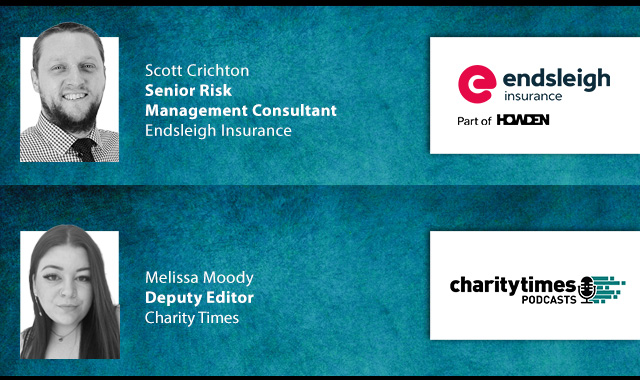
The cost-of-living crisis is impacting charities in a number of ways, including the risks they take. Endsleigh Insurance’s* senior risk management consultant Scott Crichton joins Charity Times to discuss the ramifications of prioritising certain types of risk over others, the financial implications risk can have if not managed properly, and tips for charities to help manage those risks.
* Coming soon… Howden, the new name for Endsleigh.
* Coming soon… Howden, the new name for Endsleigh.
Better Society




© 2021 Perspective Publishing Privacy & Cookies
Recent Stories