One in five trustees say their charity board lacks a diverse range of skills and over half (51%) believe that a more diverse board would enhance their charity’s effectiveness, according to new research from Trustees Unlimited.
A third of trustees said that diversity could be improved by recruiting more people from ethnic backgrounds or younger people (31%).
Trustees Unlimited questioned its database to assess if there are any the barriers preventing people becoming trustees today and the challenges trustees face.
The number one barrier preventing people becoming trustees is the lack of knowledge about where the opportunities are (33%), a lack of knowledge about what trusteeship involves (25%) and the fact charities are not good at promoting their opportunities (21%).
According to Charity Commission reports[ii], 39% of UK charities have difficulties recruiting trustees.
Interestingly, 38% of the survey respondents are still looking for a trustee position.
Out of those with a trustee role, 45% responded to a job advert and 45% were recruited via an acquaintance or colleague.
Just 9% were recruited through a recruitment company and only 1% through a scheme at work.
Ian Joseph, CEO of Trustees Unlimited, said: “One in five trustees say their board lacks diversity which is unsurprising given that half of trustees are recruited by friends and acquaintances.
"Diverse boards make better decisions but because many charities are recruiting within their own networks, they are missing out on talent.
"There are highly skilled professionals from all backgrounds and disciplines failing to find suitable roles in spite of the fact many charities need the skills these people possess. This is a clear disconnect in the sector that we are trying to bridge.”
However, being a trustee is not without its challenges.
According to the report, the main issues for trustees are ‘the time commitments’, the difficulty of ‘understanding of financial management issues’, ‘understanding and getting on with fellow trustees’ and ‘understanding governance, the role and responsibilities’.
Trustees claimed that better education is needed about trusteeship and that charities need to do more to promote their trustee positions to encourage more people to volunteer as trustees.
Charity governance also emerged as a big issue, with one in ten respondents saying they hadn’t been given the charities governing documents to read when they started. 43% said they hadn’t received an induction and 46% hadn’t seen any job description outlining their remit and responsibilities.
Over half (52%) wanted more training with 64% required training in governance, 59% in managing risks and liabilities and 40% said that training in finance would help them.
Ian Joseph added: “Trusteeships can be highly rewarding and even life changing, but people need to be aware of the risks and liabilities involved. Charities have an obligation to ensure trustees are fully aware of their responsibilities and proper inductions are essential and in some cases, this clearly isn’t happening.
“With Trustee Week upon us, there is a clear message emerging which is that charities need to do more to promote themselves to a wider audience. Charities have to function more commercially than ever before in order to survive.
"Recruiting trustees with professional skills from more diverse backgrounds could lead to better decision making, greater innovation and ensure organisations operate more effectively and competitively.”
“Equally, there is an opportunity for businesses wanting to improve their corporate social responsibility - they could encourage employees to take on a trustee role.
"Only 1% of trustees in our research applied through a scheme at work, so clearly there is a huge opportunity here.”

Latest News
-
Former Salvation Army worker struck off after alleged sex with ‘vulnerable’ ex-resident
-
British Heart Foundation reveals extent of retail losses as it starts closing 150 shops
-
Dan Francis: Thinking differently about charity leadership
-
Friday funding round up – 25 September
-
Lifeboat charity crew tracked then subjected to ‘inflammatory’ social media attack
-
Arts Council England pledges to boost ‘local expertise’ in funding decisions





Beyond the funding squeeze: Using equities to secure your charity’s future
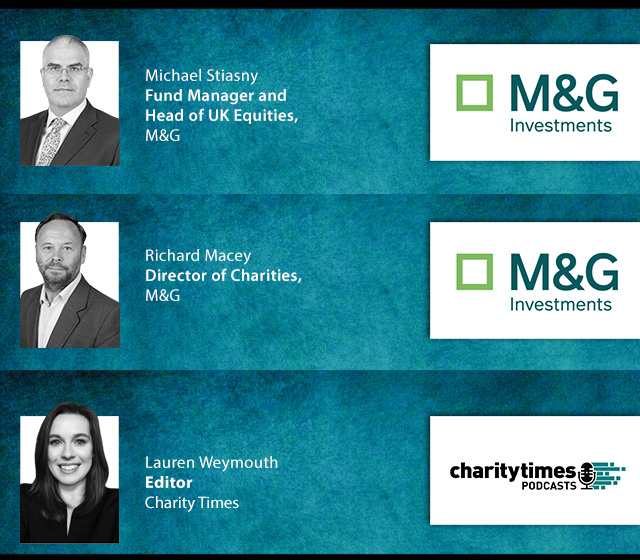
With charities facing increasing financial pressure and traditional income streams under strain, making investments work harder has never been more important. M&G’s Richard Macey and Michael Stiasny join Charity Times to discuss why equities remain a vital long-term asset class for charities, how organisations can balance income generation and growth, and the opportunities the current market environment may offer to help strengthen financial resilience.
Charity Times Awards 2023
Charity Times video Q&A: In conversation with Hilda Hayo, CEO of Dementia UK
Charity Times editor, Lauren Weymouth, is joined by Dementia UK CEO, Hilda Hayo to discuss why the charity receives such high workplace satisfaction results, what a positive working culture looks like and the importance of lived experience among staff. The pair talk about challenges facing the charity, the impact felt by the pandemic and how it's striving to overcome obstacles and continue to be a highly impactful organisation for anybody affected by dementia.




© 2021 Perspective Publishing Privacy & Cookies
Recent Stories