Following research published by UK Sustainable Investment and Finance Association reporting that three in five adults with investments want charities to take a leadership role in responsible investment of assets, Charity Finance Group have released findings from a survey of its members showing that 51% of charities now have an ethical investment policy.
This figure, from the survey for National Ethical Investment Week, is an increase from 46% in a similar survey carried out in 2009.
Over a quarter of those with an ethical investment policy (26%) are also now engaging directly or indirectly with the companies in which they invest, suggesting that charities are increasingly responding to public expectations of them to take a leadership role on investment stewardship issues, as reported by UKSIF this week.
Reflecting the challenging financial climate, concerns about the possibility of ethical investment resulting in a lower financial return were the most important barrier to ethical investment, followed by a lack of staff resources.
CFG CEO, Caron Bradshaw said: "The findings from our survey show that, although it is still a concern to some, charities are increasingly looking through the assumptions that ethical investment negatively impacts on the bottom line and responding to public expectations that they should invest responsibly.
"Ethical investment can deliver significant benefits to both the charity and wider society without negative impact on financial returns. A growing number of charities are not only adopting ethical investment policies, but also positively engaging with the companies they invest in.
"We’d encourage charities of all sizes to consider developing an ethical investment policy and I’m pleased with the guide produced by UKSIF in association with CFG for National Ethical Investment Week, which, with other guidance produced by CFG, can really help with this."
Other key findings show that:
Avoiding conflict with the charity’s aims and activities is the most importantreason for charities seeking to adopt and retain an ethical investment policy
89% of respondents said the economic downturn had not influenced their charity's view of environmental, social and governance issues relating to investment
88% of respondents said trustees were an important driver of their decision to implement an EI policy, but Finance Directors were important in just 30% of respondent charities


Latest News
-
Council terminates charity’s £8.57m children's care home contract early amid staffing concerns
-
Charity boss shows her 'vulnerability' as she posts emotional grant rejection video
-
English speaking fundraising ideas may be ‘crowding out’ local strategies
-
Friday funding round up – 9 October
-
Charity charged with corporate manslaughter following fatal boating incident
-
CEO retires after 40 years with mental health charity





Beyond the funding squeeze: Using equities to secure your charity’s future
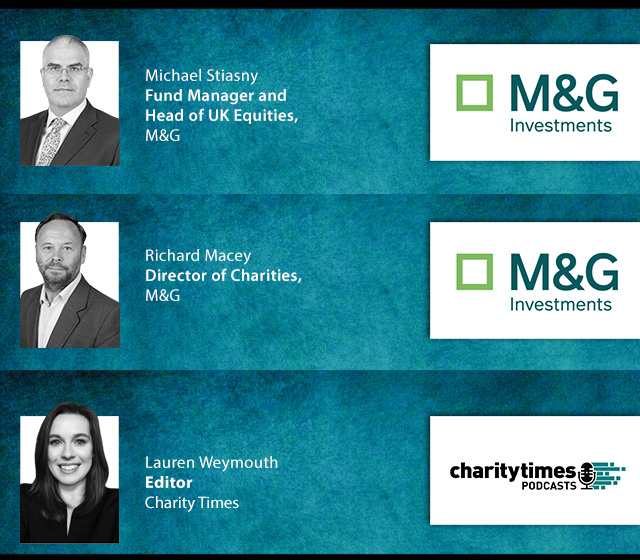
With charities facing increasing financial pressure and traditional income streams under strain, making investments work harder has never been more important. M&G’s Richard Macey and Michael Stiasny join Charity Times to discuss why equities remain a vital long-term asset class for charities, how organisations can balance income generation and growth, and the opportunities the current market environment may offer to help strengthen financial resilience.
Charity Times Awards 2023
Charity Times video Q&A: In conversation with Hilda Hayo, CEO of Dementia UK
Charity Times editor, Lauren Weymouth, is joined by Dementia UK CEO, Hilda Hayo to discuss why the charity receives such high workplace satisfaction results, what a positive working culture looks like and the importance of lived experience among staff. The pair talk about challenges facing the charity, the impact felt by the pandemic and how it's striving to overcome obstacles and continue to be a highly impactful organisation for anybody affected by dementia.




© 2021 Perspective Publishing Privacy & Cookies
Recent Stories