UK foundations gave an estimated £290 million to international development and related causes in 2009/10, a new study shows.
The vast majority of the grants were made to civil society organisations in the UK and developing countries – equal to almost half the bilateral aid support given by the Department for International Development (DFID) to such organisations.
The findings come from a study carried out by Cass Business School for The Nuffield Foundation, The Baring Foundation and Paul Hamlyn Foundation, all of whom are international funders.
In an era of increasing globalisation, the research provides an up-to-date picture of the scale of UK foundation resources devoted to international development, and the regions and causes which benefit.
It shows:
Spending on international development causes represents 9% of the spending of all UK independent foundations, which spend just over £3 billion per annum in grants
The region attracting the highest number of foundation funders is Africa (37%), in particular East Africa. This is followed by Asia (23%), and the Americas (13%)
Foundation support for civil society organisations in Africa is worth more than £90 million, and for Asia £56 million
Independent foundations support an extremely diverse range of subject areas: direct health care and formal education attract the highest number of foundation funders (12% each), and sustainable economic/ agricultural development and investment attracts 10%, followed by utilities and infrastructure (9%)
Children and youth causes attract funding from 38% of the foundations in the study.
The research, entitled Global grantmaking: A review of UK foundations funding for international development’, also looked at the approach of UK foundations to supporting international development needs today.
It found that while independent foundations in the UK have a long and evolving history of funding internationally, there is growing interest in providing overseas aid.
Recently formed foundations which fund internationally include the Children’s Investment Fund Foundation, The Waterloo Foundation, the Wood Family Trust and the Ashmore Foundation.
Emerging trends in the approach of independent UK foundations include:
Investing in health, education, and sustainable development, particularly in Africa, issues now widely acknowledged as fundamental to global change
Addressing inequalities in health and education in India
Setting up new programmes in emerging areas of need such as climate change, neglected tropical diseases, and palliative care
Working increasingly in partnerships with other philanthropic and non-philanthropic funders such as governments, international agencies and the private sector
Tackling root causes of poverty through supporting sustainable agriculture and enterprise development.
Author of the study, Professor Cathy Pharoah from the ESRC Centre for Charitable Giving and Philanthropy at Cass Business School, said: “The research shows how UK foundations are playing an increasingly substantial and dynamic role in shaping civil society in developing countries.
"Given the huge challenges of the global environment, it is important for foundations and other funders to share more experience and knowledge on effective interventions. Is more impact achieved through supporting diversity or through focussing on a small set of issues and combining resources?
"What is the potential for social investment and information technology to help address inequality? In an increasingly global world where relatively small sums of money can have a transformational impact on people in developing countries, it is time for more foundations to consider working internationally.
"But the research highlights the big questions facing independent foundations too - how much of their relatively limited resources should be devoted to international need? What is their role within the bigger picture of governmental and private aid to developing countries?”
The research identified and studied 90 independent UK foundations providing funding worth over £50,000 per annum for international development and related causes in 2009/10.
Their charitable spending represents 74% of the spending of all independent UK foundations.
Data is based on figures published in annual reports and accounts, and on interviews with a small balanced sample of foundations.
The term ‘international development’ was used in this report to refer generically to activities in developing countries and emerging economies encompassing growth, governance, health, education, gender, disaster relief, humanitarian aid, infrastructure, rights, economic and environmental sustainability, and associated research.
The study updates previous research commissioned by the Nuffield, Baring and Paul Hamlyn Foundations, and published in June 2007 under the title Going Global. Since this earlier study, it is notable that a number of new UK foundations which fund internationally have emerged, including the Children’s Investment Fund Foundation, The Waterloo Foundation, The Ashmore Foundation and the Wood Family Trust.
Headline findings will be launched at a conference in London on 18th October, and the full report published in November.


Latest News
-
Criticism of senior MP’s 'outdated' comparison of charity retail with ‘vape shops’
-
Working Families closes following ‘a sustained period of financial challenge’
-
Case study: How charities can best protect their storytellers
-
British Heart Foundation to close almost one in four of its charity shops
-
Monday movers - 8 June
-
Jobs at risk as RSPB looks to cut operating costs by 7%





Charity Times video Q&A: In conversation with Hilda Hayo, CEO of Dementia UK
Charity Times editor, Lauren Weymouth, is joined by Dementia UK CEO, Hilda Hayo to discuss why the charity receives such high workplace satisfaction results, what a positive working culture looks like and the importance of lived experience among staff. The pair talk about challenges facing the charity, the impact felt by the pandemic and how it's striving to overcome obstacles and continue to be a highly impactful organisation for anybody affected by dementia.
Charity Times Awards 2023
Mitigating risk and reducing claims
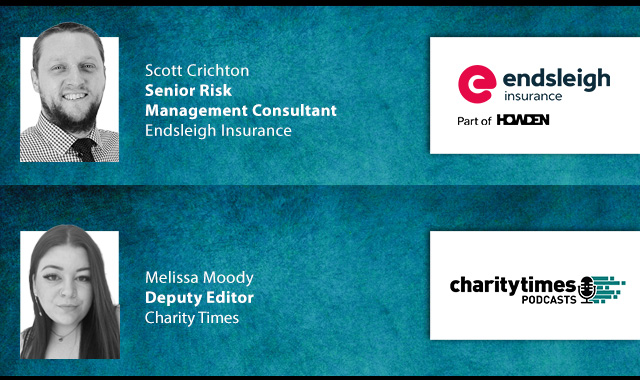
The cost-of-living crisis is impacting charities in a number of ways, including the risks they take. Endsleigh Insurance’s* senior risk management consultant Scott Crichton joins Charity Times to discuss the ramifications of prioritising certain types of risk over others, the financial implications risk can have if not managed properly, and tips for charities to help manage those risks.
* Coming soon… Howden, the new name for Endsleigh.
* Coming soon… Howden, the new name for Endsleigh.
Better Society




© 2021 Perspective Publishing Privacy & Cookies
Recent Stories