Three quarters (76%) of charity trustees say that they know about the public benefit requirement, which applies to all charities, according to new research published by the Charity Commission.
The findings of the independent research are published as the charity regulator sets out its plans for a series of further public benefit assessments of charities in the arts, health and sports/recreation sectors.
The new public benefit research is the first of its kind and is based on a survey of 1,483 charity trustees in England and Wales.
Other key findings include: 98% of those respondents who know about the requirement are confident that their charity can demonstrate its public benefit.
The trustees of larger charities (those with an income of £500,000 or more) are significantly more likely to know about the public benefit requirement, with 71% saying either they know a great deal (11%) or a fair amount (60%) about the requirement.
The Commission's guidance on public benefit has been well received by charities - 92% of those who have used it found it useful and two thirds (66%) of them found it easy to understand.
Nearly a quarter of trustees (22%) who are aware of the requirement say their charity has revisited its aims as a result. Amongst charities with an income of £500,000 or above this rises to 38%.
Smaller charities (those with an income of under £25,000) and charities with sport/recreation as their main activity were more likely to say they knew nothing about the public benefit requirement.
Dame Suzi Leather, chair of the Charity Commission, said: "We are pleased that this new research shows a good level of awareness among trustees for this relatively new requirement.
"However, there is clearly still work for the Commission to do in increasing that awareness and deepening charities' understanding of public benefit. We will use the findings to inform and further develop our work in this area. In addition, our upcoming assessments of arts, health and sports charities will provide further practical demonstration for trustees of the operation of the public benefit requirement.
"Charities occupy a special place in society and it is right that in return for this they should be required to demonstrate the benefit of their work. The public benefit requirement will bring greater transparency and public accountability to the sector, which will bring benefits to both charities and society."
To coincide with the publication of the new research, the Commission will look at fee-charging arts charities in its next round of public benefit assessments.
Subsequent assessments, which will take place later next year, will look at charities for the advancement of health and those working in sports/recreation.
As well as adding to the Commission's public benefit guidance, the assessments will provide practical examples for other charities, including fee-charging and smaller charities. The assessments will cover a range of charities of varying sizes and scope of operation in the arts.
The arts charities to be assessed by the Commission are:
• The Royal Opera House Covent Garden,
• The Young Concert Artists Trust
• The Castle Players
• Gwent Ballet Theatre, known as the Independent Ballet Wales.
The Royal Opera House, having been previously involved in providing assistance to the Charity Commission in developing the guidance around public benefit and how it applies to fee-charging charities, has volunteered to be included in this group of assessments.


Latest News
-
Nine in ten charities using AI but few exploring its ‘true potential’, warns research
-
Evaluation reveals benefits of adding a virtual candle to online fundraising
-
Former Scope CEO to chair business group set up to tackle disability exclusion
-
Senior MP’s comparison of charity retail with vape shops criticised as 'outdated'
-
Working Families closes following ‘a sustained period of financial challenge’
-
Case study: How charities can best protect their storytellers





Charity Times video Q&A: In conversation with Hilda Hayo, CEO of Dementia UK
Charity Times editor, Lauren Weymouth, is joined by Dementia UK CEO, Hilda Hayo to discuss why the charity receives such high workplace satisfaction results, what a positive working culture looks like and the importance of lived experience among staff. The pair talk about challenges facing the charity, the impact felt by the pandemic and how it's striving to overcome obstacles and continue to be a highly impactful organisation for anybody affected by dementia.
Charity Times Awards 2023
Mitigating risk and reducing claims
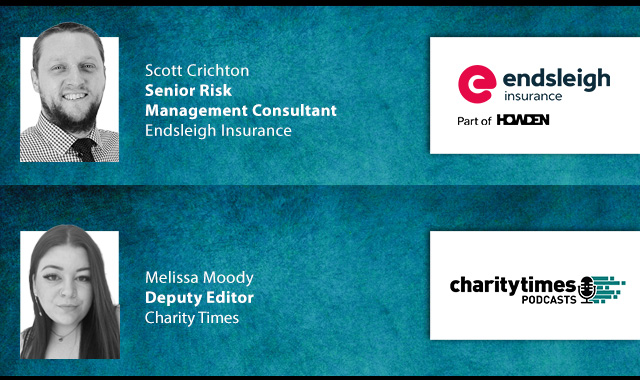
The cost-of-living crisis is impacting charities in a number of ways, including the risks they take. Endsleigh Insurance’s* senior risk management consultant Scott Crichton joins Charity Times to discuss the ramifications of prioritising certain types of risk over others, the financial implications risk can have if not managed properly, and tips for charities to help manage those risks.
* Coming soon… Howden, the new name for Endsleigh.
* Coming soon… Howden, the new name for Endsleigh.
Better Society




© 2021 Perspective Publishing Privacy & Cookies
Recent Stories