Donors’ trust and confidence in charities is high, according to a survey commissioned by the Fundraising Standards Board (FRSB), but non-supporters are significantly less trusting.
Fundraising regulation is a key influencer in both public trust and the decision to donate.
The survey results reveal that the large majority (84%) of donors are confident that the charities they support make a difference and 82% that they trust the charities they give to.
Eight in 10 people say that charities value their donations.
The large majority of people give at least once a year (80%), with 44% giving monthly or more often.
The youngest age group is least likely to give with 14% of this group saying they have never given to charity and just 38% giving monthly or more often, compared to 48% of those aged 55-64.
Affirming the link between trust and charitable giving, trust is significantly higher amongst donors than non-donors and in those parts of the country where giving is more prevalent; at its height in Scotland and lowest in Wales.
Adults aged 25 or over are more likely (87%) to say that their support really does make a difference to the charities they support in comparison to 72% of those aged 16-24.
Confidence in charities’ work is significantly lower amongst non-supporters. 78% of donors agree with the statement that ‘giving to charity is the best way of supporting good causes’ compared to just 35% of non-donors.
Only one third of non-donors agreed (29% disagreed) with the statement ‘I trust charities’ and 26% that ‘charities use donations wisely’ (33% disagreed).
Seven in ten donors and half of non-donors (49%) agreed that charities must invest in fundraising to secure the future of the services they provide.
Around half (54%) of donors agreed that charities use the most effective means of fundraising compared to 31% of non-donors.
Both donors and non-donors were least confident about charities’ expenditure with just one in five (19%) of non-donors agreeing with the statement that charities do not spend too much money on fundraising and administration.
Key factors in building public trust and confidence, both regulation and accountability have become increasingly important to the public with 72% of adults saying they would have more trust in a charity’s fundraising if it was accountable to an independent regulatory body and 71% if they knew it was a member of the FRSB, up from 65% and 64% respectively in 2011.
More than 6 in 10 people (62%) said they are more likely to give to a charity that is a member of the FRSB and more than half (56%) would not want to support a charity if its fundraising was not regulated.
Alistair McLean, chief executive of the Fundraising Standards Board, said: “It’s hugely encouraging that donors are so confident and trusting in charities, but it is clear that there is a real gulf between those that give and those that don’t.
“This survey shows that both fundraising regulation and charities’ accountability have become increasingly important to charity supporters and reinforces the opportunity of engaging non-donors.”
The TNS survey asked 1,062 Britons.


Latest News
-
Children’s hospice charities facing a total shortfall of £34.3m this year
-
Evaluation backs 800-year-old charity’s ‘deputised funding model’
-
‘Falling income and rising costs’ forces support charity to close
-
Suneet Sharma: Ethical governance in practice
-
King’s Birthday Honours list pays tribute to charity leaders and fundraisers
-
Charity brands with 'momentum' among the public revealed





Charity Times video Q&A: In conversation with Hilda Hayo, CEO of Dementia UK
Charity Times editor, Lauren Weymouth, is joined by Dementia UK CEO, Hilda Hayo to discuss why the charity receives such high workplace satisfaction results, what a positive working culture looks like and the importance of lived experience among staff. The pair talk about challenges facing the charity, the impact felt by the pandemic and how it's striving to overcome obstacles and continue to be a highly impactful organisation for anybody affected by dementia.
Charity Times Awards 2023
Mitigating risk and reducing claims
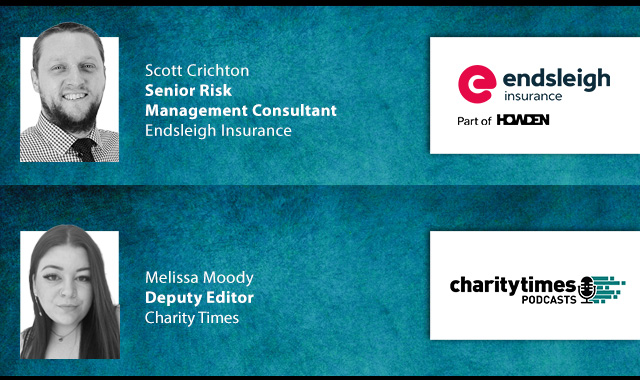
The cost-of-living crisis is impacting charities in a number of ways, including the risks they take. Endsleigh Insurance’s* senior risk management consultant Scott Crichton joins Charity Times to discuss the ramifications of prioritising certain types of risk over others, the financial implications risk can have if not managed properly, and tips for charities to help manage those risks.
* Coming soon… Howden, the new name for Endsleigh.
* Coming soon… Howden, the new name for Endsleigh.
Better Society





© 2021 Perspective Publishing Privacy & Cookies
Recent Stories