The Third Sector Research Centre has released new research analysing the role of the sector in the 2010 general election and the success of their voices in shaping the new political landscape.
It notes 2010 could be seen as a watershed election for the sector.
Voluntary, community and social enterprise groups and issues experienced a high political profile and all the major political parties shared a positive interpretation of their role in society.
However, the apparently broad consensus about the value of the sector masked key differences in how its role was viewed.
TSRC researchers conducted documentary analysis and held interviews with key stakeholders before, during and after the election, to gain an insight into the tactics used to influence debate, and the reaction of the sector to the election process and outcome.
In many ways the third sector experienced a successful election campaign.
Whilst the public facing campaign did not often touch explicitly on the role of the sector, it was implicitly at the heart of all party agendas.
And since the formation of the new coalition government the Big Society has re-emerged as a central policy theme, giving the sector a platform on which to debate.
Most commentators expect to see a significant role for the third sector in policy developments and public service delivery in the coming years.
However, political differences in positioning the sector were revealing.
Analysis of manifestos and political discourse showed that Labour talked in terms of partnership, campaigning, service delivery and policy influence, whilst the Conservatives emphasised localism, social action and smaller government.
They talked about voluntary sector providers, civil society, civic responsibility but did not use the term Third Sector – and after election moved quickly to drop the term from formal government use.
The Liberal-Democrat manifesto had least mention of the sector, although strongly shared the Conservative’s localism agenda.
Campaigning techniques
Whilst long-term policy outcomes are still being determined, organisations were able to draw some lessons on the kind of campaigning that had proved most effective for them.
· Key points were made about diplomacy - the importance of understanding competing pressures on Ministers and civil servants and presenting oneself as a ‘can-do’ ‘solution-focused’ organisation.
· Time and again, interviewees commented on the significance of developing good quality relationships with civil servants and other public officials in order to maintain the channels of dialogue.
· Most leading third sector organisations and their representative agencies produced their own manifestos, setting out their priorities for political support and policy development. These were influential in providing a strong and largely united voice from the sector.
· However, making their voices newsworthy at a national level presented a challenge for third sector organisations, which often lacked media leverage. The best chance of influencing the agenda was generally to offer comment on stories featured during the campaign, such as the Big Society.
· Some felt that self censorship restricted campaigning to some extent. One civil servant commented ‘I thought we would see more high profile activity actually’.
Since the election, the policy agenda of the new Coalition government has moved forward quickly, with a review of central support for the sector and major reductions in public expenditure planned.
Despite their campaigning successes in the election, these early policy developments have made many organisations nervous about their future and spending cuts look set to hit some parts of the sector quite hard, including some of the infrastructure organisations who were most effective in the election.
Pete Alcock, director of Third Sector Research Centre, commented: "The 2010 election provided a unique opportunity for the third sector to shape debate about future policy within a contested political climate.
"The sector responded proactively to this challenge and organisations may now be well placed to influence the Big Society agenda, which is now at the centre of the new government’s policy.
"The adaptability of their campaigning techniques and skills in forging new roles and alliances are likely to be called upon now more than ever as they negotiate this new political territory."


Latest News
-
Regulator considering MP’s claim that 32 UK charities ‘funnelled' £28m to illegal Israeli settlements
-
Nine in ten charities using AI but few exploring its ‘true potential’, warns research
-
Evaluation reveals benefits of adding a virtual candle to online fundraising
-
Former Scope CEO to chair business group set up to tackle disability exclusion
-
Senior MP’s comparison of charity retail with vape shops criticised as 'outdated'
-
Working Families closes following ‘a sustained period of financial challenge’





Charity Times video Q&A: In conversation with Hilda Hayo, CEO of Dementia UK
Charity Times editor, Lauren Weymouth, is joined by Dementia UK CEO, Hilda Hayo to discuss why the charity receives such high workplace satisfaction results, what a positive working culture looks like and the importance of lived experience among staff. The pair talk about challenges facing the charity, the impact felt by the pandemic and how it's striving to overcome obstacles and continue to be a highly impactful organisation for anybody affected by dementia.
Charity Times Awards 2023
Mitigating risk and reducing claims
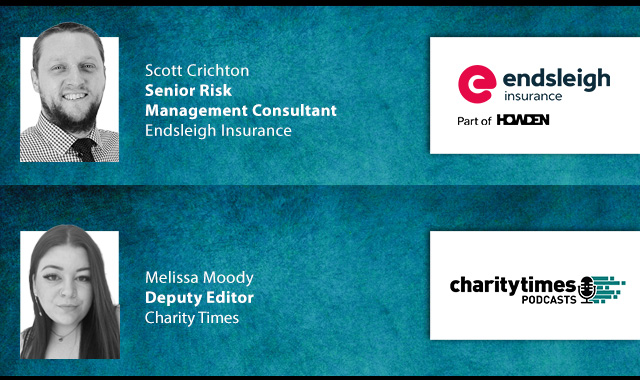
The cost-of-living crisis is impacting charities in a number of ways, including the risks they take. Endsleigh Insurance’s* senior risk management consultant Scott Crichton joins Charity Times to discuss the ramifications of prioritising certain types of risk over others, the financial implications risk can have if not managed properly, and tips for charities to help manage those risks.
* Coming soon… Howden, the new name for Endsleigh.
* Coming soon… Howden, the new name for Endsleigh.
Better Society





© 2021 Perspective Publishing Privacy & Cookies
Recent Stories