Voluntary and community sector organisations in 15 areas of England have today been given the backing of the BIG Lottery Fund to enable them to work together to improve and better coordinate services to tackle the needs of people with deeply entrenched multiple and complex problems.
The VCS organisations will lead partnerships to apply for a slice of the BIG Lottery Fund’s (BIG) £100 million investment over eight years to improve the lives of people with multiple and complex needs, including homelessness, reoffending, substance misuse and mental ill-health.
There are an estimated 60,000 adults in England with multiple needs who are beset by several problems at once and lack effective contact with services that support across all their needs.
As a result they can rotate around various welfare, health and justice systems compounding the problems in their lives.
Nat Sloane, Big Lottery Fund England chair, said: “Multiple issues feed off each other and can lead to a downward spiral of ill-health and harm to individuals, their family and society as a whole.
"By working in this original way we aim to not only improve the lives of the people reached over the eight years, but to also feed into a wider study of what works in order to influence policy and practice in the future.
“To do this, it is essential that people experiencing these issues are genuinely involved throughout the design and delivery of each project. By showing why and how this approach works we can inform future policy both within the areas funded and beyond.”
Each of the 15 areas have a significant concentration of people with multiple and complex needs and organisations were invited by the Fund to work together to select a lead partner and to closely collaborate to improve services for people who experience at least two of these problems - homelessness, reoffending, substance abuse and mental ill health.
These 15 lead partners now have the task of developing a vision for how they will deliver local services that are more tailored, better connected and involve people with entrenched problems playing a key role in developing and delivering the support.
The BIG Lottery Fund will award between £4 million and £10 million for between five to eight years to successful applications from these partnerships.
Rick Henderson, chief executive of the umbrella body Homeless Link, said: “Homelessness is often linked with other problems such as mental ill-health, alcohol dependency and experience of institutions like prison.
"It’s unfortunate but those who often need the greatest help can fall though the gaps and this is why BIG’s investment into multiple and complex needs is so vital.
“The lead partners announced today will play a role in helping some of the most vulnerable people in our communities turn their lives around.
"I wish each of the 15 organisations involved every success in pulling together solutions that make a real difference, providing individuals with access to the high quality, tailored services they deserve.”
The 15 lead partners are:
Birmingham: Birmingham Voluntary Service Council
Blackpool: Addaction
Brighton: Brighton Housing Trust
Bristol: Second Step Housing Association
Camden & Islington, London: Single Homeless Project
Great Yarmouth: Voluntary Norfolk
Lambeth, London: Resolving Chaos
Liverpool: Plus Dane Group
Manchester: Young People’s Support Foundation
Newcastle / Gateshead: The Cyrenians
Nottingham: Framework Housing Association
Plymouth: Hamoaze House
Stoke on Trent: Brighter Futures
Tees Valley: The Wisegroup
West Yorkshire: Developing Initiatives Supporting Communities


Latest News
-
Criticism of senior MP’s 'outdated' comparison of charity retail with ‘vape shops’
-
Working Families closes following ‘a sustained period of financial challenge’
-
British Heart Foundation to close almost one in four of its charity shops
-
Monday movers - 8 June
-
Jobs at risk as RSPB looks to cut operating costs by 7%
-
‘Lack of buy in’ from charity leaders hindering philanthropy, fundraising body warns





Charity Times video Q&A: In conversation with Hilda Hayo, CEO of Dementia UK
Charity Times editor, Lauren Weymouth, is joined by Dementia UK CEO, Hilda Hayo to discuss why the charity receives such high workplace satisfaction results, what a positive working culture looks like and the importance of lived experience among staff. The pair talk about challenges facing the charity, the impact felt by the pandemic and how it's striving to overcome obstacles and continue to be a highly impactful organisation for anybody affected by dementia.
Charity Times Awards 2023
Mitigating risk and reducing claims
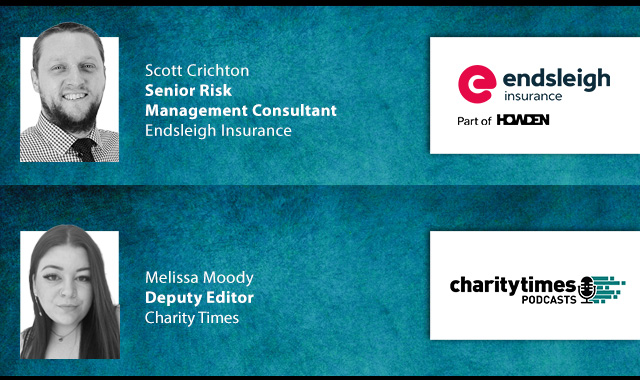
The cost-of-living crisis is impacting charities in a number of ways, including the risks they take. Endsleigh Insurance’s* senior risk management consultant Scott Crichton joins Charity Times to discuss the ramifications of prioritising certain types of risk over others, the financial implications risk can have if not managed properly, and tips for charities to help manage those risks.
* Coming soon… Howden, the new name for Endsleigh.
* Coming soon… Howden, the new name for Endsleigh.
Better Society




© 2021 Perspective Publishing Privacy & Cookies
Recent Stories