The National Council for Voluntary Organisations (NCVO) has responded positively today to Nick Clegg’s announcement that the public will be consulted on laws, regulations and infringements to civil liberties.
Ben Kernighan, deputy chief executive of NCVO, said: “NCVO warmly welcomes the fact that the coalition government is looking to engage the public in improving civil liberties and reducing inappropriate regulations. We would also urge our members to contribute their ideas to the consultation website.
“This consultation also offers a welcome opportunity for the public to have their say on disproportionate restrictions on protest and demonstrations, particularly the laws which restrict campaigning and freedom of assembly in Parliament Square and those that allow counter-terrorism powers to be used to limit peaceful protest."
Clegg has asked the public to put forward laws and regulations they would like to see abolished.
The deputy prime minister launched a Your Freedom website, on which the public will be able to propose ways to reduce bureaucracy.
In a speech he promised "raucous, unscripted debates", which will "throw up the best ideas".
The best suggestions, Clegg noted, would be taken into account when the Freedom Bill is published in the autumn.
Kernighan added: "Charities and voluntary and community organisations can play a significant role in strengthening democracy by inspiring people to get involved in causes they care about, therefore their right to campaign within the law must be respected and encouraged.”


Latest News
-
Evaluation reveals benefits of adding a virtual candle to online fundraising
-
Former Scope CEO to chair business group set up to tackle disability exclusion
-
Senior MP’s comparison of charity retail with vape shops criticised as 'outdated'
-
Working Families closes following ‘a sustained period of financial challenge’
-
Case study: How charities can best protect their storytellers
-
British Heart Foundation to close almost one in four of its charity shops





Charity Times video Q&A: In conversation with Hilda Hayo, CEO of Dementia UK
Charity Times editor, Lauren Weymouth, is joined by Dementia UK CEO, Hilda Hayo to discuss why the charity receives such high workplace satisfaction results, what a positive working culture looks like and the importance of lived experience among staff. The pair talk about challenges facing the charity, the impact felt by the pandemic and how it's striving to overcome obstacles and continue to be a highly impactful organisation for anybody affected by dementia.
Charity Times Awards 2023
Mitigating risk and reducing claims
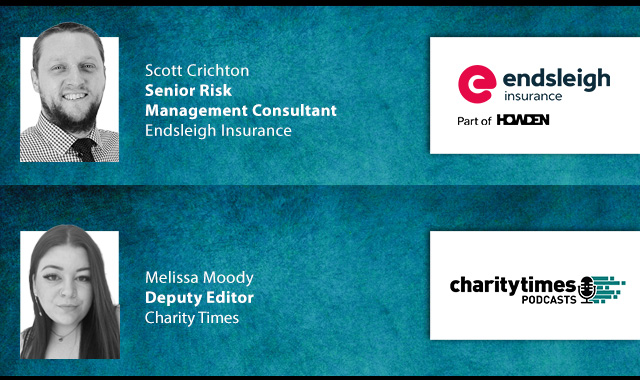
The cost-of-living crisis is impacting charities in a number of ways, including the risks they take. Endsleigh Insurance’s* senior risk management consultant Scott Crichton joins Charity Times to discuss the ramifications of prioritising certain types of risk over others, the financial implications risk can have if not managed properly, and tips for charities to help manage those risks.
* Coming soon… Howden, the new name for Endsleigh.
* Coming soon… Howden, the new name for Endsleigh.
Better Society




© 2021 Perspective Publishing Privacy & Cookies
Recent Stories