The Institute of Fundraising has launched a campaign to raise awareness of the importance of the use of cheques by charities both large and small.
It is also to put pressure on the Payments Council, urging the body not to begin the phasing out of cheques earlier than 2018, and before a viable alternative has been found.
There are many charities - in particular, but not exclusively - those who rely heavily on an older supporter base, which receive more than 70% of their income by cheque.
These charities have expressed real fears that those who currently donate this way may stop giving altogether if they are no longer able to do so by cheque.
The Institute considers that the Payments Council's proposal to phase out cheques may also give a 'green light' to banks to begin the process of the phasing out of cheques before the specified date of 2018.
It argues that without proper consultation with those most likely to be affected by the change, this move should not go ahead.
Institute members are encouraged to add their voices to the campaign, and to contact the Payments Council directly to express their view
Louise Richards, director of policy and campaigns at the Institute of Fundraising, said: "There has been insufficient consultation on this move, which has seemingly been designed entirely as a cost-cutting measure for the banks. We believe there has been scant consideration of the disastrous effect this could have on charitable income."


Latest News
-
Nine in ten charities using AI but few exploring its ‘true potential’, warns research
-
Evaluation reveals benefits of adding a virtual candle to online fundraising
-
Former Scope CEO to chair business group set up to tackle disability exclusion
-
Senior MP’s comparison of charity retail with vape shops criticised as 'outdated'
-
Working Families closes following ‘a sustained period of financial challenge’
-
Case study: How charities can best protect their storytellers





Charity Times video Q&A: In conversation with Hilda Hayo, CEO of Dementia UK
Charity Times editor, Lauren Weymouth, is joined by Dementia UK CEO, Hilda Hayo to discuss why the charity receives such high workplace satisfaction results, what a positive working culture looks like and the importance of lived experience among staff. The pair talk about challenges facing the charity, the impact felt by the pandemic and how it's striving to overcome obstacles and continue to be a highly impactful organisation for anybody affected by dementia.
Charity Times Awards 2023
Mitigating risk and reducing claims
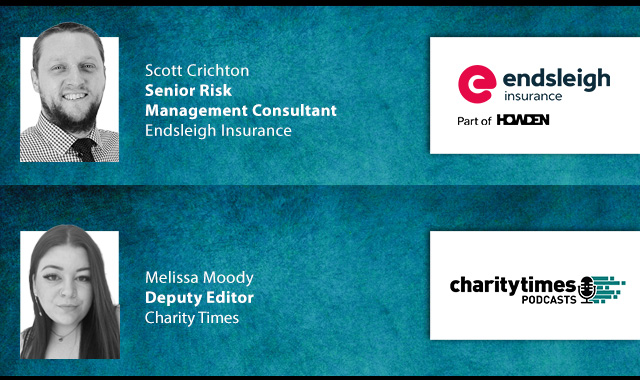
The cost-of-living crisis is impacting charities in a number of ways, including the risks they take. Endsleigh Insurance’s* senior risk management consultant Scott Crichton joins Charity Times to discuss the ramifications of prioritising certain types of risk over others, the financial implications risk can have if not managed properly, and tips for charities to help manage those risks.
* Coming soon… Howden, the new name for Endsleigh.
* Coming soon… Howden, the new name for Endsleigh.
Better Society




© 2021 Perspective Publishing Privacy & Cookies
Recent Stories