Charities are continuing to battle with financial pressures whilst still working to deliver services to the people who need them, according to a new survey of charity leaders.
The latest Charity Forecast Survey by NCVO, shows that 89 per cent of respondents expect to increase (44 per cent) or maintain (45 per cent) the services that they offer over the next quarter.
Although 43 per cent predict their expenditure will decrease over the next 12 months and just 16 per cent expect it to remain static.
The findings show that charities anticipate the year ahead will be tough, with 51 per cent of respondents expecting their financial situation to deteriorate over the next year.
One respondent said "The demand for our services is increasing day by day while our financial capacity is weakening at an unprecedented speed."
Sixty per cent of charities said they expected to compete more with other organisations over the next year, but respondents commented that smaller and local organisations are finding it challenging to stay afloat as they are being squeezed out by larger organisations who have the capacity to be "approved providers".
"We are being promised “commissioning” as the holy grail, however the tenders that are available to bid for are inappropriate for many voluntary and community sector organisations and are simply opening doors to the private sector or large national organisations," according to one survey respondent.
Commenting on the findings, Sir Stuart Etherington, chief executive of NCVO, said: "Charities are under considerable pressure. The demands on all organisations are increasing whilst still trying to support the needs of the most vulnerable in society.
"Increasingly agencies without specialist knowledge and expertise with specific client groups are winning service delivery contracts over charities, largely because they are more adept at the tendering process.
"We need Government to support charities by encouraging opening up of commissioning processes and by removing the complexity to initiatives such as the Gift Aid Small Donations Scheme so charities can benefit."
Other findings from the charity leaders’ quarterly survey include:
Forty-nine per cent of respondents said the financial situation of their organisation worsened over the last 12 months
Ninety-two per cent of respondents think economic conditions within the voluntary sector will be negative over the next 12 months
Seventy-four per cent of respondents expect to collaborate more with other organisations over the next 12 months. Sixty per cent expect to compete more.
The Charity Forecast Survey is carried out by NCVO every three months. It is open to all UK-based NCVO members.
All survey participants are chief executives, directors, trustees or senior managers of charities or voluntary sector organisations.
There were a total of 201 responses which the results in this report were based on.


Latest News
-
Charity brands with 'momentum' among the public revealed
-
Regulators issue transparency plea to the public when fundraising
-
Two in three Brits feel ‘overwhelmed by the number of charity appeals’, survey finds
-
Charities retreating into ‘protection mode’ amid online hostility, warns NCVO
-
Regulator considering MP’s claim 32 charities ‘funnelled' £28m to illegal Israeli settlements
-
Code breaches found following investigation into ‘extremely aggressive’ fundraiser





Charity Times video Q&A: In conversation with Hilda Hayo, CEO of Dementia UK
Charity Times editor, Lauren Weymouth, is joined by Dementia UK CEO, Hilda Hayo to discuss why the charity receives such high workplace satisfaction results, what a positive working culture looks like and the importance of lived experience among staff. The pair talk about challenges facing the charity, the impact felt by the pandemic and how it's striving to overcome obstacles and continue to be a highly impactful organisation for anybody affected by dementia.
Charity Times Awards 2023
Mitigating risk and reducing claims
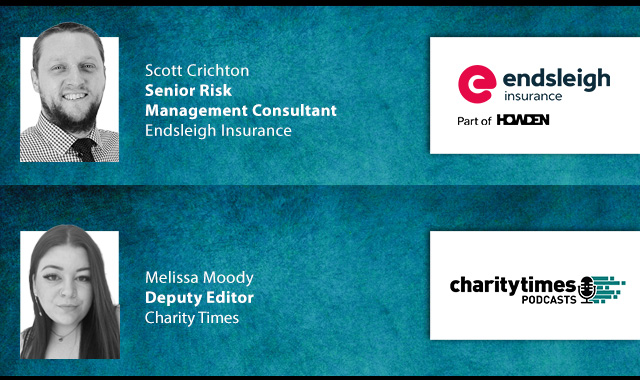
The cost-of-living crisis is impacting charities in a number of ways, including the risks they take. Endsleigh Insurance’s* senior risk management consultant Scott Crichton joins Charity Times to discuss the ramifications of prioritising certain types of risk over others, the financial implications risk can have if not managed properly, and tips for charities to help manage those risks.
* Coming soon… Howden, the new name for Endsleigh.
* Coming soon… Howden, the new name for Endsleigh.
Better Society





© 2021 Perspective Publishing Privacy & Cookies
Recent Stories