New research shows that community campaigns benefit greatly from the involvement of local councillors.
This new joint publication from bassac and Urban Forum, Local Action: The Handy Guide to Communities Working with Councillors, is full of examples that show that councillor involvement is key to the success of local community projects.
When researching for the guide both organisations were “inundated” with offers of case studies from local community groups.
The publication includes examples such as a campaign to save a local nursery in Leicestershire and the creation of a residents’ group to represent local views on planning issues in Southwark, London.
With the government’s Big Society agenda urging people to get involved in their local communities, the Handy Guide looks at how to get local councillors involved in community projects and highlights the benefits that councillors can bring.
It finds that getting councillor support for a community project can greatly improve access to councils, attract publicity to a campaign, introduce valuable contacts, add credibility and help to secure funding. Community organisations have much to gain from taking a proactive approach and being effective participants in community politics.
The research finds that five key elements are required to enhance councillor involvement:
1 Early contact, either in a project or soon after a councillor is elected.
2 Seeking out councillors rather than waiting for them to notice you.
3 Putting aside political affiliation – both the councillor and the community group will want what is best for the area.
4 Establishing a clear role for the councillor to play and their level of involvement.
5 Building trust and respect between the councillor and the community group.
Urban Forum head of policy and research, Rachel Newton, said: “There has been a great deal of discussion about the ‘Big Society’, and what this could actually look like in reality.
"The missing piece of this discussion is the role that local councillors working with community groups play. If community organisations and volunteers are to have an even greater part to play in our daily life, then it is essential that they are linked up with councillors elected to represent their area.”
bassac chief executive, Ben Hughes, added: “This is all about creating a two-way relationship. Our member organisations are rooted in their communities and are a rich resource for local councillors. But these organisations can’t just wait to be consulted.
"They need to be politically pro-active in their community – approaching local councillors, identifying key issues and explaining what they can offer. Through our Inspiring Democracy programme we are supporting our members to successfully lead community politics in their neighbourhood.”


Latest News
-
Evaluation reveals benefits of adding a virtual candle to online fundraising
-
Former Scope CEO to chair business group set up to tackle disability exclusion
-
Senior MP’s comparison of charity retail with vape shops criticised as 'outdated'
-
Working Families closes following ‘a sustained period of financial challenge’
-
Case study: How charities can best protect their storytellers
-
British Heart Foundation to close almost one in four of its charity shops





Charity Times video Q&A: In conversation with Hilda Hayo, CEO of Dementia UK
Charity Times editor, Lauren Weymouth, is joined by Dementia UK CEO, Hilda Hayo to discuss why the charity receives such high workplace satisfaction results, what a positive working culture looks like and the importance of lived experience among staff. The pair talk about challenges facing the charity, the impact felt by the pandemic and how it's striving to overcome obstacles and continue to be a highly impactful organisation for anybody affected by dementia.
Charity Times Awards 2023
Mitigating risk and reducing claims
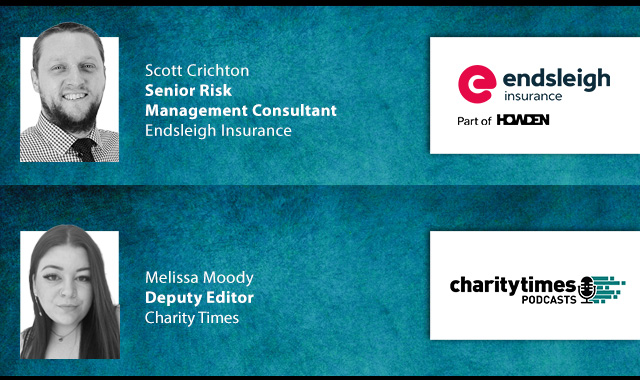
The cost-of-living crisis is impacting charities in a number of ways, including the risks they take. Endsleigh Insurance’s* senior risk management consultant Scott Crichton joins Charity Times to discuss the ramifications of prioritising certain types of risk over others, the financial implications risk can have if not managed properly, and tips for charities to help manage those risks.
* Coming soon… Howden, the new name for Endsleigh.
* Coming soon… Howden, the new name for Endsleigh.
Better Society





© 2021 Perspective Publishing Privacy & Cookies
Recent Stories