The Charity Commission, has today published a regulatory case report into the Arts Council of England recommending the charity develops comprehensive training for trustees
The Commission became involved when the charity informed it that a grant had been awarded to one of the charity’s trustees without the necessary authorisation.
The Commission’s involvement focused on how the unauthorised payment had occurred and what steps the charity was taking to ensure that a similar incident did not occur again.
The Commission has recommended that the charity develops comprehensive training for trustees on their duties and responsibilities relating to trustee benefits and managing conflicts of interest.
The charity has improved the checks on its grant assessment process and has confirmed to the Commission that it has updated its induction programme for new trustees.
The report highlights the importance of managing conflicts of interest for trustees as such incidents may impact upon public trust and confidence in their charity and the charitable sector as a whole.
A key aspect of managing the issue is for trustees to be open and transparent. All trustees should advise their fellow trustees of any actual or potential conflicts of interest as soon as they arise.
The Commission recommends that all charity trustees familiarise themselves with the Commission’s relevant guidance on conflicts of interest and trustee expenses and payments.
The charity’s main activities are supporting and providing funding for the arts in England.


Latest News
-
Evaluation reveals benefits of adding a virtual candle to online fundraising
-
Former Scope CEO to chair business group set up to tackle disability exclusion
-
Senior MP’s comparison of charity retail with vape shops criticised as 'outdated'
-
Working Families closes following ‘a sustained period of financial challenge’
-
Case study: How charities can best protect their storytellers
-
British Heart Foundation to close almost one in four of its charity shops





Charity Times video Q&A: In conversation with Hilda Hayo, CEO of Dementia UK
Charity Times editor, Lauren Weymouth, is joined by Dementia UK CEO, Hilda Hayo to discuss why the charity receives such high workplace satisfaction results, what a positive working culture looks like and the importance of lived experience among staff. The pair talk about challenges facing the charity, the impact felt by the pandemic and how it's striving to overcome obstacles and continue to be a highly impactful organisation for anybody affected by dementia.
Charity Times Awards 2023
Mitigating risk and reducing claims
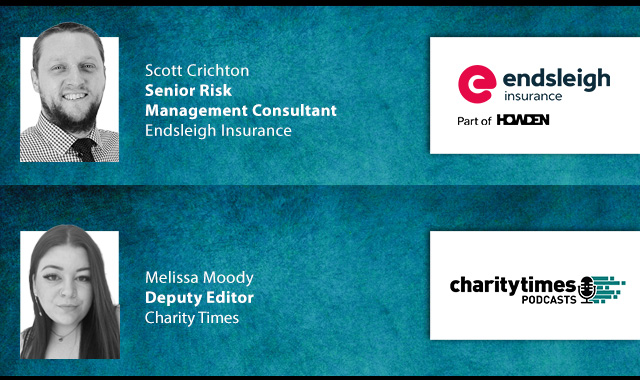
The cost-of-living crisis is impacting charities in a number of ways, including the risks they take. Endsleigh Insurance’s* senior risk management consultant Scott Crichton joins Charity Times to discuss the ramifications of prioritising certain types of risk over others, the financial implications risk can have if not managed properly, and tips for charities to help manage those risks.
* Coming soon… Howden, the new name for Endsleigh.
* Coming soon… Howden, the new name for Endsleigh.
Better Society




© 2021 Perspective Publishing Privacy & Cookies
Recent Stories